

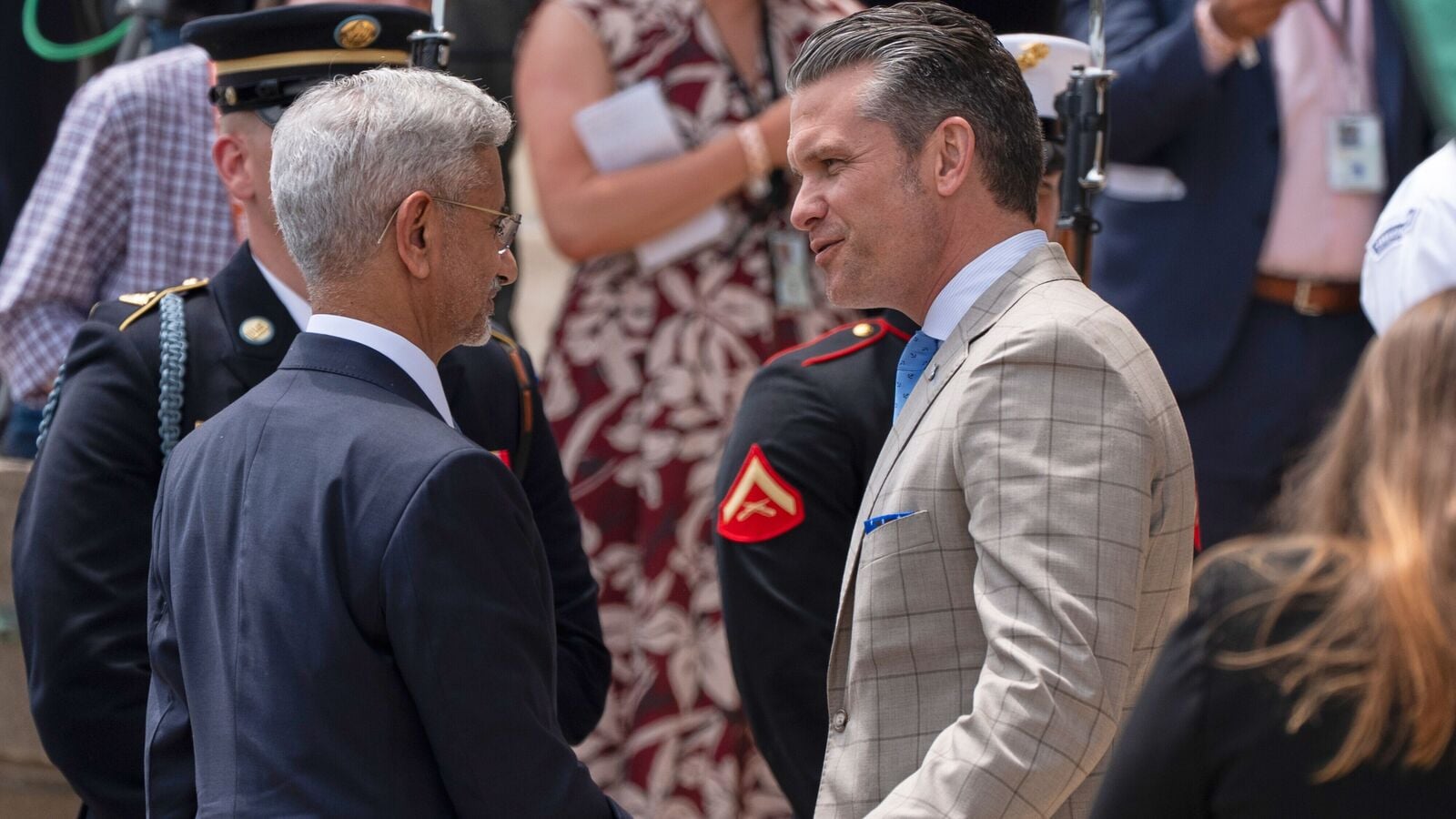
US Secretary of Defense Pete Hegseth on Wednesday thanked EAM S Jaishankar for a productive meeting on advancing the India-US defence partnership, building on growing convergences of interests, capabilities and responsibilities. The two met on Tuesday on the sidelines of QUAD.
Hegseth posted on X, “Great meeting yesterday with Indian Minister of External Affairs S Jaishankar”
“Thank you, Mr. Minister, for all you do to strengthen U.S.-India relations, especially our defense partnership. I salute our two great democracies’ cooperation in securing a free and open Asia-Pacific,” he goes on to add.
On Wednesday, the US has expressed hope that it can complete several major pending American defence sales to India, as it stressed that Washington and Delhi are “mutually aware” of the security concerns in the Indo-Pacific region.
Hegseth said, according to the Department of Defence (DoD) news article, the US and India are “mutually aware of the security concerns in the region, and both nations have the ability to counter that threat together.”
He also emphasised on US efforts to equip India with the necessary tools to address security challenges in the Indo-Pacific. “The United States is very pleased with the successful integration of many US defence items into India’s inventory,” Hegseth said, according to the DoD news article.
“And building on this progress, we hope we can complete several major pending US defence sales to India, expand our shared defence industrial cooperation and coproduction efforts, strengthen interoperability … between our forces, and then formally sign a new 10-year Framework for the US-India Major Defence Partnership … which we hope to do very soon.”
Jaishankar, meanwhile, said, “We believe that our defence partnership is, today, truly one of the most consequential pillars of the relationship.
“It’s not built merely on shared interest, but we believe really deepening convergence and of capabilities, of responsibilities and what we do in the Indo-Pacific, we believe, is absolutely crucial to its strategic stability,” he said.
(With inputs from agencies)
