


Prime Minister Narendra Modi inaugurated the COSMOS Planetarium at the University of Mysore campus in Karnataka on November 13, dedicating India’s first LED dome planetarium to the nation. Located at the foothills of Chamundi Hills, the facility has been developed by the Indian Institute of Astrophysics (IIA) in collaboration with the University of Mysore.
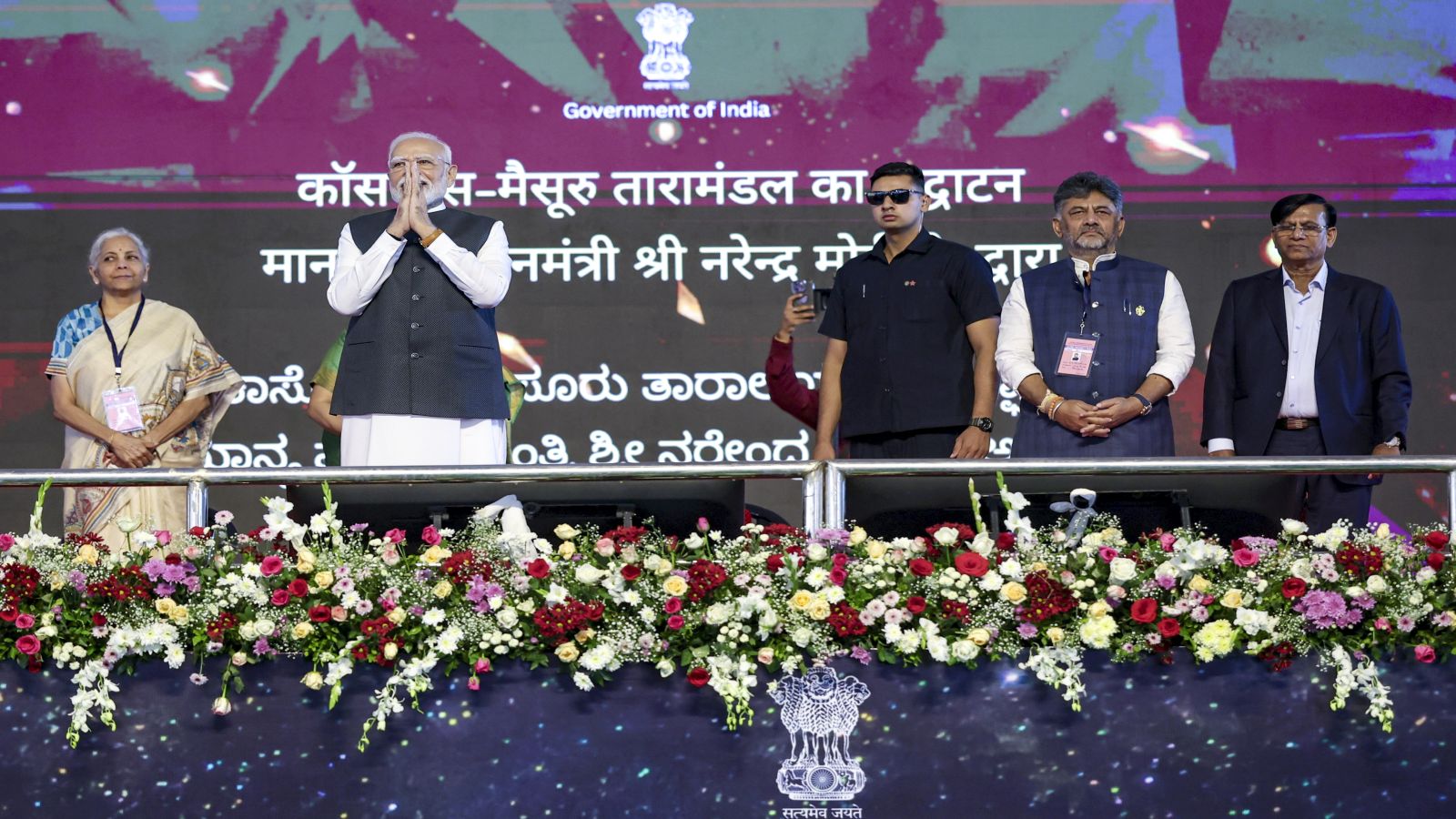
Designed as a centre for astronomy education, research and training, COSMOS Planetarium aims to make the study of space and the universe more accessible to students and the public. Its key attraction is a large LED dome that offers an immersive viewing experience, along with educational programmes and plans to connect visitors with astronomical observations from research facilities.
Here are seven key features of the newly inaugurated COSMOS Planetarium in Mysuru.
1. India’s first LED dome planetarium
COSMOS Planetarium is India’s first planetarium to feature an LED dome. Unlike conventional planetariums that use projectors to display images on a passive dome, this facility uses LED panels that can be controlled in real time.
The technology offers an immersive visual experience and creates new possibilities for astronomy education and presentations.
2. 15-metre tilted dome with 4.2 crore LEDs
The planetarium features a 15-metre tilted dome made up of around 6,150 panels. These panels contain approximately 4.2 crore individual LEDs, which work together to display visuals across the dome.
The large LED surface is designed to give visitors a detailed view of astronomical objects and events, making it easier to understand different aspects of the universe.
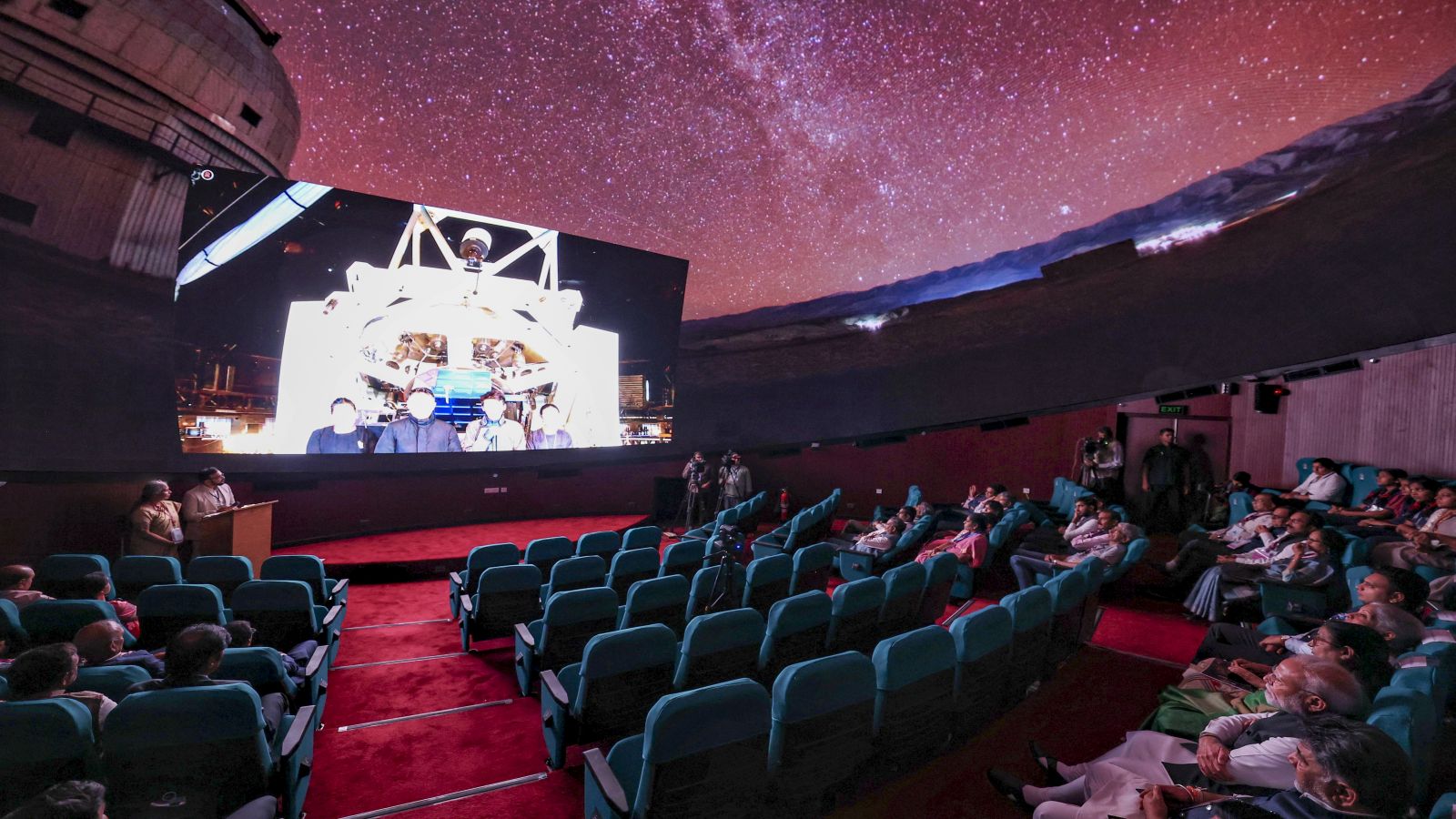
Image: PTI
3. Sky Theatre with astronomy programmes
The facility houses a Sky Theatre that will screen professionally produced astronomy programmes. These presentations are designed to help visitors understand stars, planets and other aspects of space through visual storytelling.
The theatre will also feature an in-house film exploring the connection between the history of Mysuru and astronomy.
4. Shows in Kannada, English and Hindi
To make astronomy education accessible to a wider audience, the planetarium will offer its shows in three languages: Kannada, English and Hindi.
This will allow students and visitors from different linguistic backgrounds to learn about astronomy and space science.
5. Live connections with astronomical observatories
One of the planned features of COSMOS Planetarium is live video connectivity with astronomical observatories at Hanle in Ladakh and Kodaikanal in Tamil Nadu.
According to Union Finance Minister Nirmala Sitharaman, these connections will bring astronomical observations into the planetarium dome on selected days. Students will be able to see how observations are carried out at these research facilities and gain a better understanding of astronomical studies.
6. Visual presentations on India’s space missions
The planetarium will use visual presentations to explain India’s progress in space exploration. These will cover major missions such as Mangalyaan, Chandrayaan-3, Aditya-L1 and Gaganyaan.
The presentations are expected to help children understand the science and technology behind India’s space programmes and developments in the space sector.
7. Centre for astronomy education, research and training
Beyond its Sky Theatre and visual presentations, COSMOS Planetarium has been developed as a centre for cosmology education, research and training.
Built by the Indian Institute of Astrophysics in collaboration with the University of Mysore, it aims to encourage scientific curiosity among students and the public. The facility is expected to give young learners an opportunity to explore astronomy and develop an interest in scientific research.
At the inauguration, Sitharaman said institutions such as COSMOS would help nurture a generation of students who question, explore and discover as India works towards its Viksit Bharat 2047 goal.
The planetarium is also expected to add to Mysuru’s tourism offerings by attracting school groups, students and astronomy enthusiasts.
