

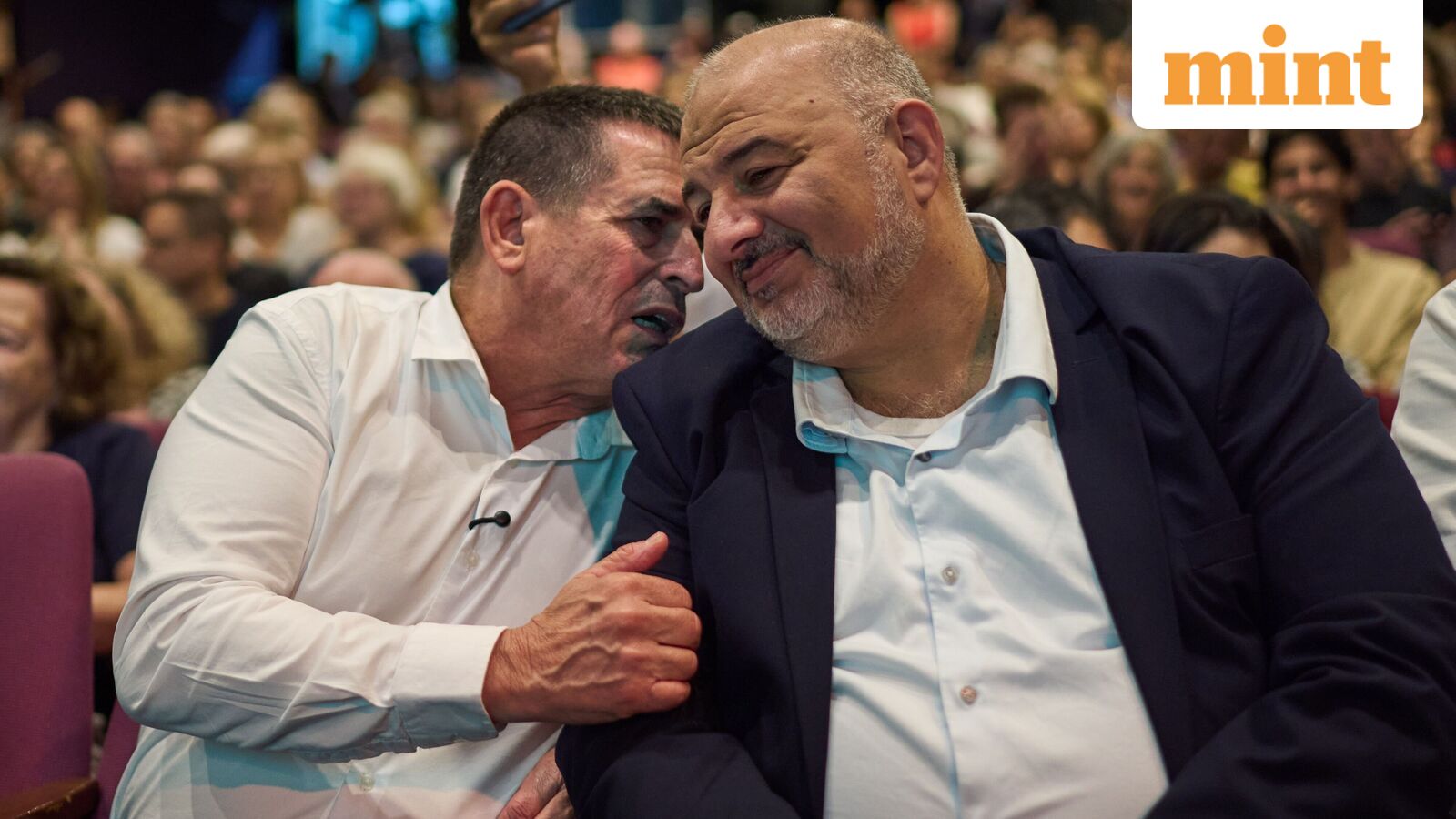
A Jewish former police officer and self-described Zionist joining an Arab-led Islamist party is an unusual political move in Israel. But Yoav Segalovitz’s decision to join Ra’am has drawn attention beyond the party itself, raising questions about whether Jewish and Arab parties can work together to shape the country’s next government.
According to an Associated Press report, Segalovitz will enter the Knesset as a member of Ra’am, which won eight seats in the election. His move is part of an alliance with party leader Mansour Abbas, who believes Jewish and Arab citizens can work together despite their differences.
“He’s Arab. I’m a Jew. I’m secular. He’s religious,” Segalovitz told AP before the election. “But we’re all citizens of Israel. We all take part in this society. If we want to get progress here, we must go in partnership together.”
Who is Yoav Segalovitz?
Segalovitz is a former Jewish police officer and self-described Zionist who left a centrist Jewish-led party to join Ra’am, a conservative Arab-led Islamist party.
His move stands out in Israel, where political divisions often follow religious and ethnic lines.
At a Ra’am celebration on Tuesday, Segalovitz was the only politician who did not address supporters in Arabic. Instead, he declared, “Kulanu Yisraelim!” — Hebrew for “We are all Israelis”, AP reported.
Why has his move drawn criticism?
The partnership has faced criticism from both the Israeli right and sections of the Arab political spectrum.
Right-wing critics accused Segalovitz of betraying Israel and warned that Ra’am’s influence could open the door to Islamic law. Some members of the more left-wing Arab-led Joint List, meanwhile, dismissed the alliance as a political branding exercise intended to make Ra’am more acceptable to mainstream parties, rather than address issues facing Arab communities.
Prime Minister Benjamin Netanyahu and his allies have also repeatedly attacked Ra’am. Netanyahu’s Likud party was among those that sought to disqualify it from contesting the election.
During the campaign, Netanyahu warned that his main rival, former military chief Gadi Eisenkot, could join hands with Abbas to secure a parliamentary majority. His party also spread unsubstantiated claims that the election had been “stolen” by Arab-led parties, which rejected the allegations.
Segalovitz responded to the attacks in a post on X on Thursday, saying that “incitement, racism, and exclusion” were among the biggest threats to Israel’s strength and resilience, AP reported.
Can Arab-led parties shape Israel’s next government?
The alliance comes at a crucial time. Arab-led parties won a combined 19 seats in the 120-member Knesset, giving them the potential to influence the formation of the next government.
However, their role will depend on whether Jewish-led opposition parties are willing to work with them. So far, several have been reluctant to form a coalition with Arab-led parties to remove Netanyahu from power.
Only once has an Arab party joined an Israeli governing coalition. In 2021, Ra’am became part of a coalition government that lasted around 18 months.
Eisenkot has set conditions for cooperation with Arab-led parties, including that they recognise Israel as a Jewish and democratic state and declare Hamas a terrorist organisation that must be dismantled.
Abbas has acknowledged Israel as a Jewish state and repeatedly condemned Hamas’s October 7, 2023, attack.
However, he has resisted formally labelling Hamas a terrorist organisation, describing such demands as a political trap and a loyalty test set by extremists, AP reported.
With inputs from AP.
About the Author
Bhanu Pratap
Bhanu Pratap is a journalist who reports and writes on foreign affairs, India’s foreign policy, geopolitics and strategic affairs. He closely follows diplomatic developments in New Delhi and has a keen interest in defence and national security.
Bhanu also focuses on in-depth, interview-based reports and regularly speaking with experts and policymakers to bring perspectives and context to major developments around the world.
He is also interested in stories with strong humanitarian angles.
One such report examined the cases of Indian nationals who were allegedly recruited and forced into Russia’s war against Ukraine. While reporting the story, Bhanu spoke to the families of those affected and documented their experiences. The report was later taken into account by the United Nations in its findings on human rights violations linked to the war in Ukraine.
For Bhanu, the zeal to produce meaningful and impactful journalism remains at the heart of his work.
He has previously worked with Firstpost, NDTV, Newslaundry and Republic.
Bhanu studied at the Delhi School of Journalism, University of Delhi. He initially chose science with plans to pursue engineering, influenced by conventional expectations, but fate had other plans and eventually led him to journalism.
Beyond the newsroom, Bhanu enjoys exploring culture and history and often spends his days off on heritage walks. He is also passionate about travelling, biking and listening to folk music.
For tips, reviews and suggestions, you can reach him at bhanu.pratap@htdigital.in.
