

Advertisement

Multiple FX Rates Cost Nigeria More Than Fuel Subsidy – Cardoso
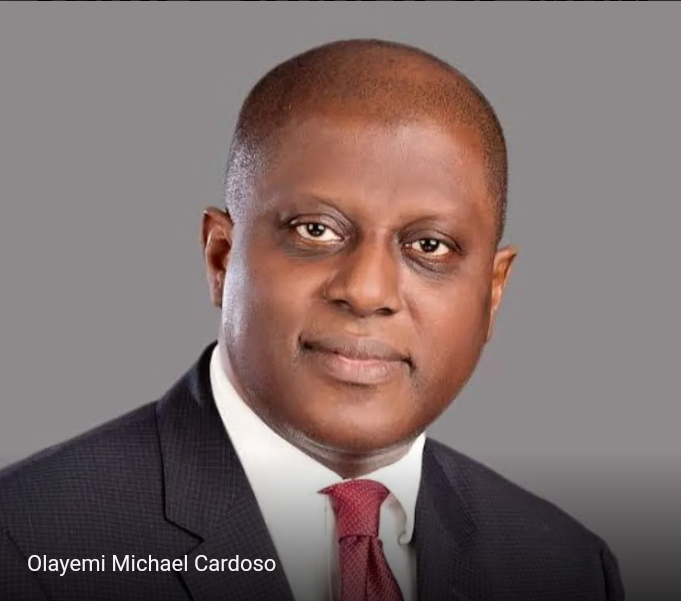
The multiple exchange rate regime previously operated in Nigeria imposed a heavier burden on the economy than fuel subsidy, with the distortions associated with the system costing the country about 3 per cent of its Gross Domestic Product, the Governor of the Central Bank of Nigeria (CBN), Olayemi Cardoso, has said.
Cardoso, who disclosed this while reflecting on the 3 years monetary reforms implemented under his leadership, on Tuesday at the end of the committee’s 307th meeting in Abuja, said the losses linked to foreign exchange distortions, when combined with fuel subsidy costs, amounted to approximately 5.2 per cent of Nigeria’s GDP.
The CBN governor said the reforms became necessary because the country’s foreign exchange market had become dysfunctional, with multiple exchange rate windows creating opportunities for arbitrage, restricting access and undermining confidence in the economy.
According to him, the situation made access to foreign exchange dependent on connections rather than transparent market principles, while businesses and investors struggled to plan because of persistent volatility.
Cardoso explained that one of the major priorities of his administration at the apex bank was to restore the CBN to its core mandate of maintaining price and financial stability.
He said the decision to reform the foreign exchange market was part of a broader effort to eliminate distortions and establish a more transparent system based on willing buyers and willing sellers.
“Before we came, there were multiple exchange rates. It was a dysfunctional market where access was dependent on connections,” Cardoso said, according to the report of his remarks.
He explained that the previous arrangement created significant economic distortions and imposed costs that extended beyond the foreign exchange market, affecting businesses, consumers and the wider economy.
The governor said the losses associated with the multiple exchange rate windows were estimated at three per cent of GDP, compared with 2.2 per cent attributed to fuel subsidy.
When combined, he said, both distortions accounted for about 5.2 per cent of GDP, highlighting the scale of the economic burden inherited by the administration.
Cardoso’s remarks formed part of his assessment of the reforms introduced by the CBN since he assumed office. He said the central bank inherited an economy facing serious confidence challenges, rapid currency depreciation, rising prices and negative assessments from international rating agencies.
He recalled that the country had reached a point where confidence in its economic management had weakened, with businesses and investors finding it difficult to make reliable projections.
According to him, restoring confidence required a combination of policy consistency, discipline and reforms aimed at addressing the structural weaknesses within the monetary system.
On the unification of the foreign exchange market which reduced the gap between official and parallel market rates, Cardoso said the CBN replaced the previous system of multiple windows with a more transparent market structure, allowing exchange rates to respond more directly to market forces.
The reform, he said, was designed to reduce opportunities for arbitrage and ensure that access to foreign exchange was no longer determined by preferential arrangements.
The governor noted that the new approach was based on the willing buyer, willing seller principle, which he said would support transparency and improve the functioning of the market.
The foreign exchange reforms were introduced at a time when the naira was experiencing significant pressure and businesses were struggling with uncertainty over the availability and cost of foreign currency.
For import-dependent businesses, manufacturers and other economic operators, fluctuations in the exchange rate affected production costs, pricing and investment decisions.
Cardoso said the CBN’s objective was to move the economy away from volatility towards a more stable environment in which individuals and businesses could plan with greater certainty.
He described the transition as part of a broader effort to rebuild confidence in the country’s economic management and improve the credibility of monetary policy.
The CBN governor also defended the bank’s decision to adopt an aggressive monetary tightening approach, even as several other central banks around the world were beginning to ease their policies.
He said Nigeria’s economic conditions were different and required policy decisions based on domestic data rather than developments in other jurisdictions.
The CBN raised interest rates as part of efforts to address inflationary pressures, manage excess liquidity and stabilise the foreign exchange market.
Cardoso said the bank inherited substantial financial pressures, including a Ways and Means balance of ₦23.7 trillion and interventions exceeding ₦10 trillion.
He argued that the accumulation of excess liquidity had contributed to inflationary pressures and complicated the task of restoring macroeconomic stability.
According to him, the CBN’s decision to tighten monetary policy was informed by the need to address these challenges and restore discipline within the financial system.
He said the measures had begun to produce results, pointing to the moderation of inflation and improvements in the country’s external position.
Nigeria’s headline inflation, according to the figures referenced in the report, declined from about 30 per cent when the current CBN leadership assumed office to 15.39 per cent in August 2026, compared with 15.43 per cent in July.
Cardoso said the decline in inflation suggested that the tightening measures were having an impact, although he acknowledged the need for continued vigilance and policy calibration.
