

Advertisement

Dangote: How One Refinery Is Rewriting Nigeria’s Fuel Story
By Lawal Dahiru Mamman,
For decades, Nigeria’s downstream was a thing of worry. Africa’s largest oil producer, pumping around 1.5 million barrels per day of crude, but with a downstream that barely functioned.
Four state-owned refineries in Port Harcourt, Warri and Kaduna lay largely inoperative despite billions spent on turnaround maintenance. The country exported crude and imported nearly everything it used ranging from petrol, diesel, to jet fuel.
Seaborne product imports hit nearly 400,000 barrels per day in 2023. Domestic refining accounted for less than 5% of petrol supply in some years. Every litre consumed was a dollar spent abroad.
That equation has been rewritten by one asset.
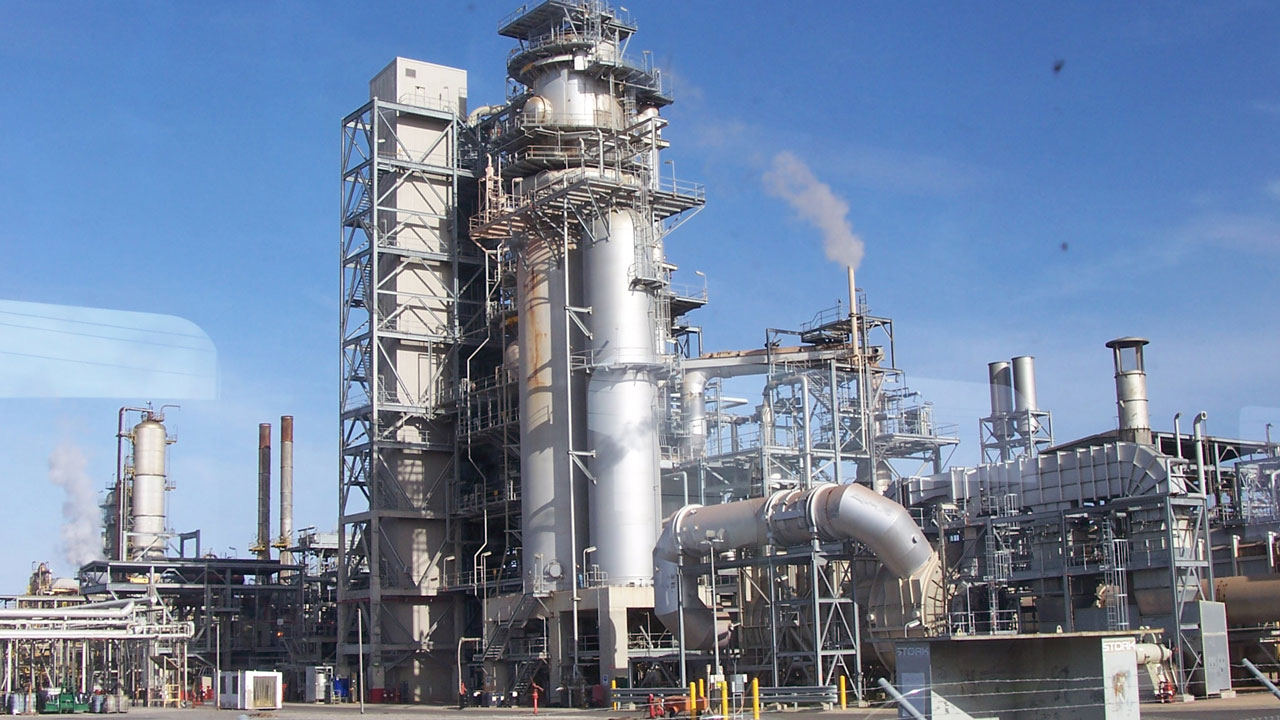
The Dangote Petroleum Refinery in Lekki, initially built as a 650,000 bpd single-train plant, now operates at 700,000 bpd after a 2026 debottlenecking — the largest single-train refinery in the world. It accounts for the vast majority of Nigeria’s operational refining capacity. Modular plants like Waltersmith, Edo and Aradel contribute, but state refineries remain largely offline.
Its output has changed the national supply balance. In recent months, Dangote has supplied 30 to 53 million litres of PMS per day — against a national consumption benchmark of 50-60 million litres. The company says it can produce 75 million litres/day of PMS, plus 25 million litres/day of diesel and about 20 million litres/day of jet fuel.
In the first seven months of 2026, domestic refineries, overwhelmingly Dangote, accounted for 75% of national petrol supply, up from 39% in the same period of 2025. Snapshots tell the story: 62% market share in January 2026, 80% of domestic demand in April, moderating to 43% in months when import competition rose again.
According to analysts the scale is about to get bigger. That is what the Dangote Refinery Initial Public Offering (IPO) is for.
The IPO
Securities and Exchange Commission (SEC) approved the refinery’s Initial Public Offering. The offer is 4.1 billion ordinary shares at N525 per share, to raise about N2.15 trillion — $1.63 billion. With SEC registering its existing 120.13 billion shares, the implied valuation is around $47 billion.
The order book opened September 14 and closes October 13, with listing on the Nigerian Exchange targeted for November. The majority shareholder is raising cash to fund a doubling of capacity to 1.4 million barrels per day, an expansion its CEO says is already engineered and due by 2028/2029.
The deal is retail-driven by design. With a minimum subscription of 10 shares, a partnership with fintechs like Piggyvest and Chapel Hill Denham, and a stated target of 10 million shareholders, Dangote calls it “the people’s IPO” — a bid to make every African a part owner.
*What it Means Downstream*
1. From import dependence to import displacement
The clearest impact is on trade. Seaborne product imports have fallen from approximately 400,000 bpd in 2023 to under 130,000 bpd in Q2 2026. Petrol import volumes in some periods have dropped more than 60% year-on-year.
Conversely, Nigeria has become an exporter. Refined product shipments rose from 79,000 bpd in 2023 to an average of 561,000 bpd including coastal movements in Q2 2026. The Central Bank of Nigeria (CBN) recorded $5.85 billion in refined product exports in 2025, driven by diesel and jet fuel, Dangote became Europe’s largest jet fuel supplier in mid-2026.
Analysts estimate an annual balance-of-payments improvement of around $5.5 billion.
The IPO locks in that shift. The $1.6bn-$2.1bn raise will fund the $14bn expansion to 1.4 million bpd, turning import displacement from a monthly fluctuation into a permanent structural surplus.
2. The end of the old marketer model
The downstream value chain — depot owners, importers under Depot and Petroleum Products Marketers Association of Nigeria (DAPPMAN), retail marketers under Independent Petroleum Marketers Association of Nigeria (IPMAN), was built around import arbitrage. Dangote is disrupting it at the root.
It is not just refining. The company is deploying thousands of CNG-powered trucks for direct distribution to stations and bulk industrial users, bypassing traditional coastal depots and middlemen.
Availability has improved, price volatility has moderated from the post-subsidy peaks, and the import license has become less a tool of survival and more a source of regulatory friction.
For downstream players, the IPO means the model is no longer in transition — it is listed. Margins will have to come from logistics, retail efficiency and non-fuel services, not from FX differentials.
3. Transparency where there was opacity
For the first time, Nigeria will have a publicly quoted refinery. A listed Dangote Refinery will be required to publish crude costs, refining margins, utilisation rates and product offtake volumes.
For a downstream sector that has lived on opaque subsidy claims and turnaround maintenance budgets, that is revolutionary. It creates a public benchmark for what it costs to refine in Nigeria and forces competitors, including Nigerian National Petroleum Corporation (NNPC), to be judged against a market standard.
4. Deepening local ownership of the energy security asset
Through targeting 10 million retail investors, the IPO does something NNPC never did: it democratises ownership of downstream. If fully subscribed, plus its greenshoe option, the company could raise over $2.1bn from Nigerians.
With $400m already underwritten and its July private placement 3.7 times oversubscribed, appetite is proven.
That broad base makes it politically harder for future governments to reverse reforms or re-impose distortive price controls because 10 million shareholders are a powerful constituency for market pricing.
5. Self-sufficiency is closer, but not complete*
Imports still account for 20-40% of supply in many months. Feedstock remains a challenge owing to the fact that Dangote still imports some crude when Nigerian supply is short, and its merchant model means it will always export where margins are highest, not just supply domestically at any cost.
The downstream is no longer dysfunctional, but it is not yet fully self-sufficient. Its future will depend on crude security, regulatory consistency on import licensing, and whether the 1.4 million bpd expansion is executed on time and on budget.
Bottom Line
What the IPO ultimately does is this that it takes Nigeria’s most important downstream asset built with $20bn of private risk and turns it from Aliko Dangote’s refinery into Nigeria’s refinery, funded by the public market and accountable to it.
For a sector that spent 30 years importing what it should have refined, that is the real transformation.
