


Oil prices fell Thursday as Saudi Arabia shifts some crude exports through the Strait of Hormuz to compensate for the closure of a key pipeline, easing market fears that the outage will cause another major disruption to global supplies.
Brent futures, the international benchmark, traded 2.6% lower at $103.05 per barrel. West Texas Intermediate crude briefly dipped below $100. The U.S. benchmark was last down 1.8% to $100.55. U.S. crude oil has erased most of its gains for the week but is up 17% for the month.
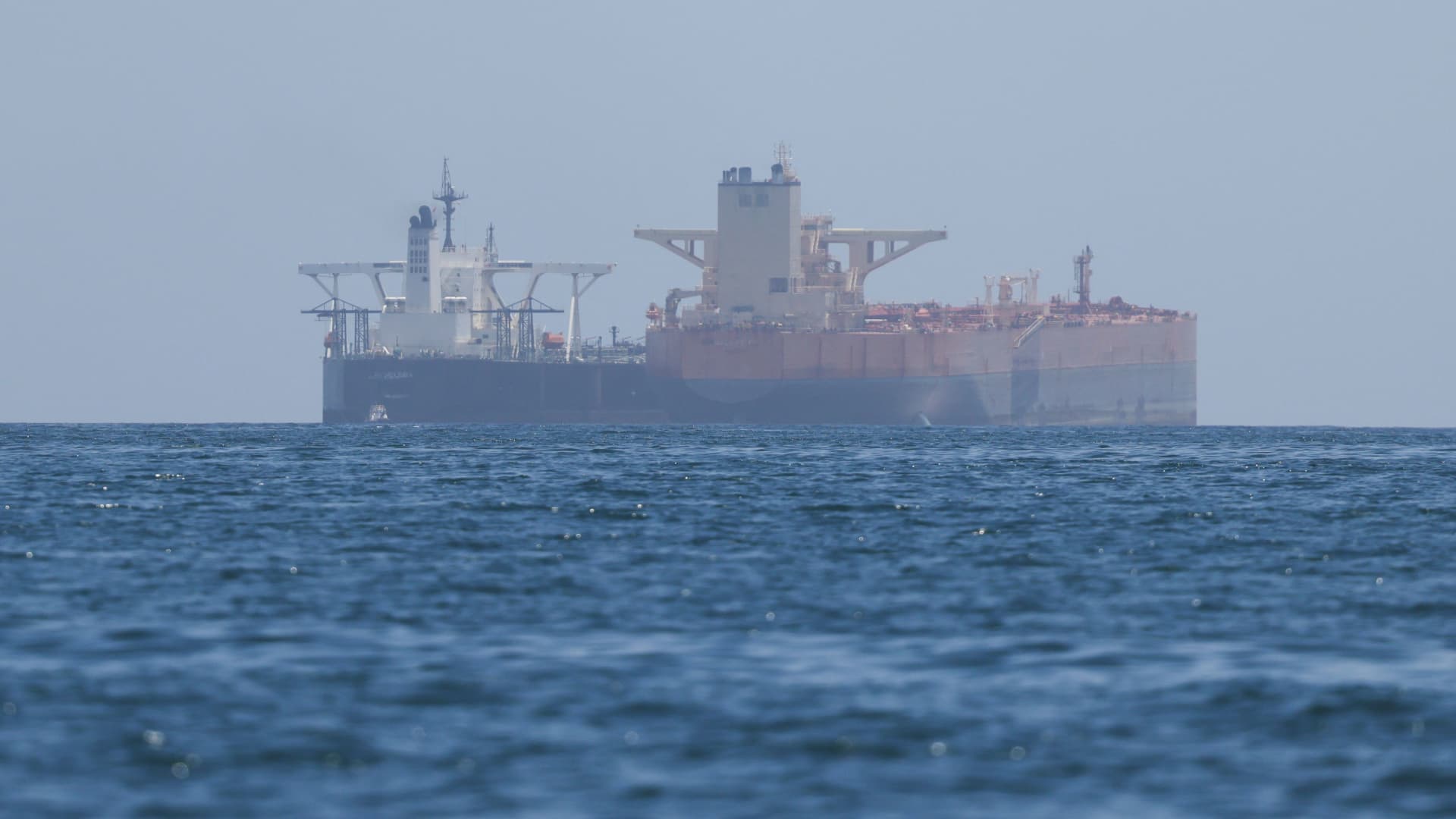
The Saudis are making additional crude cargoes available to Asian refiners through ship-to-ship transfers just outside Hormuz near Oman’s Sohar port, sources familiar with the matter told Reuters.
Shuttle vessels transport crude through Hormuz and then load it onto tankers waiting outside the strait, which allows these ships to avoid the risk of Iranian attack while sailing into the Gulf.
Saudi crude loadings at its Mideast Gulf ports are up so far this month, said Matt Smith, director of commodity research at Kpler. And ship transfers in the Gulf of Oman have risen to 2.7 million barrels per day compared to 1.5 million bpd in August, Smith said. But it is difficult to know whether the Saudis or other Gulf states are behind those transfers, he said.
U.S. Energy Secretary Chris Wright told CNBC on Tuesday that the Saudis have taken “quick action” to export more oil through Hormuz with the assistance of the U.S. military.
Earlier this week, the Saudis halted crude loadings at the Red Sea export terminal at Yanbu and canceled some shipments to European customers, industry sources told Reuters.
Yanbu has become Saudi Arabia’s key route for oil exports since Iran began attacking tankers in the Strait of Hormuz following U.S. and Israeli attacks on the country in late-February.
The Saudis closed the East-West pipeline late last week after it sustained damage in a drone attack launched from Iraq. The U.S. Energy Secretary told CNBC the outage is a “brief and temporary interruption” that “will be measured in days.” But independent analysts warn it could take weeks or months to repair the damage.
Rapidan Energy expects Saudi crude oil exports to fall by 400,000 barrels per day this month due to the pipeline outage. But lower shipments from Yanbu should be partly offset by higher exports through Hormuz, the Rapidan said.
“Risk remains skewed toward a larger disruption if the pipeline outage extends past September or Iran, the Houthis, or other proxy groups escalate attacks,” Rapidan told clients in a Thursday note.
