

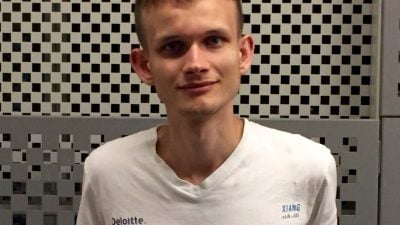
Vitalik Buterin has laid out a case for why artificial intelligence, despite its well-documented tendency to hallucinate and produce buggy code, might actually become the most powerful tool the software world has ever seen for preventing hacks. The catch: AI doesn’t do it alone. It needs a mathematical babysitter called formal verification.
In a blog post published on May 18, Buterin explored how pairing AI’s raw code-generation speed with the mathematical rigor of formal verification could dramatically improve the security of software systems, particularly those underpinning Ethereum’s infrastructure. He also casually dropped that roughly 90% of his net worth is held in ETH, which makes his interest in bulletproofing the ecosystem feel less academic and more personal.
The AI accuracy problem, and its fix
Buterin’s core argument is deceptively simple. AI can generate enormous volumes of code quickly, but that speed comes with a reliability tax. The output tends to be less accurate than what a careful human developer would produce. In smart contracts managing billions of dollars, it’s an existential threat.
Formal verification uses mathematical proofs to demonstrate that code behaves correctly in all possible scenarios, rather than relying on testing, which only checks a program’s behavior against specific scenarios.
Buterin specifically pointed to the Lean theorem prover as a key tool in this space. Lean allows developers to write proofs that can be mechanically checked, creating a layer of mathematical certainty that traditional code review simply cannot match.
He acknowledged a common objection, that AI might also be used by attackers to find bugs faster. His response was that this concern is “transient.” A verified proof, once confirmed, is permanent. An attacker finding a bug is a one-time event.
Why Ethereum cares more than most
Post-quantum cryptography is one area Buterin highlighted. As quantum computers inch closer to being able to break current encryption schemes, Ethereum and every other blockchain will need quantum-resistant signatures, and formal verification offers a path to confidence that testing alone cannot.
Zero-knowledge proofs are the other. ZK technology is central to Ethereum’s scaling strategy through ZK-EVMs and rollups. These are extraordinarily complex cryptographic constructions where a single subtle bug could compromise the integrity of an entire Layer 2 network.
Buterin cited two specific ongoing projects as examples of this work in practice. Arklib is a formally verified implementation of STARKs, one of the two main families of zero-knowledge proof systems. The second, evm-asm, is an EVM abstraction designed to make Ethereum’s virtual machine more amenable to formal analysis.
One of his more interesting observations was about trust models. Formal verification doesn’t just make code more secure. It changes what users need to trust. Instead of auditing an entire codebase, line by line, users can verify high-level assertions about what the code does.
The risks Buterin isn’t ignoring
Buterin identified two significant limitations. The first is specification risk. Formal verification proves that code matches its specification, but if the specification itself is wrong, the proof is worthless.
The second is hardware. Software can be formally verified. The physical chips running that software cannot, at least not with the same level of rigor. A compromised processor could undermine even perfectly verified code.
Despite these caveats, Buterin described AI-assisted formal verification as potentially the “final form” of software development. The roots of formal verification stretch back to the 1950s and 1960s, but practical applications have remained limited, mostly confined to aerospace, defense, and a handful of other safety-critical industries where the cost of mathematical proof was justified by the cost of failure.
What’s changing now is the economics. AI dramatically reduces the human effort required to write both code and proofs, potentially making formal verification practical for a much wider range of software.
Disclosure: This article was edited by Editorial Team. For more information on how we create and review content, see our Editorial Policy.
