

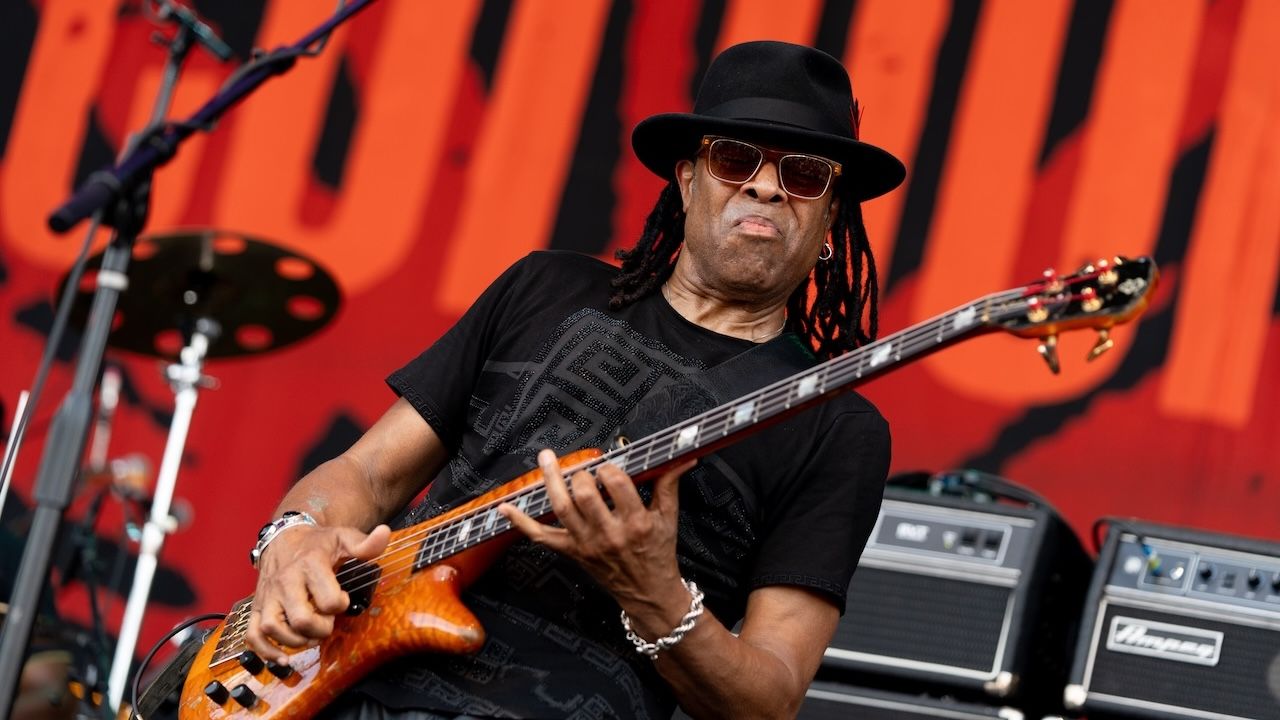
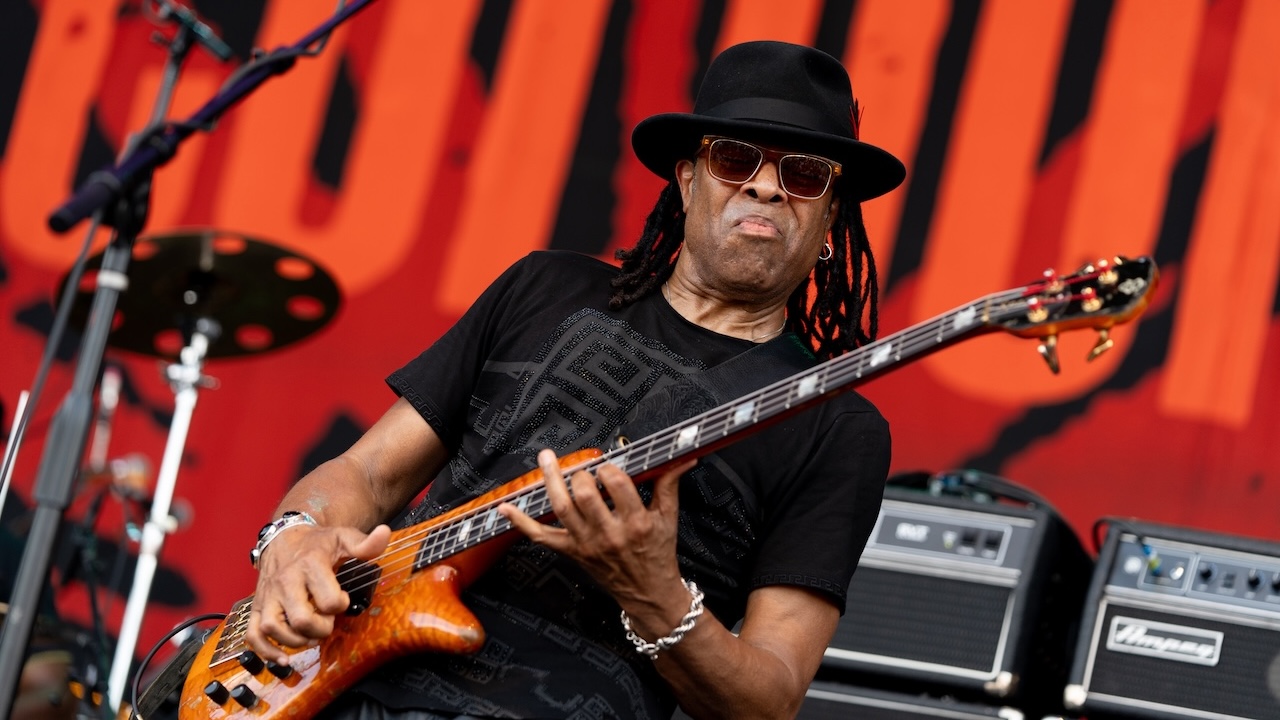
After making a name for himself as a teenager with East Coast funk outfit Wood, Brass & Steel in the mid-’70s, bassist Doug Wimbish helped shape the sound of early hip-hop.
Working for producer Sylvia Robinson at All Platinum and Sugar Hill, he laid down basslines on classics including Grandmaster Flash & Melle Mel’s White Lines, before bringing his unmistakable groove to Unity, the landmark 1984 collaboration between James Brown and Afrika Bambaataa.
By his 35th birthday, he was juggling sessions with Mick Jagger, Madonna, Seal, Annie Lennox, Joe Satriani, and Ronnie Wood while mulling an offer from Bruce Springsteen. Then came the call that would define the next chapter of his career.
When Living Colour needed a replacement for founding bassist Muzz Skillings, Wimbish was an obvious contender. He’d first met guitarist Vernon Reid in the early ’80s, and in 1991 he was invited to audition.
Flying through a hurricane on his way into New York, Wimbish arrived at the band’s Brooklyn rehearsal space. Reid, drummer Will Calhoun, and frontman Corey Glover asked what he wanted to play first, and Wimbish suggested Time’s Up, the blazing title track from the band’s second album. The room got so quiet that Wimbish wondered if he’d said something wrong.
“I’m looking around, and I can feel the vibe,” said Wimbish in the October 2017 issue of Bass Player. “They’re looking at each other and not saying anything. Finally, they said, ‘We’ve auditioned a lot of people, and you’re the only bass player who wants to play that song.’”
Wimbish nailed the audition, and officially joined Living Colour in early 1992.
Although 1993’s Stain didn’t match the commercial success of its predecessors, it produced some of the band’s most adventurous material.
“Go Away was the opening track of Stain and I’ll never forget it, because Will and I were so tight. We locked in perfectly. Some of those songs had a lot of twists and turns, and we had to watch each other’s body language to make it happen.”
Tensions within the band led to a hiatus in 1995, which saw Wimbish move to London, adding Lee ‘Scratch’ Perry, Little Annie, Brooklyn Funk Essentials, Nitzer Ebb, Bomb The Bass, Depeche Mode, and a dozen other credits to his resumé.
Since Living Colour reunited in 2000, Wimbish still approaches songwriting as a collaborative process rather than a fixed formula. Drawing on ideas developed across a wide-ranging career, every project seemingly feeds into the next.
“I’ve worked with different bands for quite some time like TackHead, Little Axe, Bad Dog, Mark Stewart and the Mafia, and there are different layers of all these things that are part of the ingredients I use to assemble ideas for Living Colour.
“I might start off with some chords and I will present it to Will, or maybe I will just track everything – bass, guitar, drums – and build the song from there.
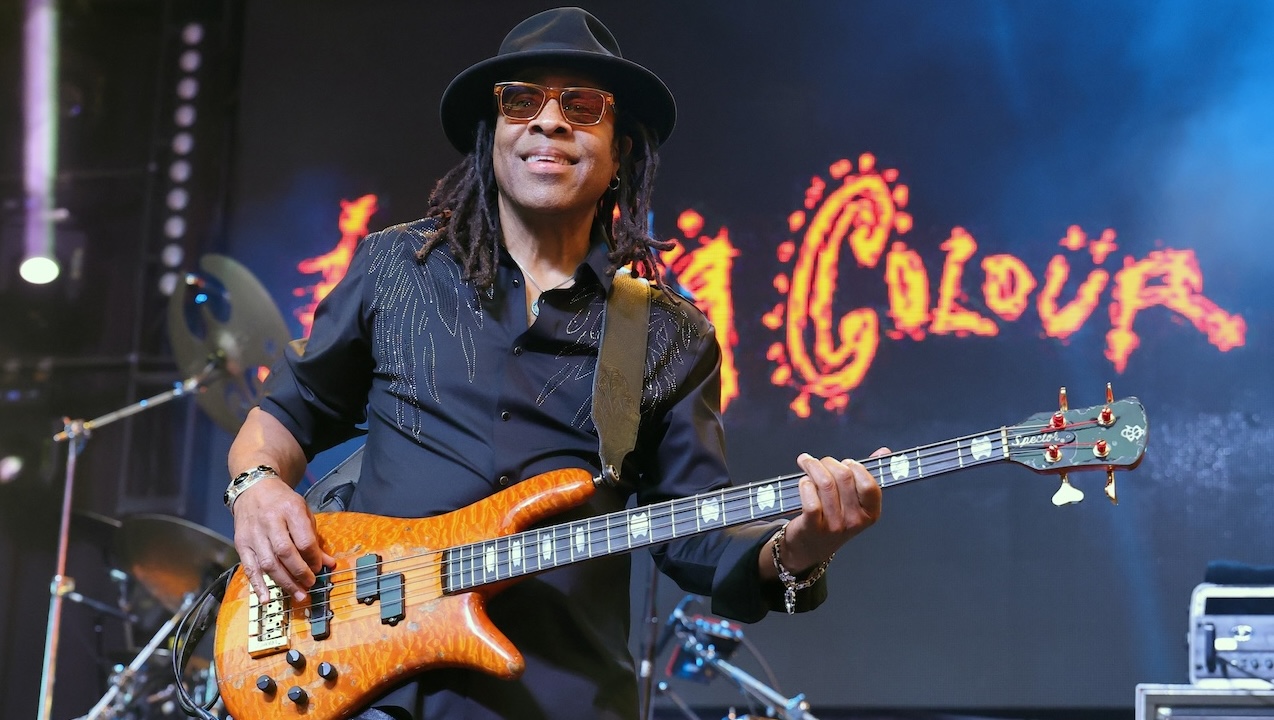
“Vern might come in with a riff or another way of approaching the line, and you just use the resources that are there and get everybody involved in what’s happening so you can really make the music for the band. That’s how I like to work with Living Colour.”
Alongside drummer Will Calhoun, Wimbish has built one of modern rock’s most intuitive creative partnerships.
“When you play with a drummer and you listen to each other it’s always a very rewarding and healthy environment to be in. I could play four notes and a rhythm and be already knows where to go with it, and vice-versa.
“I know his swagger and when he’s going to speed up or slow down. I sound better with him on drums, and he sounds better with me on bass. Period.”
