

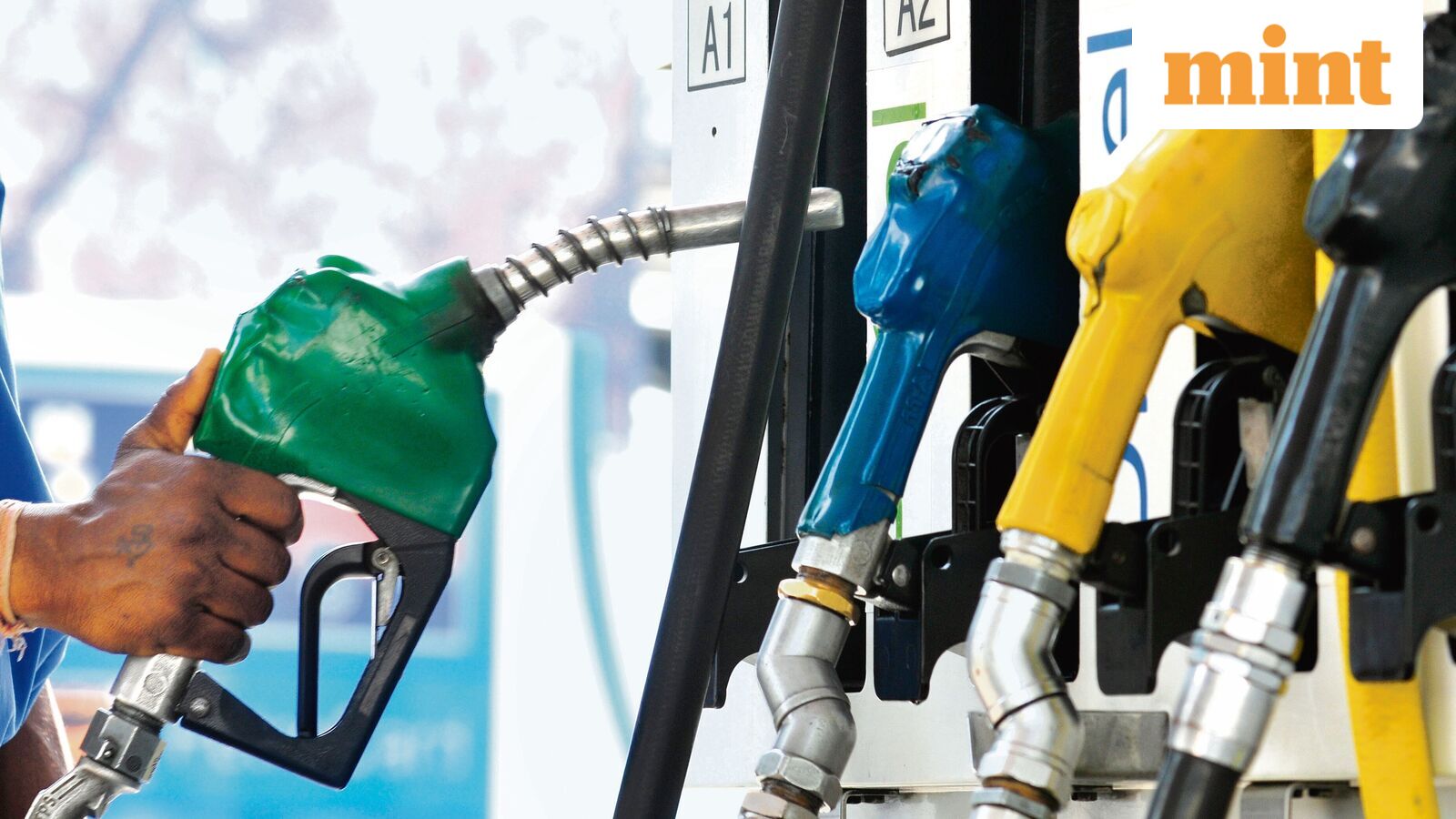
The Supreme Court on Tuesday proposed a pilot project under which fuel would be supplied only to vehicles with valid insurance to curb the growing number of uninsured vehicles and ensure timely compensation for road accident victims, according to a report by Bar and Bench.
“In the absence thereof, the vehicle concerned would be refused fuel at petrol pumps until such time that valid insurance is obtained,” the Bench ordered, noting that the Ministry of Petroleum and Natural Gas had, in principle, raised no objection to the proposal.
A Bench of Justice Sanjay Karol and Justice Prashant Kumar Mishra issued several directions, including linking Automatic Number Plate Recognition (ANPR) cameras with insurance databases to automatically issue e-challans to uninsured vehicles. It also called for handheld devices to be provided to traffic police to check insurance status on the spot, longer mandatory third-party insurance for new vehicles, and faster disposal of pending motor accident compensation cases.
56% of vehicles on Indian roads are uninsured
Hearing the case National Insurance Co. v. Smt. Thungala Dhana Laxmi & Ors., a Bench of Justice Sanjay Karol and Justice Prashant Kumar Mishra noted that nearly 56% of vehicles on Indian roads do not have valid insurance. The court said this weakens the purpose of compulsory motor insurance and often leaves accident victims waiting years for compensation.
Observing that a large number of vehicles remain uninsured, the Bench said the statutory safeguard for compensating road accident victims was often “delayed, if not defeated”, forcing victims and their families into lengthy legal battles.
“The object behind mandatory insurance under Section 146 of the Motor Vehicles Act is not just that victims of road accidents are compensated, it is also that they are not drawn into prolonged litigation,” the court was quoted as saying by Bar and Bench.
The court said such a system would help identify uninsured and unregistered vehicles while encouraging owners to keep their insurance active. It suggested using Automatic Number Plate Recognition (ANPR) cameras for the project.
Court orders e-challans for uninsured vehicles
The Bench also directed that ANPR cameras already installed on highways and city roads be linked with the Insurance Information Bureau database and the VAHAN portal. This would allow authorities to automatically issue e-challans to uninsured vehicles. It further asked States to provide traffic police with handheld devices or mobile apps connected to these databases so they can instantly check a vehicle’s insurance status and issue challans on the spot.
The court also directed strict implementation of the proposed amendment to Section 196 of the Motor Vehicles Act, which provides for higher penalties for driving uninsured vehicles once the Centre notifies the changes.
In a major relief for road safety, the Bench directed IRDAI to increase the mandatory third-party insurance period for new private cars from three years to four years and for new two-wheelers from five years to six years. The court said it was extending the insurance period by one year despite IRDAI and the General Insurance Council advising against the move, saying it was necessary in the interest of road safety.
The direction builds on the Supreme Court’s 2018 ruling in S Rajaseekaran vs Union of India, which had made long-term third-party insurance compulsory at the time of registration of new vehicles.
The judgment also approved a new four-layer motor insurance framework proposed by IRDAI. It includes a mandatory third-party insurance policy, an optional legal liability cover for occupants and pillion riders, an optional personal accident cover for the owner, driver and occupants, and an optional own-damage cover.
To help buyers make informed choices, the court directed that every motor insurance customer, whether buying online or offline, should receive a standard option form to choose additional covers. Buyers must also be given an easy-to-understand information sheet explaining which parts of motor insurance are mandatory and which are optional.
The Bench further directed IRDAI, along with the General Insurance Council and insurers, to prepare standard policy wordings for optional insurance covers while allowing companies flexibility in pricing and product design.
Insurance companies have also been asked to clearly display the benefits of comprehensive motor insurance policies on their websites in a simple and easy-to-understand format.
About the Author
Kanishka Singharia
Kanishka Singharia is a Senior Content Producer at Mint with a passion for news, trends, and the stories shaping the digital world. She specialises in spotting viral narratives by constantly tracking social media platforms and turning them into engaging, reader-friendly stories. Her work ranges from fast-paced breaking updates to sensitive human-interest features, blending speed with clarity.
With over four years of experience in news and trend reporting, Kanishka has worked with leading organisations such as Hindustan Times and Times Now. She moves seamlessly between profiling business leaders and telling the stories of everyday people, covering national developments just as effortlessly as the memes and conversations that dominate online culture.
She also reports on real estate developments and civic challenges in major urban hubs like Bengaluru, Delhi, and Gurugram. Her coverage frequently explores the struggles of startup founders, inspiring journeys of CEOs, and the experiences of candidates dealing with the complexities of visa processes.
Kanishka holds an undergraduate degree in Journalism from Delhi University and a diploma from the Indian Institute of Mass Communication. Rarely offline, she spends much of her time scrolling through X, LinkedIn, Reddit, Instagram, and Facebook in search of the next big story. When she finally logs off, she enjoys binge-watching shows and exploring cafes in pursuit of good food and better conversations.
