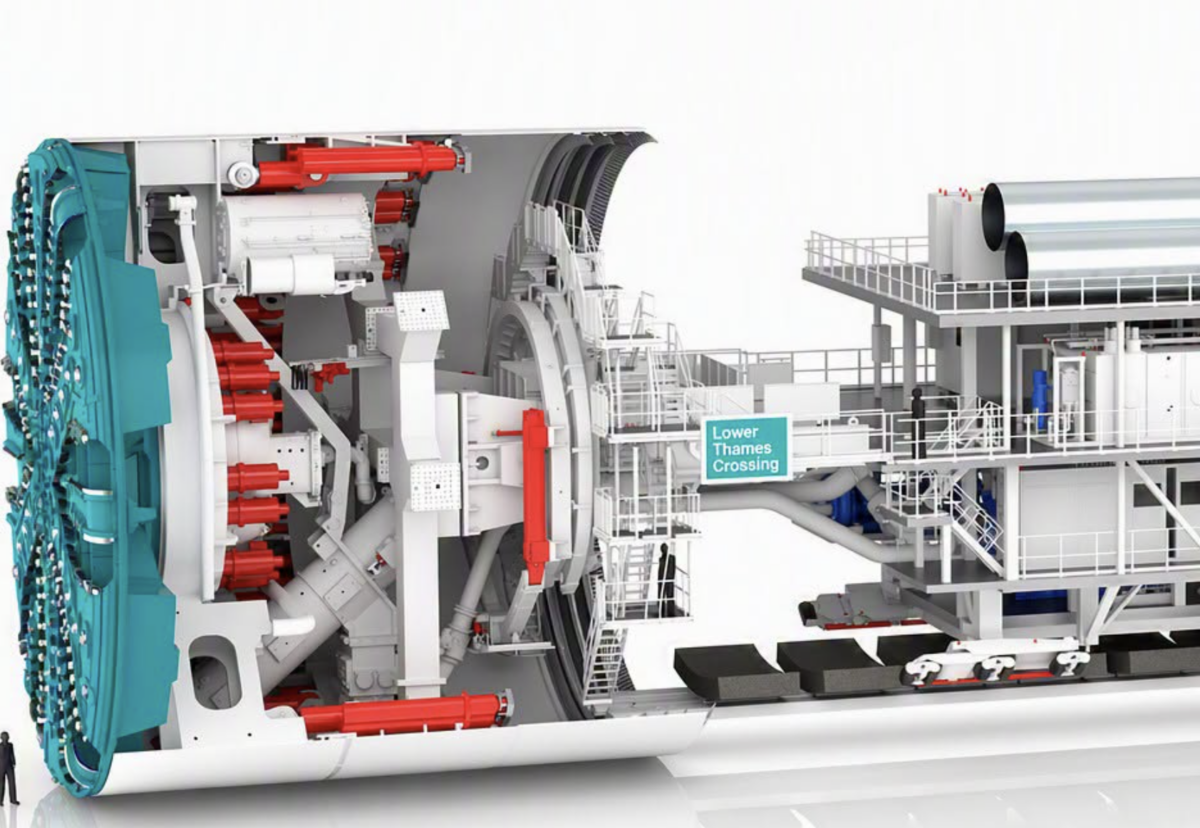
German manufacturer Herrenknecht will build the 16.4m diameter machine, which will be the third largest tunnel boring machine ever built worldwide. The machine will be bought and operated by the Bouygues Travaux Publics Murphy joint venture, which is delivering the twin-bore tunnel beneath the Thames.
At 120m long and weighing more than 5,000 tonnes, the machine will be shipped to the Port of Tilbury in sections before being assembled on site.

The variable density TBM will excavate both 2.6 mile tunnel bores, making a U-turn after completing the first drive to cut costs and reduce carbon emissions.
The twin three lane tunnels will become the UK’s longest road tunnel and more than double the length of the existing Dartford Crossing tunnels. They will be driven through chalk and clay up to 60m below the River Thames.
National Highways said construction remains on programme after main works began earlier this year, with the new crossing expected to open in the early to mid 2030s.

The electrically powered machine will use renewable energy and low carbon concrete tunnel linings as part of the project’s ambition to become the UK’s first carbon-neutral major infrastructure scheme during construction.
Herrenknecht has previously supplied tunnel boring machines for the Elizabeth line, HS2, Thames Tideway and the Silvertown Tunnel. The Lower Thames Crossing machine will also be the largest variable density TBM the German manufacturer has ever built, featuring the biggest accessible cutting wheel in its history.