

Neither mother nor daughter could agree on how to fix Pioneer Girl, a fledgling memoir that wouldn’t sell. The 63-year-old aspiring author Laura Ingalls Wilder wanted to focus on nostalgic memories viewed through rose-colored glasses, scribbling “not to be used” in the margins of passages she deemed not fit for print. Her daughter, Rose Lane—a 43-year-old journalist with writers’ block who’d already mined and sold everything saleable in her own life—pushed for drama and sensationalism. Though their creative liberties leaned in different directions, neither was a particular stickler for the truth. Nor could they afford to be. Nearly penniless in Missouri during the height of the Depression, both women’s financial futures hinged entirely on the book’s success.
A century-year-old spoiler: Their first collaboration, Little House in the Big Woods, was indeed published, eventually, by Harper & Brothers (these days, HarperCollins) for an undisclosed amount (read: not much). The publisher sided with Wilder, tailoring the book not to children but to “juveniles” decades before a proper YA genre existed. They edited the book accordingly: Though corporal punishment and some jaw-dropping racism remained, a story about a mother sow who ate her litter was cut, for example, and the unfortunate fate of the family cow Sukey at the butcher. The order of events was changed to streamline the book’s plot and elevate drama. When necessary, happy endings were fabricated—as in the chapter from the fourth book of the series, On the Banks of Plum Creek, about finding and restoring Laura’s lost rag doll.
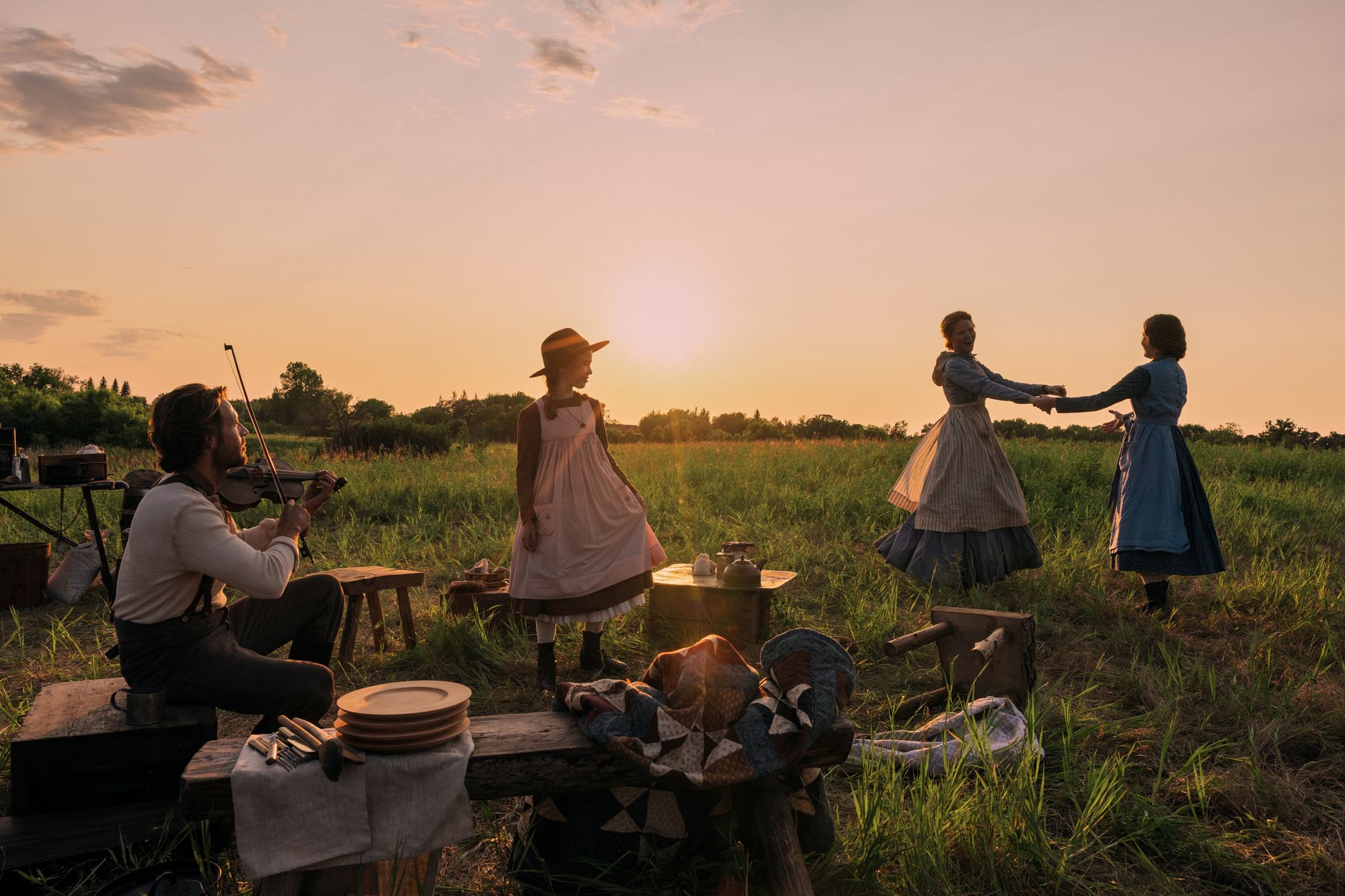
As third-person fiction based on a true story, the Little House series became a children’s classic about family and pioneer life that sold more than 60 million copies. Its sequels were mined for a beloved 1970s TV show, Little House on the Prairie, that still runs in syndication and will be rebooted on Netflix for a whole new generation in a series that premieres July 9. As historical fact, however, the Little House books make some massive, deliberate omissions that complicate and contradict Wilder’s saccharinely sweet stories. As Little House on the Prairie returns and young Laura Ingalls warms American hearts all over again, here are a few key plot points that the elderly Wilder wisely excluded about her intrepid life on the prairie.

Alice Halsey as Laura Ingalls in the new Little House on the Prairie.ERIC ZACHANOWICH/NETFLIX
Pa’s not-so-stellar business savvy
In the late 1920s, Wilder was nearing the age her father was when he died. She was also grieving the recent loss of her mother, whom she hadn’t seen in person for two decades. “Wilder had complicated feelings and motivations and wanted to memorialize her parents, especially her father,” says Caroline Fraser, author of the Pulitzer Prize–winning Prairie Fires: The American Dreams of Laura Ingalls Wilder.
Though the books are told through Laura’s eyes, patriarch Charles Ingalls (“Pa”) is arguably the series’s true protagonist. It’s his choices—as head of the household in the late 1800s—that everyone else respects and obeys. The incidents that an older Wilder would depict as exciting new adventures across the open frontier, including her family’s move from a log cabin in the Wisconsin woods to their titular homestead on the Kansas prairie to a hillside dugout built at Plum Creek, were actually endless upheavals catalyzed by her father’s ever-precarious finances and poor business decisions.

Laura Ingalls Wilder, circa 1895.
Everett Collection

Laura Ingalls Wilder, in the 1950s.
Bettmann/Getty Images
The family lived in Wisconsin, for example, when farming was good and wheat prices were peaking. But Pa wound up selling his farmland there for more than $1,000—three times what he’d paid for it less than five years previously. With the proceeds, he bought a plot of land in Missouri, likely sight unseen, which was relinquished for non-payment before the Ingalls even arrived in the state. At that time, the family was instead squatting in Kansas on land owned by Osage Indians, where Pa built a new house and splurged on luxuries like glass windows. Though staying put for just a few more weeks would have solidified his squatters’ rights—and allowed him to buy 40 acres of land there for just $50—Charles Ingalls instead packed up his family’s wagon and forced them to move again.
The Ingalls’ Minnesota dugout house was a desperate makeshift accommodation—not much larger than their wagon, where they often slept anyhow—which Pa had to stay in in an attempt to establish residency in the state. The patriarch then bought 172 acres, paying twice the usual price of land, while ignoring warnings about impending swarms of locusts. The insects promptly decimated both his crops and prospects. When they were between houses and fanciful financial endeavours, the Ingalls family would sleep on the floors of whatever friends and family would have them. Pa’s “wandering foot,” as his writer daughter kindly called it, had the bonus effect of making his whereabouts unknown during drafts for the ongoing Civil War.
But rather than depicting him as a freeloader, a draft-dodger, or a squanderer, Laura (both young and old) loved and idolized her father. In her books, he’s lionized, shown as “charming, cheerful, and musical,” writes Fraser. Even as he punishes his kids’ minor childhood misbehavior with the strap, notes Fraser, “he did it with a glint in his eye that told her it would be all right.” Years later, the television show’s Michael Landon—who served as its lead actor as well as its producer, director and head writer—portrayed Pa (and himself) as a wholesome and gallant man, solidifying the character as someone far more moral, upstanding and stable than the real Charles Ingalls.

Michael Landon as Pa Ingalls in the original TV series.
NBC/Getty Images
An awful year in Burr Oak, Iowa
When a new Republican government cracked down on handouts in 1876, an infuriated Pa quit farming for town life. But because it wouldn’t fit neatly into the pioneer narrative of a carefree Laura skipping through open fields, the Ingalls’s next chapter never appeared in her books. It was an ill-fated effort at running a bawdy hotel and tavern in what Wilder later called the “dark and dirty” town of Burr Oak in Iowa.
Tragedy struck during their 200-mile journey there, when Wilder’s little-known younger brother, 9-month-old Freddy, fell ill. Even in Pioneer Girl, her posthumous autobiography published in 2014, Wilder couldn’t bring herself to write more than a curt paragraph about the loss. “Little Brother was not well and the Dr. came,” she wrote. “I thought that would cure him…but [he] got worse instead of better and one awful day he straightened out his little body and was dead.” The only Ingalls brother was buried nearby, and the Ingalls family travelled on.
At age nine, Laura Ingalls Wilder began the first of her many service jobs—as “a dishwasher, cook, maid, babysitter, waitress, seamstress, companion and general dogsbody,” writes Fraser. This gig was at the Burr Oak House, a rough hotel with bullet holes in the walls and not infrequent fires that catered to settlers passing through.
Child labor may have been the least of Laura’s problems in Burr Oak. Drunken brawls, shady dealings and unsavoury characters were daily occurrences there. Particularly disturbing was one family who, in lieu of the money owed to them, offered to take Laura instead. Rather than sell their child, the Ingalls loaded their wagon in the middle of the night, skipped town, and moved back to Minnesota..
Once there, Laura was still expected to work for 50 cents a week (about $15 today) at the Masters family hotel, where Pa worked as a carpenter, a place rife with drunkenness, violence and extramarital affairs, One night, writes Fraser, 11-year-old Laura awoke to find her boss’s married, 20-something-year-old son “looming over her, smelling of whiskey and apparently intent on molesting her.” After that, Laura wasn’t allowed to sleep over at the hotel anymore. But the Ingalls still remained employed at the hotel until necessity—that is, another batch of insurmountable debts—led the family to load their wagon and relocate once more.
Though this dramatic chapter was inevitably formative and “among the most consequential in Wilder’s young life,” writes Fraser, both mother and daughter agreed the Burr Oak saga had no place in the Little House books. Instead, Wilder concludes On the Banks of Plum Creek and begins By the Shores of Silver Lake, when Laura causally notes that two years have passed—during which “Pa had only made two poor wheat crops.”

Melissa Sue Anderson as Mary Ingalls Kendall, Lindsay or Sydney Greenbush as Carrie Ingalls,Michael Landon as Charles Philip Ingalls, Karen Grassle as Caroline Quiner Holbrook Ingalls, Melissa Gilbert as Laura Ingalls Wilder.NBC/Getty Images
Little Serial Killers on the Prairie
Editorial decisions rarely went so smoothly for Wilder and her daughter turned editor (and reviewer, agent, consultant, etc.). A major source of contention was whether the books should include or exclude a notorious local true-crime story sure to attract publicity and attention: the 1871 saga of the “Bloody Benders,” a group of serial killers operating just 17 miles northeast of Independence, Kansas, where Netflix has set its heartwarming Little House reboot.
For 80 years—before Truman Capote’s 1959 book In Cold Blood usurped this claim to fame—Kansas’ most notorious murderers were a group of four immigrant adults (believed to beGerman or Norwegian) masquerading as a family while running a deadly bed and breakfast. In just a few years, at least a dozen travellers—and one unfortunate child, whom legend says was buried alive alongside their murdered parents—were robbed, killed and buried in shallow graves around the Bender’s property.
Their unassuming aliases were John (a.k.a. Pa), Kate (a.k.a. Ma), John Jr. and Kate Jr. The latter was about 24 years old during the murderous rampage and was said to be particularly fetching, which made her popular in the tabloid papers that Rose Lane read and wrote. “Rose was obsessed with the Bloody Benders,” says Fraser, “so she pushed hard to get them into the book.” Lane knew a saleable headline when she saw one, and tried to work the murderers’ scandalous names onto her mother’s shopped-around Pioneer Girl manuscript.
As always, Lane shamelessly embellished the truth, almost certainly inventing a scenario in which Pa had stopped at the inn and was almost invited in by the comely Kate. Because the Benders had abandoned their inn and fled before police apprehended them, never to be seen again, rumours swirled about their whereabouts and fate. In one version of Little House in the Big Woods, Lane imagined her grandfather as “part of a vigilante posse that caught and executed them,” says Fraser. She’s as relieved as anyone that Wilder wisely wound up omitting any mention of the murderers nearby in the book’s final draft. “It was as if Louisa May Alcott had decided to drop Jack the Ripper into the domestic circle of Little Women just to see what might happen,” she writes.
Mention of the Benders—or any other misadventures that Wilder ultimately scrapped from her books—would inevitably have changed the Little House world as we know it. But would full and complete honesty have ultimately made for a better series of books? “I don’t know and we’ll never know,” says Fraser. “It would be a very different book, but not necessarily a richer one.”
While speaking to a crowd on her legacy at a 1937 book fair—on the last national stage she’d ever take to—Wilder reflected on the nature of truth and selective memory. Fraser writes that Wilder appeared pensive: “All I have told is true, but it is not the whole truth,” she admitted to her audience of fans. Immediately after that, she repeated her daughter’s made-up story about the Bloody Benders, and embellished it some more for good measure. Right there in the doorway, Laura Ingalls Wilder said, she’d seen Kate Bender with her own eyes.
-
What Ever Happened to Marvel’s Wunderkind X-Men Showrunner?
-
Blackpink’s Lisa Pulls Back the Curtain on the Life of a K-Pop Showgirl
-
How Garth Fisher Became the Go-To Plastic Surgeon for the West Coast Elite
