

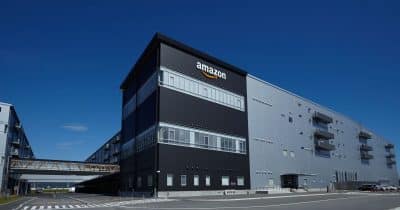
Amazon Web Services just put a number on what environmentalists have been warning about for years. The company’s global data centers withdrew approximately 2.5 billion gallons of water in 2025, a figure that makes the resource demands of the AI revolution impossible to ignore.
To put that in perspective, 2.5 billion gallons is roughly enough to fill about 3,800 Olympic swimming pools. Every year. Just to keep servers cool.
The numbers tell two stories at once
AWS reported a 2% year-over-year decline in water withdrawals compared to 2024. That’s notable because the company has been aggressively expanding its data center footprint to meet surging AI demand.
The company’s water usage effectiveness, or WUE, came in at 0.12 liters per kilowatt-hour. For every unit of energy its data centers consume, Amazon uses a fraction of the water that its peers do. The industry average sits at 0.84 liters per kilowatt-hour, which means AWS is operating at roughly seven times better efficiency than the typical data center.
Amazon achieved these gains through a few key strategies. Free-air cooling, which essentially uses outside air instead of water-intensive chillers, played a major role. The company also raised the temperature tolerances for its server operations, meaning equipment runs hotter before cooling kicks in. And in some locations, AWS turned to treated wastewater rather than pulling from freshwater sources.
Why this disclosure matters now
This marks the first time Amazon has publicly reported aggregate annual water withdrawal figures for its data centers. The timing is not accidental.
Tech companies have faced mounting pressure from regulators, communities, and investors to quantify their environmental impact. Data centers have become particularly contentious in regions already grappling with water scarcity, with local opposition stalling or complicating projects in multiple states and countries.
Amazon has said it is 75% of the way toward its goal of becoming “water positive” by 2030, meaning the company aims to return more water to communities and the environment than its operations consume.
The broader AI industry faces the same reckoning. Microsoft, Google, and Meta have all seen their water consumption climb as they scale AI infrastructure. Microsoft disclosed significant increases in its own water usage in prior years, tied directly to AI development.
What this means for investors
For those watching the intersection of tech and sustainability, Amazon’s disclosure sets a benchmark. A WUE of 0.12 L/kWh is genuinely impressive relative to industry norms, and it gives AWS a credible talking point as ESG-focused investors scrutinize Big Tech’s environmental commitments.
The operational implications extend beyond reputation. Water costs money. Water rights involve regulatory complexity. In drought-prone regions, access to water can determine whether a new data center gets built at all. Companies that demonstrate superior water efficiency may find it easier to secure permits and community approval for expansion.
Watch the 2030 water-positive deadline closely. Amazon is currently 75% of the way there, and that figure will determine whether these commitments translate into measurable outcomes.
Disclosure: This article was edited by Editorial Team. For more information on how we create and review content, see our Editorial Policy.
