

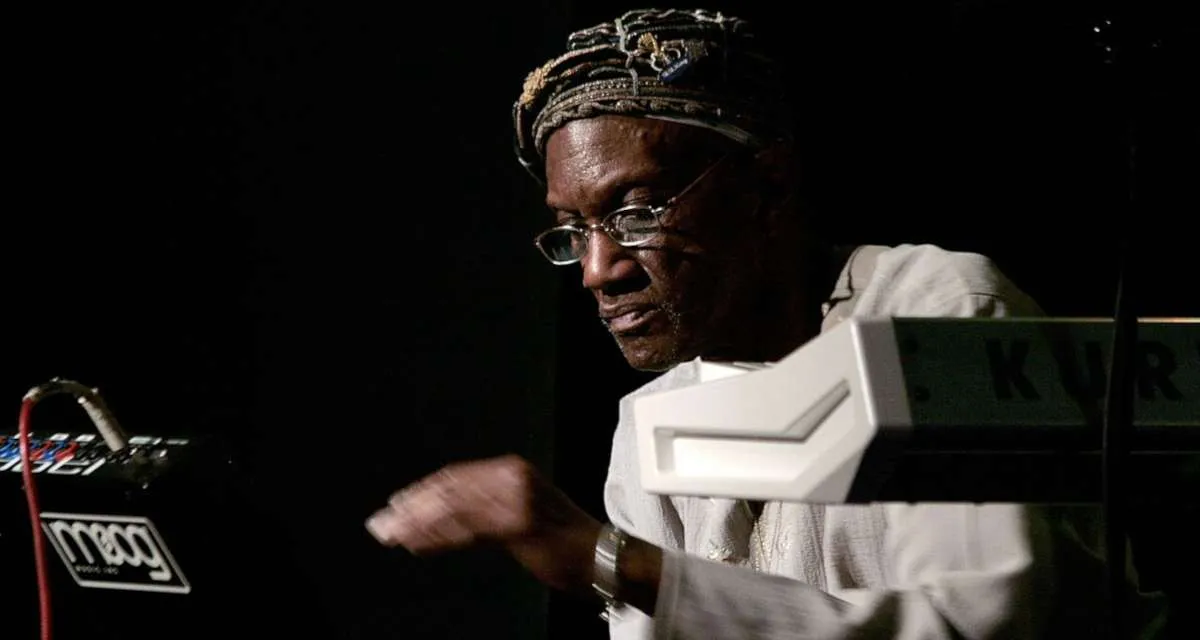

A live performance from Bernie Worrell. Photo Credit: Manfred Werner
Moments after George Clinton sued Universal Music over allegedly unpaid royalties, a federal appeals court has revived the years-running copyright (and contract) lawsuit filed against him by the estate of fellow Parliament-Funkadelic founding member Bernie Worrell.
The U.S. Court of Appeals for the Sixth Circuit yesterday reversed a lower court’s dismissal, thereby laying the groundwork for Worrell v. Clinton round two. Like Clinton’s newer complaint against UMG, the Worrell estate’s suit involves a “purported” 1976 contract between Worrell and Clinton as well as the latter’s Thang Inc. company.
Long story short, under that alleged contract, which was preceded by informal compensation arrangements, Worrell is said to have signed away his interests in the famed funk groups’ masters in exchange for royalties.
But those payments failed to materialize, according to the estate, which submitted a state-level complaint (following different actions filed by Worrell himself) against Thang for breach of contract in 2019. Ultimately, the court determined that the agreement was invalid because neither Clinton nor a representative for Thang had signed it.
Running with the conclusion, the Worrell estate, repped here by entertainment attorney Richard S. Busch, fired off a federal action claiming ownership of the relevant copyrights because the 1976 contract wasn’t, in fact, valid. (Clinton sued UMG for allegedly violating one of their agreements by withholding royalties due to the ongoing Worrell estate dispute.)
The district court then ruled in favor of Clinton on statute-of-limitations grounds – setting the stage for the appeal and now the revived suit. Unsurprisingly, there are more than a few moving parts in the appellate court’s opinion, which acknowledges “the complex and convoluted nature of the issues” at hand.
In brief, however, the three-year statute of limitations for copyright-ownership actions only started accruing in 2020, when Clinton in the state case “repudiated Worrell’s copyright coownership” by denying the 1976 contract’s validity, per the opinion.
“Even though Worrell may have co-ownership rights in the sound recordings that he worked on a half-century ago, Clinton and Thang arguably did not plainly and expressly repudiate his rights to recordings covered by the 1976 Agreement until 2020, when they denied its validity in a sworn affidavit,” wrote Circuit Judge Karen Moore.
“The 1976 Agreement (even if never validly executed), coupled with Clinton’s and Thang’s behavior, gave Worrell good reason to believe that he had exchanged his co-ownership for royalties,” the court continued.
On the “behavior” front, “Clinton repeatedly acted in a manner that was consistent only with the 1976 Agreement being in effect” – like settling a 1981 lawsuit over unpaid royalties, turning Thang’s books over to Worrell upon request, and more.
With that, the copyright-ownership case has been remanded to the district court for further proceedings.
Two closing notes: First, though the Worrell estate was seeking ownership of all the recordings that the professional contributed to across a decade and change with Parliament and Funkadelic, the appellate court limited the case’s scope to works created during the 1976 contract period. That purported pact spanned three years from January 1st, 1976.
Second, Team Clinton raised separate arguments about Worrell’s joint authorship claims from the perspective of his allegedly signing the 1976 agreement.
“If anything, the fact that Worrell thought he had signed away ownership indicates that he did intend to be a co-author with the capacity to exchange his co-ownership rights for valuable royalties,” Judge Moore summed up.
“If he did not harbor such intent there would have been nothing, apart from his studio time, for him to sign away. Because the evidence creates a genuine dispute of material fact as to both elements of copyright coownership, summary judgment is inappropriate,” the court concluded.
