Active Citizens, Biodiversity, Civil Society, Conferences, Conservation, Development & Aid, Economy & Trade, Editors’ Choice, Environment, Featured, Headlines, Indigenous Rights, Latin America & the Caribbean, Natural Resources, Ocean Health, Sustainable Development Goals, TerraViva United Nations
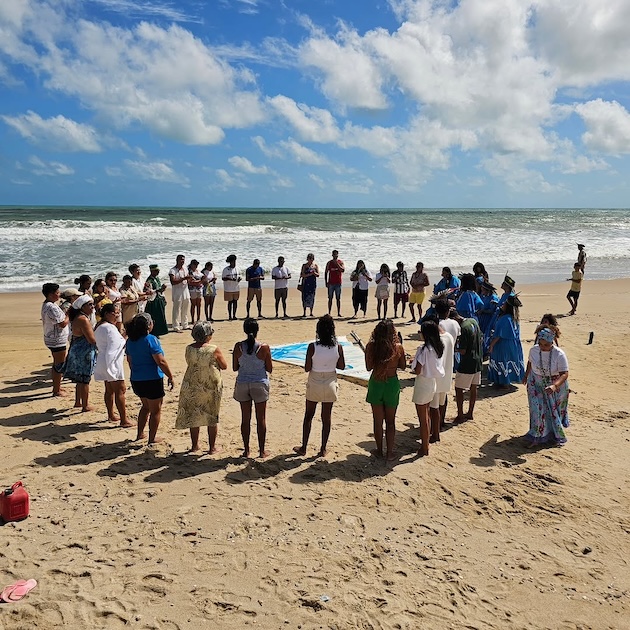
The community works to preserve its identity amid pressure from real estate development and non-Indigenous settlers. Credit: Samuel Tremembé
BELÉM, Brazil, May 21 2026 (IPS) – On Brazil’s northeastern coast, the Indigenous community, Tremembé da Barra do Mundaú, lives on a preserved stretch of land shaped by mangroves, dunes, and deserted beaches. The group of around 160 families is led by women and depends on the 3,500-hectare territory for fishing and subsistence farming.
In 2023, the Tremembé won federal recognition of their ancestral land in the state of Ceará – giving them formal control over the territory.
But their home remains under threat. As tourism has expanded, they have faced growing pressure from real estate developments and around 100 non-Indigenous settlers. A push for renewable energy has also brought nearby wind projects that the community says damage the environment and disrupt their way of life.
“We have many problems here, including trash in our rivers, cars scaring away animals, and people damaging the dunes,” said Cleidiane Tremembé, a local Indigenous teacher. “With the installation of wind farms, many fish species have also disappeared from our river, and we’re catching fewer fish.”
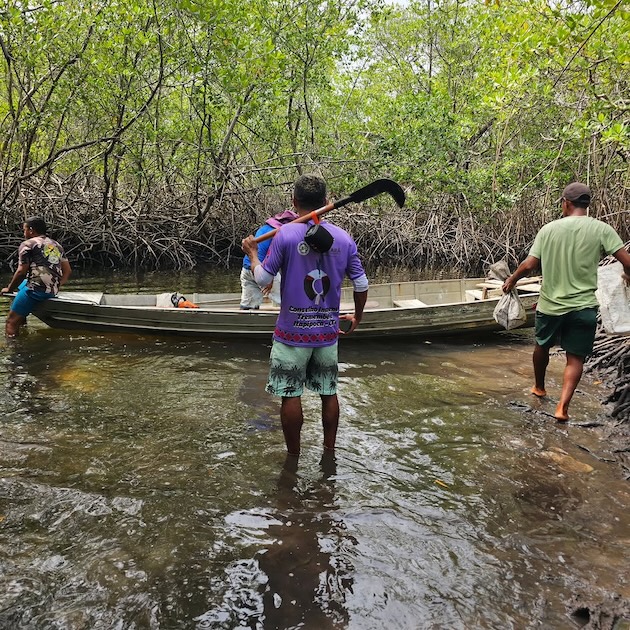
The Tremembé da Barra do Mundaú Indigenous Land protects 27 km of mangrove forest and 8 km of coastline. Credit: Samuel Tremembé
This May, the group will begin investing roughly US$300,000 in efforts to protect their territory. The funds come from the Ywy Ipuranguete (‘beautiful land’) project – an ambitious initiative that aims to distribute a total of US$9 million to 15 Indigenous Lands across Brazil by 2030.
The project is coordinated by Brazil’s Ministry of Indigenous Peoples (MPI), implemented by the Brazilian Biodiversity Fund (FUNBIO), and financed through the Global Biodiversity Framework Fund (GBFF). The GBFF, whose donors include the governments of Canada, Norway and the United Kingdom, is managed by the Global Environment Facility (GEF) – the world’s largest multilateral environmental fund.
According to the GEF, the goal is to support the protection of Indigenous territories as a strategy to conserve biodiversity and strengthen climate resilience.
“A growing body of evidence shows that territories managed by Indigenous Peoples — particularly where land tenure is formally recognised — consistently rank among the most effective settings for maintaining biodiversity, retaining carbon stocks, and preserving ecological integrity, often outperforming both unprotected lands and formally designated conservation areas,” said Adriana Moreira, Lead of the Partnerships Division at the GEF.
If fully implemented, the project would help protect 6.4 million hectares and reach around 61,000 Indigenous people.
Following the project’s launch in March 2025, the Tremembé will be among the first communities to put the funds into action.
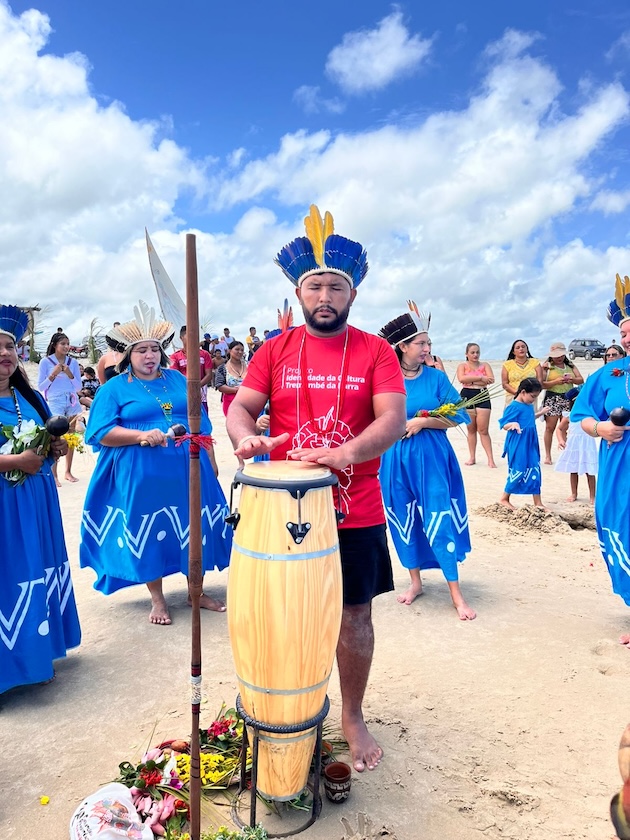
Tremembé community member Mateus Castro says their goal is to preserve their land and culture for future generations. Credit: Julia Holanda
Mateus Castro, a community member coordinating the work locally, said the money will be used primarily to acquire drones, radio transmitters, vehicles and a boat to help secure the territory’s boundaries.
“We want to monitor and record the presence of outsiders,” he said in an interview. “This project will allow us to have the tools that give our territory security and autonomy.”
The same equipment would help the community inventory local ecosystems and animal species. Their coastal stretch is home to a wide range of species – from fish and crabs to endangered sea turtles.
“We want to record the species along our coastline so we can use that information as a defence against the licensing of new offshore wind farms,” he said.
With the funding, they also plan to reforest degraded areas, train local environmental brigades, and fund traditional festivals. The first will be the Farinhada Festival that takes place in July. During the festivities, families celebrate cassava as a sacred food and prepare traditional dishes for younger generations.
“In Indigenous culture, everything is connected,” Castro said. “Our goal is to preserve our land, culture, and identity for the children who are yet to be born. We are thinking 100, 200 years from now.”
Future Plans
The Indigenous communities selected to participate in the Ywy Ipuranguete project were chosen by FUNAI, Brazil’s federal Indigenous affairs agency, with input from Indigenous organisations.
The priority was given to groups outside the Amazon, including the Tremembé in Ceará, as part of an effort to decentralise environmental funding. Nearly half of Brazil’s 1.69 million Indigenous people live outside the Legal Amazon, according to the legal census.
“If we look at environmental projects in general, funding, implementation, and resources are usually focused on the Amazon,” said Francisco Itamar Gonçalves Melgueiro, FUNAI’s general coordinator for environmental policies. “That is why we distributed the project across five biomes in Brazil – the Amazon, Pantanal, Cerrado, Caatinga and Atlantic Forest.”
FUNAI also selected communities that had recently removed invaders from their lands, including the Kayapó and Munduruku, who have been in conflict with illegal miners in the Amazon for decades. “After that removal, we see an opportunity for Indigenous peoples to fully retake possession of their territories,” Melgueiro said.
Communities did not need their territories to be fully recognised by the federal government to qualify for the funding. However, they had to submit detailed plans, known as PGTAs, which are part of a broader set of Indigenous territorial and environmental management documents.
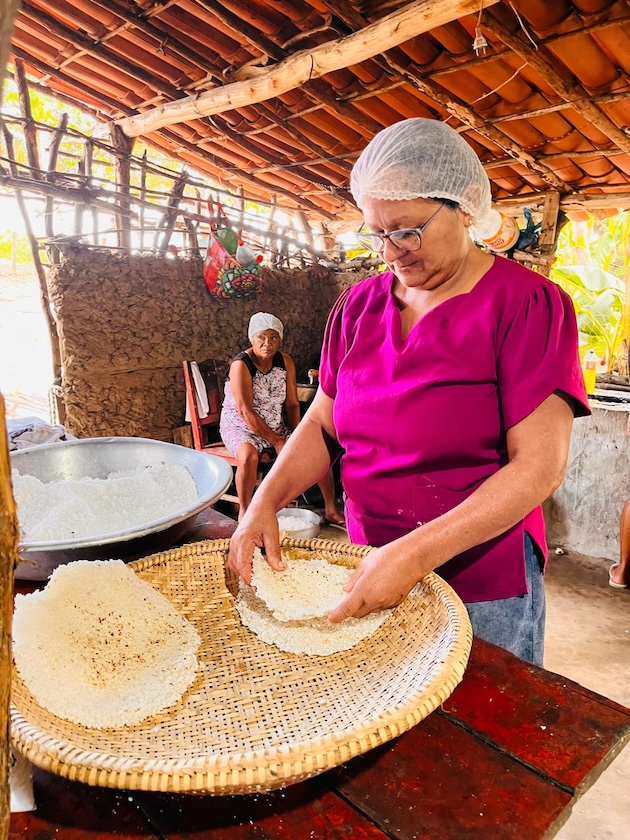
During the Farinhada Festival, families celebrate cassava and prepare traditional dishes such as tapioca crepes. Credit: Julia Holanda
“These plans serve as blueprints for their future and cover a wide range of themes and actions,” Melgueiro said. “They are an instrument of the peoples, built by the peoples.”
But many are still working on their PGTAs. More than a decade after Brazil created the framework for these plans, a 2023 civil-society report found that Indigenous communities have received little support for their development, especially during the administration of Brazilian right-wing President Jair Bolsonaro. To date, FUNAI has mapped just 148 PGTAs in a country with more than 800 Indigenous Lands.
The first year of the Ywy Ipuranguete project has been largely dedicated to helping participating communities finalise and detail their PGTAs. The Brazilian Biodiversity Fund (FUNBIO), GEF’s implementing agency, told IPS that this “is a massive and meticulous undertaking”, as they work with Indigenous communities to “determine which PGTA activities are to be undertaken, the best methods for executing them, and the specific implementation arrangements for each Indigenous Land”.
According to Brazil’s Ministry of Indigenous Peoples (MPI), only about 8% of the total budget has been spent so far, mostly on planning, coordination and initial activities. Eventually, MPI said, 75% of the budget will go directly to the communities, with much of the funding transferred to Indigenous organisations. “Investing in Indigenous peoples to maintain their own ways of existing is investing in the survival of humanity itself,” the ministry said in a statement.
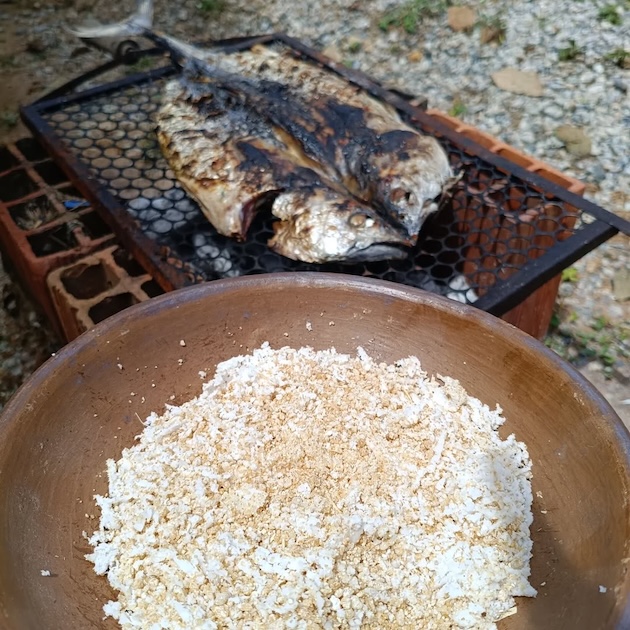
Community members say fish species have disappeared from their river following the installation of nearby wind farms. Credit: Samuel Tremembé
In an email, Brazil’s Ministry of Indigenous Peoples (MPI) said only about 8% of the total budget has been spent so far, mostly on planning, coordination and initial activities. Eventually, MPI said, 75% of the budget will go directly to the communities, with much of the funding transferred to Indigenous organisations.
“Investing in Indigenous peoples to maintain their own ways of existing is investing in the survival of humanity itself,” the ministry said in a statement.
In Tremembé da Barra do Mundaú, where plans are underway, the community feels ready. The funding will build on years of work, from training young environmental agents to documenting food traditions.
“This is one of the largest resources the territory has ever received,” Castro said. “For us, it’s a huge opportunity to consolidate and strengthen our mission of caring for the land.”
Note: The Eighth Global Environment Facility Assembly will be held from May 30 to June 6, 2026, in Samarkand, Uzbekistan.
This feature is published with the support of the GEF. IPS is solely responsible for the editorial content, and it does not necessarily reflect the views of the GEF.
IPS UN Bureau Report