Solvéo Energies has expanded its Bélesta-en-Lauragais solar plant to 3 MW with a new 300 kW unit, using a decentralized low-voltage “mini solar field” design.
The model enables faster permitting and grid connection while minimizing land use, despite slightly higher upfront costs.
From pv magazine France
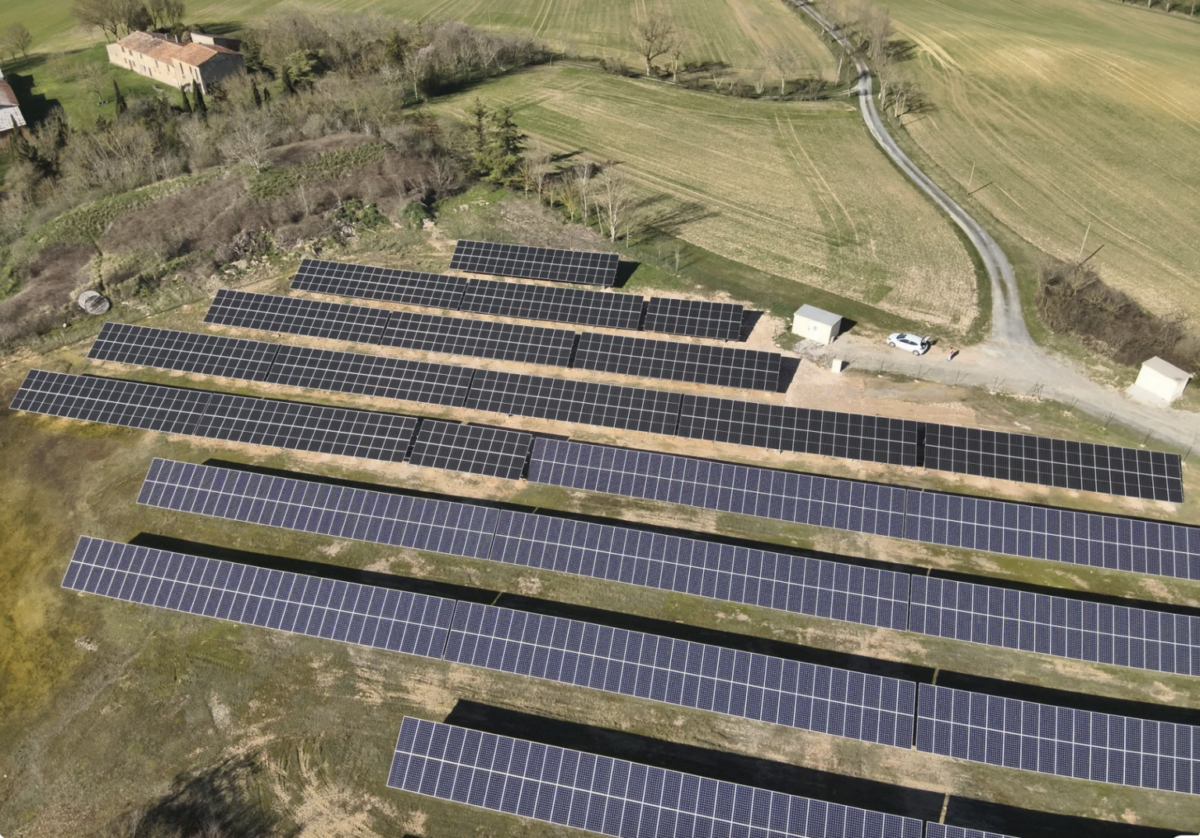
French independent power producer Solvéo Energies has announced the expansion of its Bélesta-en-Lauragais solar power plant in France’s Aude region.
Backed by French asset manager Mirova, Solvéo Energies commissioned a new 300 kW unit in February, bringing the plant’s total capacity to 3 MW. The facility has been in operation since 2018 and was previously expanded in April 2022 with the addition of a 250 kW low-voltage unit.
Unlike a conventional expansion, the latest development is based on a decentralized architecture developed by Solvéo. The company’s so-called “mini solar field” is not connected via high voltage (HV-A) through the original plant’s substation. Instead, it connects at low voltage (LV) directly to the local grid operator via a dedicated, separate link.
This “island” architecture enables capacity additions without modifying the existing solar farm’s electrical configuration. As a result, electricity metering and sales are managed separately.
Although Capex per installed megawatt is slightly higher than for conventional ground-mounted projects, Solvéo says the model offsets this through greater reversibility and reduced use of natural, agricultural, and forest land. It also enables shorter development timelines. “Between securing the land and commissioning, we generally need between 18 and 24 months,” a company spokesperson told pv magazine France.
Solvéo’s business model focuses on developing land considered unsuitable by traditional developers, with project sizes ranging from 5,000 m2 (around 300 kW) to 2 hectares (1 MW). A key advantage is reduced permitting time, directly linked to the smaller scale of the installations.
This regulatory flexibility stems from the limited size of the projects. Installations under 300 kW in France are exempt from environmental impact assessments, while those between 300 kW and 1 MW bypass lengthy public inquiries and instead undergo a simplified review by the Regional Directorate for the Environment, Planning and Housing (DREAL). In addition, their limited capacity allows for a simple prior declaration of works, typically processed within one month, compared to the longer timelines required for building permits for larger projects.
Grid connection follows a similar principle of simplicity. By using low voltage, Solvéo can obtain a technical proposal within three months, avoiding the costly and time-intensive stability studies and grid reinforcement work associated with high-voltage connections.
This content is protected by copyright and may not be reused. If you want to cooperate with us and would like to reuse some of our content, please contact: editors@pv-magazine.com.
Popular content