



When James Taylor was inducted into the Rock and Roll Hall of Fame at the turn of the century with three Grammys to his name, the legendary folk rock singer-songwriter had the Beatles to thank for kickstarting his career.
After all, he got his first real taste of success when the Fab Four signed him to their label, Apple Records. Following a year or so of trying to make it in New York with his band, the Flying Machine, the group “starved to death”, and Taylor looked to new shores for new opportunities.
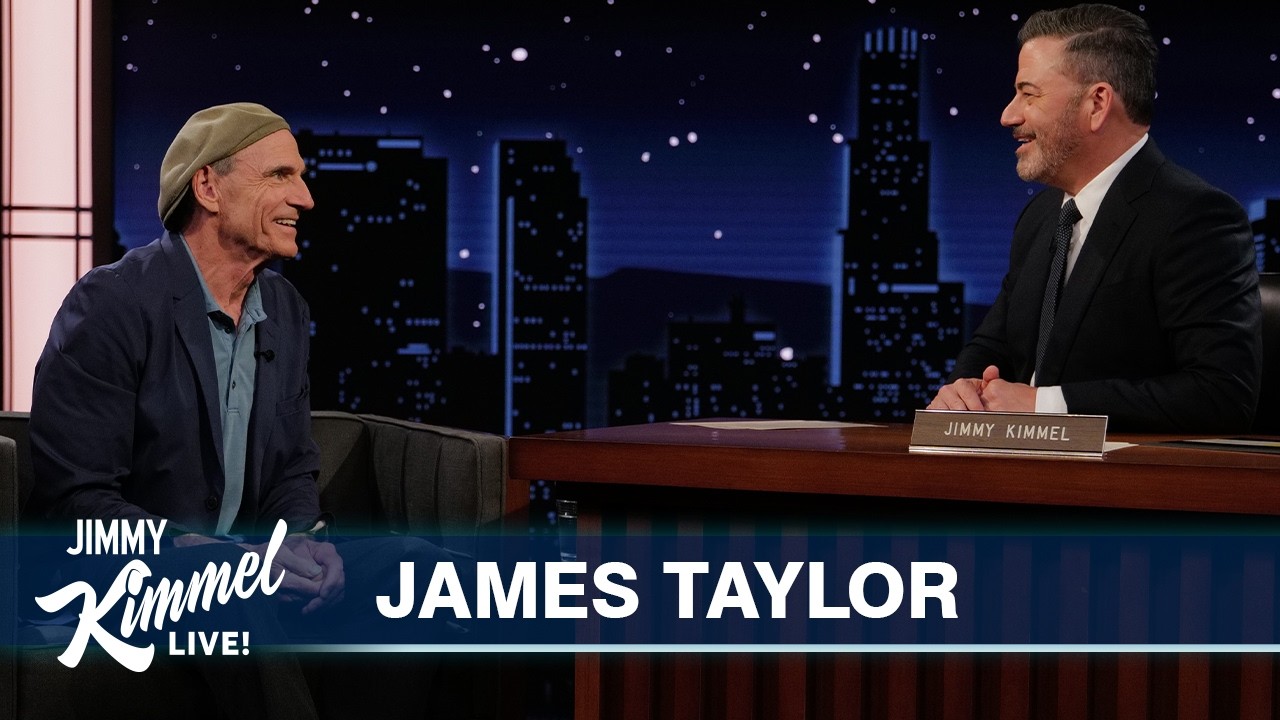
“After the band dissolved in New York City, I went home to North Carolina to sort of recover and lick my wounds for a while,” Taylor tells Jimmy Kimmel in a new interview.
Article continues below
“Then, not knowing what else to do, I talked my folks into buying me a plane ticket to go visit a friend who lived in London. I took my guitar and some songs, and I ran into some people who were enthusiastic about my music. They convinced me to make a little demo.
“My friends and I started sort of shopping these around, and eventually, I got in touch with Peter Asher,” he continues. “I went over to his house, played through some songs I had, and as luck would have it, he had just taken on a job as the head of A&R. He was looking for new talent to sign to Apple Records.”
Speaking to Guitar World about what happened after his meeting with Asher, he once detailed: “Peter and his wife really heard something in my music. And he took me to Apple, where I played for George and Paul.
For a musician whose previous creative project had “starved to death” just years earlier, it was a remarkable turnaround, and one that set him on the path to becoming one of his generation’s greatest songwriters.
James Taylor on Performing at 15, The Beatles Launching His Career & Elvis Covering One of His Songs – YouTube
Something in the Way She Moves, which would get a public release in 1968, was included on that demo tape, and by the time Fire and Rain – which peaked at number 3 on the Billboard Hot 100 and earned him his first Grammy – dropped in 1970, his career was more than up and running.
In related news, GW’s Neville Marten has penned a heartfelt piece explaining what he learned from interviewing the acoustic icon.
” data-join-the-conversation-text=”Join the Conversation”>
You must confirm your public display name before commenting
Please logout and then login again, you will then be prompted to enter your display name.
