

- The Global Landscapes Forum recently announced the addition of 12 new “chapter” members to its GLFx network.
- The GLFx network connects independent, community-oriented groups worldwide to strengthen their work protecting and restoring healthy forests and other landscapes.
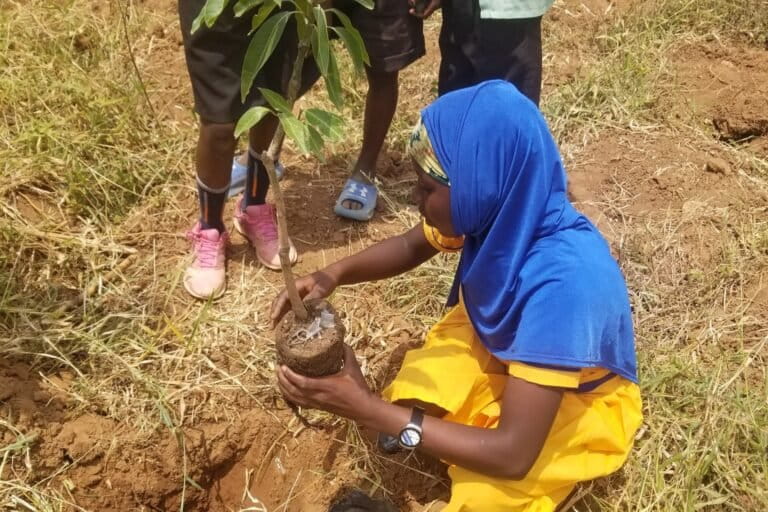
- Five of the new members are in Africa, including the School Food Forest Initiative in Uganda, which works with children to plant trees and grow food on school grounds.
Amid rapid deforestation in Uganda’s Kalangala district, the School Food Forest Initiative launched a tree-planting project in school premises in 2019, aiming to instill knowledge and value for conservation in local communities by involving students planting and managing trees. The initiative has just become part of the Global Landscapes Forum. Its coordinator, Ngobi Joel, said becoming a GLFx chapter will help strengthen the group’s work against deforestation in Uganda.
The School Food Forest Initiative has established nurseries where schoolchildren and others in the community grow seedlings for a range of indigenous tree species, other fruit trees and medicinal plants. The NGO has also set up agroforestry and vegetable plots on school grounds that serve both to provide food for students and as demonstration sites for how to make use of the land in ways that conserve the environment, Joel told Mongabay by email from Kalangala town.
The project has so far established eight school forests, Joel said. Becoming a chapter of the GLF will enhance this work, he said. “Getting advice on agroforestry design, keeping an eye on biodiversity, and checking climate impact will ensure our projects are sustainable and help school communities as much as possible.”
The School Food Forest Initiative is one of 12 new GLFx chapters announced in February, expanding a movement that mobilizes and connects grassroots efforts on restoration of degraded landscapes around the world.
Fairness and sustainability: Acting to restore African landscapes

GLFx is a collection of independent, community-oriented initiatives working to transform their landscapes and advocating for stronger policy. The network, a project of the Global Landscapes Forum, is aimed at strengthening local actors by connecting them with knowledge, tools and connections that can enable them to achieve sustainable results.
Read more about the work other members of GLFx are doing in Cameroon, Madagascar, and Sierra Leone.
The five new African chapters are from Ethiopia, Kenya, Madagascar, Tanzania and Uganda.
Ana Yi Soto, GLFx coordinator at CIFOR-ICRAF, said the addition of 12 new members expands their opportunities to exchange knowledge in person or online and gain visibility at global conferences the forum organizes.
“At the heart of this expansion is our strong belief that when landscape communities connect with one another, their restoration impact becomes stronger, and so does their collective voice about how restoration should be shaped and implemented,” she told Mongabay in an email.
Yi Soto said the chapters’ work is not just about ecosystems or land management. “It is also about regenerating livelihoods, strengthening community practices, rebuilding the relationship people have with their landscapes, and claiming legitimacy of their solutions while addressing the historical and ongoing pressures that affect their territories,” she said.
Banner image: Students are planting indigenous and other fruit tree species on school grounds. Image courtesy of Namulindwa Brendah.
In Madagascar, Taniala Regenerative Camp aims to heal deforestation scars
Feedback: Use this form to send a message to the author of this post. If you want to post a public comment, you can do that at the bottom of the page.
Credits

