

IF I HAD a time machine, there’s a lot I’d tell my younger self. For starters, ska band-inspired sideburns are not an acceptable fashion choice. I’d then obviously go full Biff in Back to the Future II and disclose the results of every major sporting event to gamble my way into an early retirement. But I’d also need to let this soon-to-be-billionaire know that while spending the bulk of my days lying out on a private beach, I’d need to be wearing sunscreen every day, all year long, including a separate, dedicated SPF moisturizer for my face.
Before my early 20s, I either used whatever drugstore sunscreen I slapped all over my body on my face, or worse, not at all. As dermatologist Dr. Marisa Garshick, MD, explains, this is a recipe for disaster. Prolonged exposure to UV rays can lead to an increased risk of cancer, sun damage, and premature skin aging, she says. When you use a body SPF on your face, you’re also risking additional issues and irritation. But that’s not the only advice I’d pass along to my former self. SPF is not reserved for the spring and summer months—it is a 12-month necessity. Here’s why.
You Need to Wear SPF Year-Round
I understand the impulse, but just because the weather is cold does not mean UV rays are no longer harmful. Be it 100 degrees or 10 degrees, if it’s daytime, sunscreen should be on. And I don’t just mean when it’s especially sunny either. According to Dr. Ariel Ostad, MD, UV rays are constantly present and easily pass through clouds, making them a major driver of aging, pigmentation issues like melasma, and collagen breakdown. Clouds actually offer little protection, and UV exposure isn’t tied to temperature—people often get severe sunburns in cold conditions, like skiing, where snow reflects UV and doubles exposure, he says.
This daily UV exposure adds up over time, increasing the risk of skin cancer and accelerating premature aging. As much as 80 to 90 percent of facial aging is driven by chronic sun exposure, according to dermatologist Dr. Matthew Knight, MD. In fact, one person dies of skin cancer every hour in America, with most cases directly linked to chronic UV exposure, he says.
You Also Need to Use a Dedicated Face SPF
You know how you use a cleanser for your face (I hope) instead of a body wash? The same strategy is necessary when it comes to sunscreen because facial skin is thinner and more sensitive. The key difference between body and facial sunscreen formulas comes down to how they’re designed to be used. Body sunscreens prioritize covering large areas quickly and cost-effectively, so manufacturers make them thicker and heavier, says Dr. Ostad.
On the other hand, facial sunscreens are formulated specifically for delicate facial skin, making them lighter, more cosmetically elegant, and often enhanced with skincare ingredients, like antioxidants or barrier-supporting compounds, he says. Dr. Garshick adds that facial sunscreens are often also non-comedogenic (to avoid causing breakouts) and more delicate around the eyes. If you use a standard body SPF for your face, there is a good chance of irritation or acne.
Common added ingredients include niacinamide for oil control and redness, antioxidants such as vitamins C and E for environmental protection, and hydrating agents like hyaluronic acid or glycerin for lightweight moisture, says Dr. Knight. Some formulas also include a tint to help even skin tone and reduce the appearance of redness. In short, these can help support your existing skincare routine.
Best Face SPF
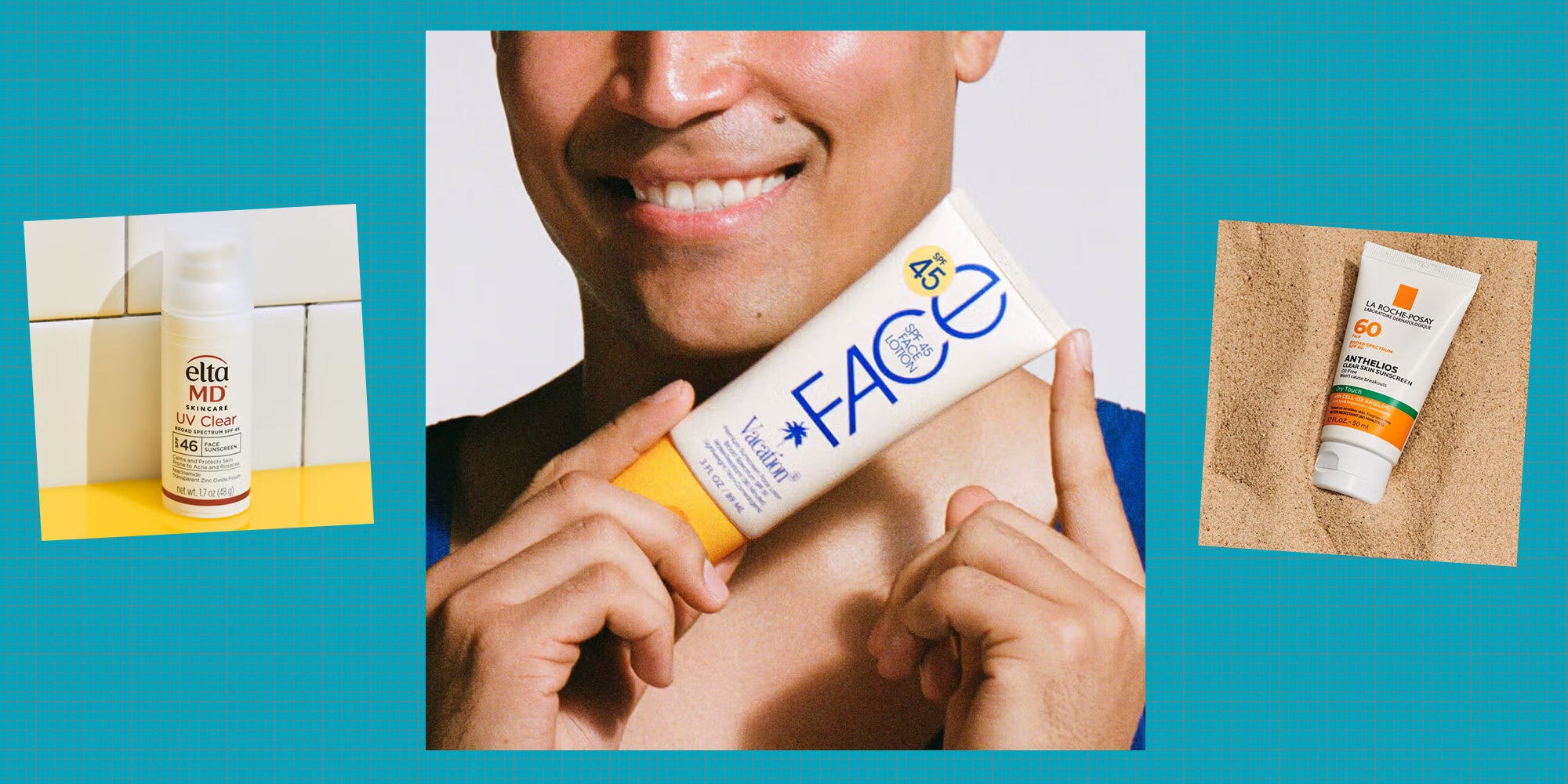
Whenever I chat with dermatologists about sunscreens, two brands are always mentioned at the top: La Roche-Posay and EltaMD. It’s no surprise, as both are mainstays in our SPF coverage. I’ve long maintained that La Roche-Posay Anthelios Clear Skin Dry Touch Sunscreen is the best overall sunscreen for men, thanks to its fast-absorbing, long-lasting, and lightweight formula that’s effective on all skin types (including sensitive). Beyond the SPF 60, it also features a slew of skin-boosting ingredients like barrier-strengthening ceramides, calming niacinamide, and moisturizing glycerin.
Dr. Garshick also backs La Roche-Posay’s Anthelios line of sun protection, specifically shouting out its latest addition: Anthelios UV Air Serum Sunscreen. This innovative SPF 50 is just as gentle as the Clear Skin Dry Touch in an even more lightweight formula that absorbs in seconds, and adds hyaluronic acid for hydration.
Both formulas feature Cell-Ox Shield technology, which incorporates antioxidants to protect the skin from free radical damage, she says. This damage occurs when unstable molecules generated by UV exposure break down collagen and skin cells, leading to wrinkles, discoloration, and accelerated aging.
Dr. Knight is a big fan of zinc-based sunscreens, with EltaMD being his personal go-to. Dr. Ostad also backs the brand, noting that its UV Clear SPF 46 is well-formulated with niacinamide and suitable for different skin types, especially acne-prone skin. For those who struggle with facial redness, EltaMD recently launched a green-tinted version of its famed SPF moisturizer, which won a 2026 Men’s Health Grooming Award for its ability to neutralize redness, protect skin, and blend in fast without grease or white cast.
Dr. Garshick also recommends Neutrogena Ultra Sheer Invisible Gel Face SPF, which is a great budget option under $20. It suits anyone looking for a lightweight, fast-absorbing sunscreen that leaves a shine-free, matte finish and fits easily into a simple daily routine. Its clear, fragrance-free, non-comedogenic formula makes it especially well-suited for oily or acne-prone skin types, she says.
Two other sunscreens that I’m digging right now are Spooge Ghosted SPF 30 and Vacation Classic Face Lotion SPF 45. The latter is a new version of the OG Vacation Classic Lotion, redesigned for facial use. It’s packed with coconut oil, aloe vera, banana extract, and vitamin E to help soothe skin while it protects. Spooge Ghosted is a unicorn mineral sunscreen that doesn’t leave a cast and is as invisible as any chemical option. Plus, it’s water-resistant for 80 minutes, and there is added bisabolol to calm skin.
Look, planning for the future can be exhausting, whether it’s financial or physical. But unlike a 401(k) or Roth IRA, setting your skin up for retirement is easy. Simply by wearing SPF on your face every day, you’ll be better prepared to face your golden years with healthier, younger-looking skin.
Best Overall Sunscreen
La Roche-Posay Anthelios Clear Skin Dry Touch Sunscreen SPF 60
Best SPF Serum
Best Sunscreen for Acne-Prone Skin
