

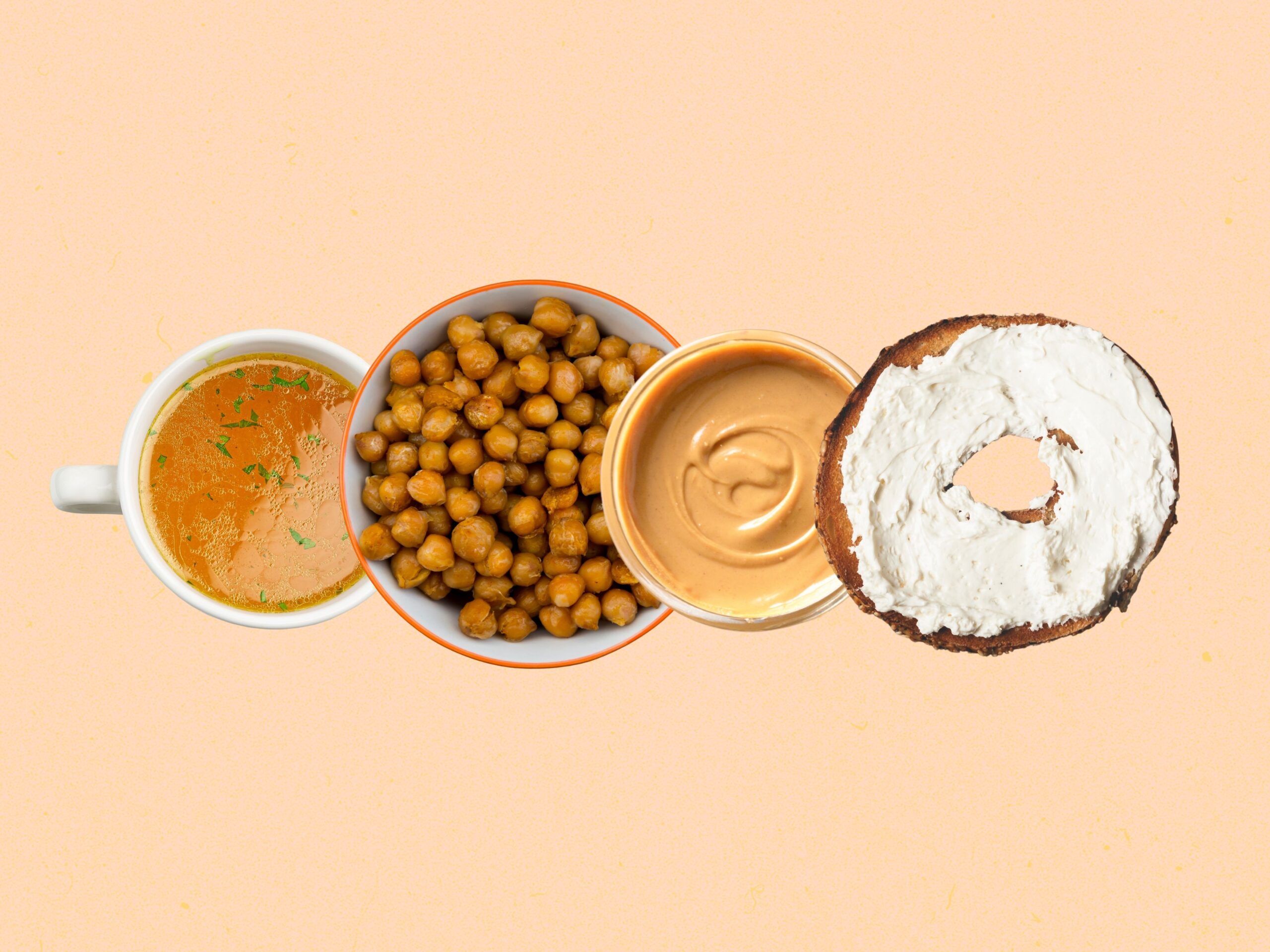
Misconceptions about protein are everywhere, from how much of it you need in a day to the best food sources available. If you’re really trying to maximize your intake of the macro, the latter is particularly important—especially because a bunch of foods that are commonly touted as high in protein actually aren’t as packed as you might think
“The key issue here is that many of these so-called ‘high-protein’ foods are secondary sources of protein,” Sapna Peruvemba, MS, RDN, founder of Health by Sapna, tells SELF. While these foods do contain some of the all-important nutrient, the majority of their nutritional makeup actually consists of others, like fat or carbs. So if you want a single item to do most of the heavy lifting on the protein front, you might want to look at your options a little more carefully. Many of these so-called “high-protein” foods actually don’t contain enough to get you to the recommended 15 grams or so per meal on their own.
To be clear, this is not to say these foods aren’t deserving of a spot on your plate. Even though the marketing machine may have seized on protein as a selling point, both fats and carbs are just as critical for good health: Fat supports cell growth and helps you absorb other nutrients like vitamins A and E. Meanwhile, carbs are the body’s main source of energy.
That said, if you’re focused on increasing your protein intake or reaching a certain protein goal (whether to help your muscles recover after a workout or simply to stop your stomach from growling between meals!), you’re better off considering fats and carbs helpful sidekicks rather than the main character. Here are nine foods that are commonly misconstrued as protein-packed, plus some expert-approved ways to beef them up.
1. Peanut butter
GymTok would have you believe that peanut butter is the poster child for plant-based sources of protein, but in reality, the nutty spread is primarily composed of healthy fats; its protein content is a meager four grams per tablespoon, Peruvemba says.
Just because peanut butter is skimpy on protein doesn’t make it short on flavor, though, so feel free to continue spooning it up. It can still round out a meal nicely: add it to a smoothie made with yogurt or whole milk, or use in a savory dish like tofu curry or black bean soup.
2. Chia seeds
Four grams in two tablespoons is not nothing, but it’s also probably a little less than you expected, considering that chia seed pudding is often hyped as the perfect vegetarian-friendly, protein-dense breakfast.
That’s particularly true if you’re soaking the seeds in a plant-based milk like almond or oat, both of which are lower on protein thanks to their lack of dairy, Wendy Lopez, MS, RD, the cofounder of Diabetes Digital, a virtual nutrition counseling platform for people with prediabetes and diabetes, tells SELF.
Still, chia seeds are nothing to sneeze at from a nutritional standpoint. With their robust array of antioxidants and omega-3 fatty acids (not to mention their notably high fiber content, which is one of its main draws), they have many other commendable characteristics—so don’t abandon your morning pudding entirely.
Instead, you can shore up your pudding’s protein content by pairing it with a milk (or other liquid) that will better deliver on your protein demands. If you don’t have a problem with dairy, a smart choice could be ultra-filtered milk, which has almost twice as much protein as the traditional kind (and almost none of the lactose), Cara Harbstreet, MS, RD, of Street Smart Nutrition, tells SELF. Alternatively, you could also stir a quarter-cup of Greek yogurt into regular old whole milk before adding your seeds.
For a dairy-free option, try a protein-rich plant-based milk (yes, those exist!). Soy milk, for instance, has roughly seven grams of protein per cup. When combined with two tablespoons of chia seeds and two scoops of peanut butter, that should safely surpass the recommended 15 grams per meal.
3. Pistachios
Pistachios—and nuts of all kinds—are primarily fat sources with a little bit of protein mixed in for good measure. However, pistachios are superior to other varieties in two ways: They provide slightly more protein (six grams per one-ounce serving, compared to just four grams in the same amount of walnuts), and they’re also a complete protein, which means they contain all nine essential amino acids our bodies need to synthesize the macro, Harbstreet says. The humble pistachio is “nothing to scoff at, as this can be a valuable source of plant-based protein, heart-healthy fats, fiber, and flavor,” she says, “but pistachios probably shouldn’t be framed as a ‘high-protein’ food.”
Much as with peanut butter, consider adding pistachios to a dish where protein is already present and maybe falling short by a few grams, says Peruvemba. You could use them as a topping on a salad that already contains protein-rich ingredients like eggs and edamame, or mix them into a creamy lentil soup.
4. Quinoa
Sure, at eight grams per one-cup serving, quinoa is one of the highest-protein grains out there, but in the grand scheme of protein-rich foods it actually doesn’t pack a ton. Its reputation in part stems from the fact that, in contrast to many other grains, it’s a complete protein, Lopez says, but this designation doesn’t reflect the protein volume. Even if you paired a cup of quinoa with an egg and a side of sautéed vegetables, you’d still only be getting about 14 grams total in a meal.
That said, quinoa still deserves a top spot in your pantry as a bona fide superfood: It boasts five grams of fiber per cup on top of the protein content. Pair a cup with other protein sources (like a hearty bean stew or flavorful tofu or tempeh stir-fry) to make the most of those eight grams.
5. Eggs
When you think of classic protein sources, meat, fish, dairy, and eggs probably top the list. But we’ve said it before and we’ll say it again: Eggs aren’t the incredible protein vehicle they’re cracked up to be (get it?!). Eggs only offer six grams each, Harbstreet says (though they still represent a valuable and complete protein source). To put that in perspective, you’d need to eat three to surpass the protein recommendation per meal.
Peeling a hard-boiled egg for breakfast and moving on with your morning is tempting, especially if you’re tight on time, but doing so will probably leave you hungry sooner than you’d like. Instead, treat eggs as more of a high-protein snack rather than a full meal in and of themselves (unless, of course, you’re eating something like a three-egg omelet), or pair them with another protein source to make them go farther. That could be scrambling two eggs with a quarter-cup of Greek yogurt (which will not only make the end result more filling, but also lend it a super fluffy consistency), or making one of these five original egg-bite recipes, all of which incorporate other ingredients to supply at least 15 grams of protein per serving. And for a more lunch-y option, you could add a poached egg to a salad stacked with other protein-rich ingredients like edamame, cheese, and beans.
6. Chickpeas
We’re big fans of chickpeas, mainly for their high fiber content and their endless versatility. That said, their protein content leaves a little to be desired, since a half-cup serving delivers just seven grams, Peruvemba says.
Yet again, the trick to reaping the protein benefits of a food like this is to pair it with other protein-rich items to compound the impact, or enjoy it solo but in snack form. You don’t need to eat chickpeas whole, either: Peruvemba is partial to dipping chips or veggies in hummus (basically chickpea paste). Tacking on a cup of quinoa, plus spices and additional veggies, will also put you firmly over the 15-gram mark.
7. Yogurt
Yogurt can be a good source of protein, but the verdict depends on which type you choose, Peruvemba says. Plain, traditional yogurt contains just under six grams per six-ounce serving, while the same amount of Greek yogurt delivers more than twice that, for instance.
Regardless of the exact protein content, Peruvemba recommends pairing yogurt with other foods, since protein and fats are really all it has to offer, tasty as it may be. Including fiber and complex carb-rich ingredients, like nuts, seeds, and fruit, will ensure you stay nice and full until your next meal. Might we suggest this savory, protein-packed Greek yogurt bowl that’s ready in 10 minutes?
8. Brussels sprouts
Vegetables in general don’t serve up much in the way of protein, says Harbstreet. But some, like Brussels sprouts, bring a tad more than others to the table—three grams per one-cup serving, in this case.
While three grams per one-cup serving isn’t nothing, it’s also not exactly a ton—so make sure to match your sprouts with a larger meal that already contains protein (like a baked chicken dish or the eggs-cheese-edamame salad). That way, you’ll take in a bit more of that essential nutrient and make a dent in your recommended five daily servings of fruits and veggies, Harbstreet says.
9. Cream cheese
While cream cheese might rank as one of the most protein-rich cheeses out there, it’s not all that impressive when the field is broadened to include other food types. After all, the classic bagel spread only contains around two grams of protein per ounce. If your standard bagel order is typically pretty bare-bones, you might want to consider taking it up a notch to include a higher-protein add-on like bacon, lox or smoked salmon, or even a combo of eggs and avocado (more on that momentarily).
10. Avocado
Similar to cream cheese, avocado is considered a high-protein item in its food category (it’s technically a fruit, but the USDA classifies it as a vegetable). Given this label, you might find yourself a little disappointed when you actually crunch the numbers: One whole avocado only contains around three to four grams of protein—not all that much when you consider how much you have to eat to actually hit that amount (and how filling avocados are, thanks to their signature combo of fiber, protein, and healthy fats). To enjoy your morning avocado toast while optimizing your protein intake, try this hack from Nicole Addison, RD, a recipe developer and content creator based in Canada, to instantly triple the protein content: Mash your avocados with a half-cup of cottage cheese and a hard-boiled egg before slathering the mixture onto the bread. “Minus the hard-boiling, the whole thing took five minutes from start to finish and left me with just one bowl to clean,” a SELF writer said when she tried it in 2024.
11. Bone broth
Within the nutrition world, bone broth has something of a cult following. Central to this fascination is the idea that it can act as a complete substitute for regular meals—that somehow this liquid will deliver all the protein you need to feel full. Needless to say, that’s just not true; bone broth isn’t a suitable meal in its own right, says Harbstreet.
While the exact amount of protein in bone broth varies by brand, type, and how you make it, it averages just 10 grams of protein per 1.5 cups. “That’s not too shabby, but it’s not the quick-fix elixir many proponents claim it is,” Harbstreet says. Ultimately, you’ll benefit way more from bone broth by combining it with other protein-rich ingredients, like quinoa or beans—and if you need or want other options, we suggest simply scrolling up.
Related:
- What’s the Best Time of Day to Eat Protein?
- Is Parmesan Cheese the New Protein Bar?
- Celebs Are Cashing In on Protein
Get more of SELF’s great food content delivered right to your inbox.
