

The Allegheny Front covers the environment in Pennsylvania and eastern Ohio. Sign up for their newsletter here. Listen to the radio version of the piece below.
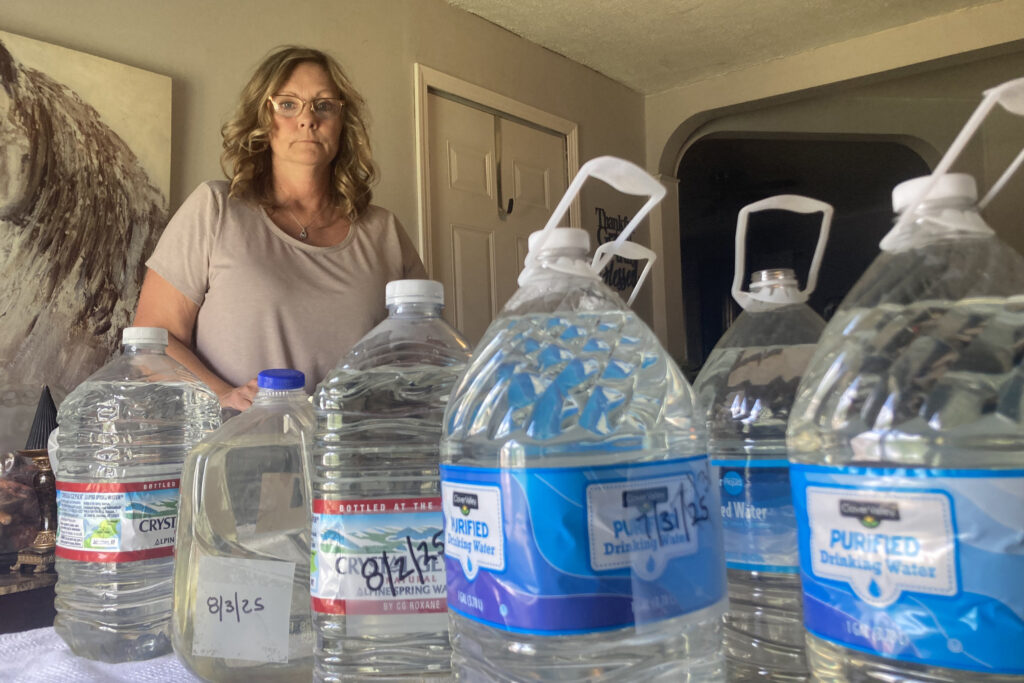
Stacey Greer started filling and dating gallon-sized jugs with tap water last summer, when her village of Cadiz, Ohio, just over an hour west of Pittsburgh, issued a boil water advisory that lasted for over a month.
A glass of water from her kitchen looked clear, but she could see the discoloration in the larger jugs.
“You can see like the tinge of yellows, and then I started testing those, and the pH level was high on them,” she said last August at her home near Cadiz’s small downtown.
Greer has been using testing strips regularly to track not only the water’s pH, but things like lead, copper, zinc and mercury.
She said sometimes the water makes the inside of a jug slick with oil, which she also finds in the water tank on the back of her toilet.
“It’s like, real thick, gooey, oily stuff,” she said, lifting the lid to point out the buildup in her tank.
For Cadiz resident Tonya Shockey, the water woes have been even more of an imposition. For much of last summer, she boiled water on the stove to sanitize it before putting it in the bath for her two toddlers. She also did this for her 22-year old son.
“It is a lot of work,” Shockey said. “But I would rather boil the water and then be safe than to have to be in the hospital again.”
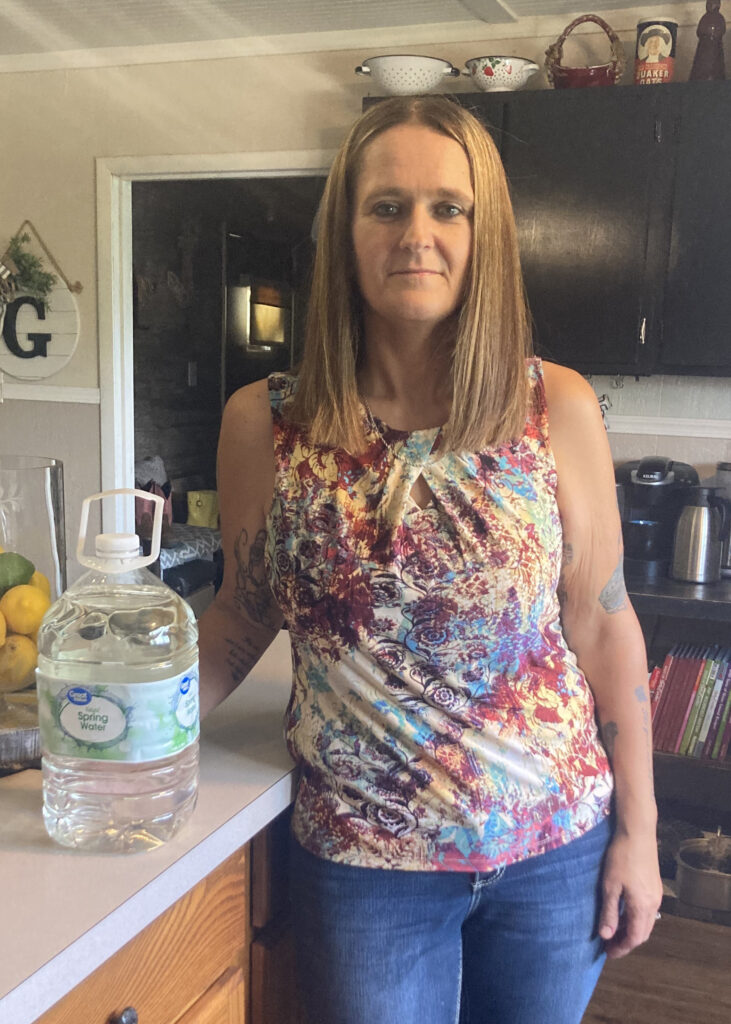
Shockey said the water caused an infection in a wound on her son’s foot, so she doesn’t trust what village leaders and the Ohio Environmental Protection Agency are telling residents.
“They just act like it’s nothing. They actually will tell you that there’s nothing harmful in the water, can’t harm anyone,” she said. Shockey shared a letter from Nationwide Children’s Hospital in Columbus with The Allegheny Front. “I have documentation from the hospital saying that it is the water that caused the infection in the open wound. Something has to be going on.”
To add insult to injury, she says her water bill is extremely high.
“The water bills in this town are ridiculous. Every month, our water bill is at least $300 a month. Yeah, it’s terrible,” she said.
What’s Causing the Problem?
In the seven months since that water advisory was lifted, residents say problems with the water’s look, taste and odor persist. In an email, the Ohio EPA said low levels of certain compounds give the water an earthy or musty odor and taste, but don’t pose a health risk.
Meanwhile, village leaders have offered a variety of reasons for the problems, and worked on solutions.
Cadiz gets its drinking water from nearby Tappan Lake. Last summer, village administrator Brandon Ludwig said extreme weather stirred up sediments in the water.
“We had a drought last year, we had excessive heat this year, lake turnover, algae blooms, things like that,” he said.
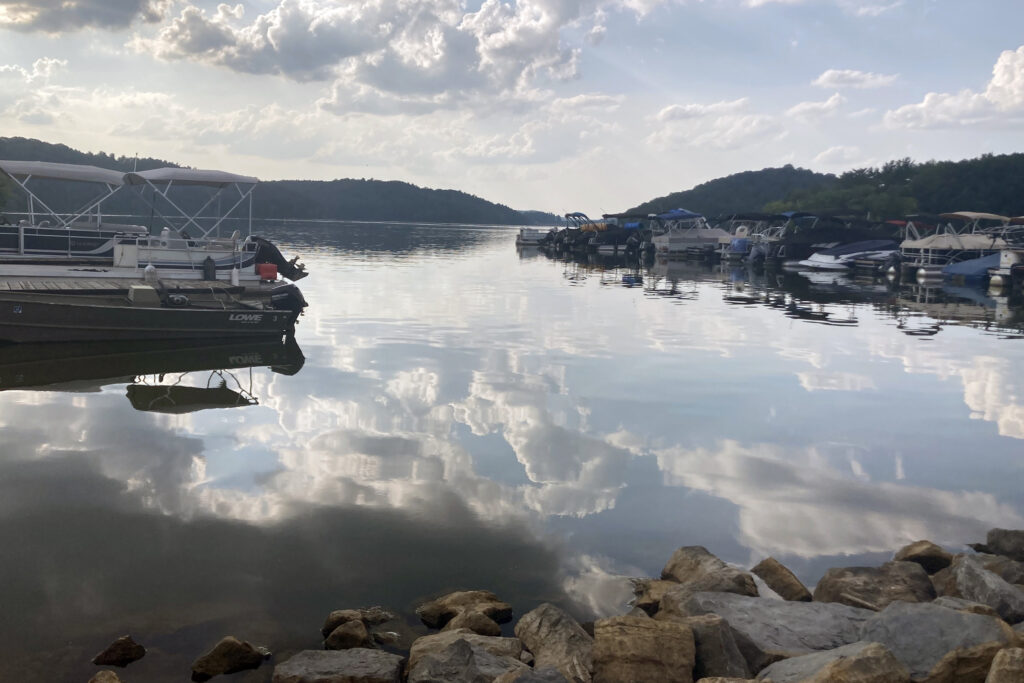
The village told residents it was turbidity, basically high levels of soil, algae, and other matter in the lake, which moved to the village’s water treatment plant.
In recent years, this region has experienced a drought–flood cycle, indicative of what scientists say should be expected as the climate changes. Ludwig isn’t sold that it’s climate change, but he agrees the weather hasn’t been normal.
“We don’t get rains anymore, we get 30-minute monsoons, it feels like,” Ludwig said. “So I know that eroding the [creek] beds and everything brings a lot of sediment into the lake.”
Researcher Zia Lyle isn’t surprised to hear about weather patterns causing water problems in Cadiz. For her PhD in engineering and public policy at Carnegie Mellon University, Lyle interviewed water utility managers across the U.S. for a study about how they’re preparing for climate change.
She found that water managers in the West understand the need to plan for increasing drought.
“But most utility managers in areas like Ohio, Pennsylvania, they don’t understand that climate change is a whole swath of changes to natural hazards, like extreme rainfall, cold water, and freeze-thaw cycles. So they’re still using historical understanding of their system,” Lyle said.
Many communities need to redesign their water infrastructure to handle the changing rainfall patterns, temperatures and turbidity, according to Lyle.
In Cadiz, turbid water from Tappan Lake was partly responsible for the problematic tap water.
The village also found cracks in the concrete foundation of one of the filters at the water treatment plant were another part of the problem. According to the Ohio EPA, this allowed sediments to get into the treated water – the same water that was being sent to people’s homes.
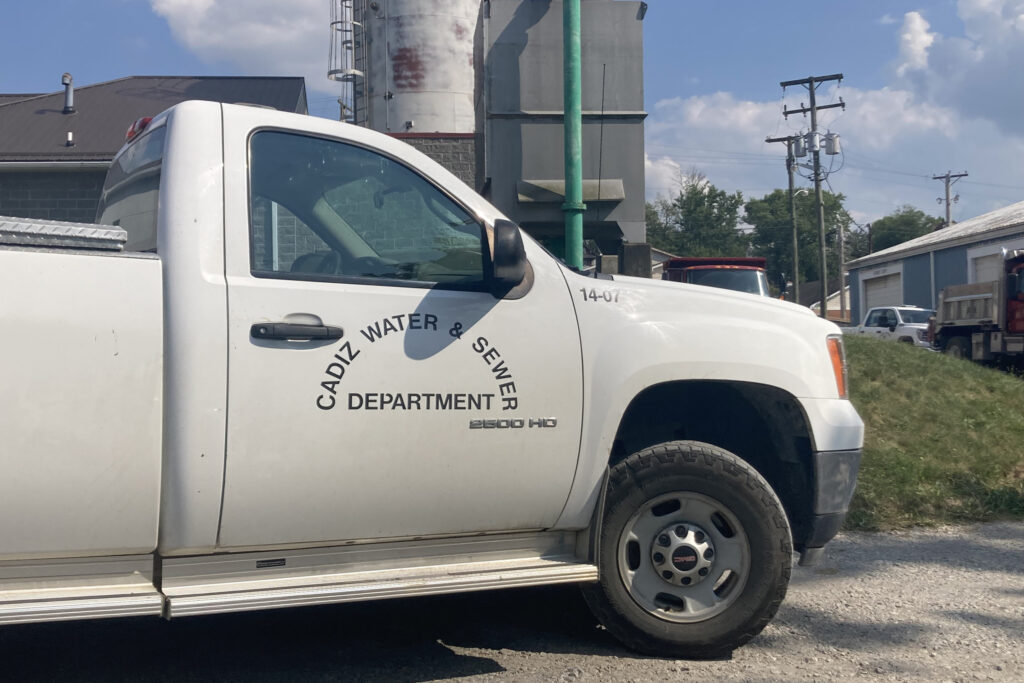
Cadiz Mayor Kevin Jones said it would cost tens of millions of dollars to upgrade the Cadiz water plant, and they’re not alone. Last October, he attended a meeting with the mayors of communities throughout the Ohio Valley and found that collectively they need $400 million.
“The issue all the mayors have said is infrastructure, aging infrastructure,” Jones said.
Some Possible Solutions
Researchers like Lyle suggest they could privatize or start working together.
“That’s something that’s, I think, going to come up more and more: a regionalization effort. Is there some way to help these smaller systems invest in these resiliency measures?” she said.
Many small communities don’t want to give up control of their water systems, according to Lyle and other experts, but there are other reasons they think that regionalization makes sense.
Beyond extreme weather and outdated water infrastructure, Cadiz and other rural water systems face another hurdle: the lack of certified water professionals.
The Cadiz water manager retired in 2024, and the village didn’t have a properly certified water plant operator to do the job, something the state requires, when these problems arose.
Finding a highly trained water operator is difficult in rural areas.
“There’s a major shortage of operators in the water and sewer industry; that’s a separate issue that affects especially small rural systems really hard,” said Nathan Davis, of the Rural Community Assistance Program, which worked with Cadiz on its water plant problems.
This story is funded by readers like you.
Our nonprofit newsroom provides award-winning climate coverage free of charge and advertising. We rely on donations from readers like you to keep going. Please donate now to support our work.
Certified water operators can get better pay and more support, and often choose that over jobs in rural areas, Davis said.
Cadiz wound up hiring a part-time water manager, who comes there after his full-time job in Steubenville, a larger community nearby.
Davis said affording the personnel, maintenance and repair is a challenge for small rural water systems in this region.
“You’re dealing with communities that are trying to operate a water treatment plant and several miles of water distribution line, that was probably at this point now 60, 70, 80 years old. And they’ve got [300] or 400 customers.” Davis said. “They’re trying to generate the revenue they need to maintain that system with a very small population economy of scale.”
One Idea To Raise the Needed Funds
At a community meeting in Cadiz last fall, Mayor Jones said he doesn’t think their 3,000 or so residents, who are already paying high water bills, can afford the needed plant upgrades.
So, he wants to attract a large water customer, such as a data center being built near Cadiz.
“Let’s start selling water,” Jones said. “Let’s go to these corporations and say, ‘Look, we need you to contribute to our infrastructure. You’re going to use it. So we need money.’ So let’s do that. ‘Give us money,’” he said.
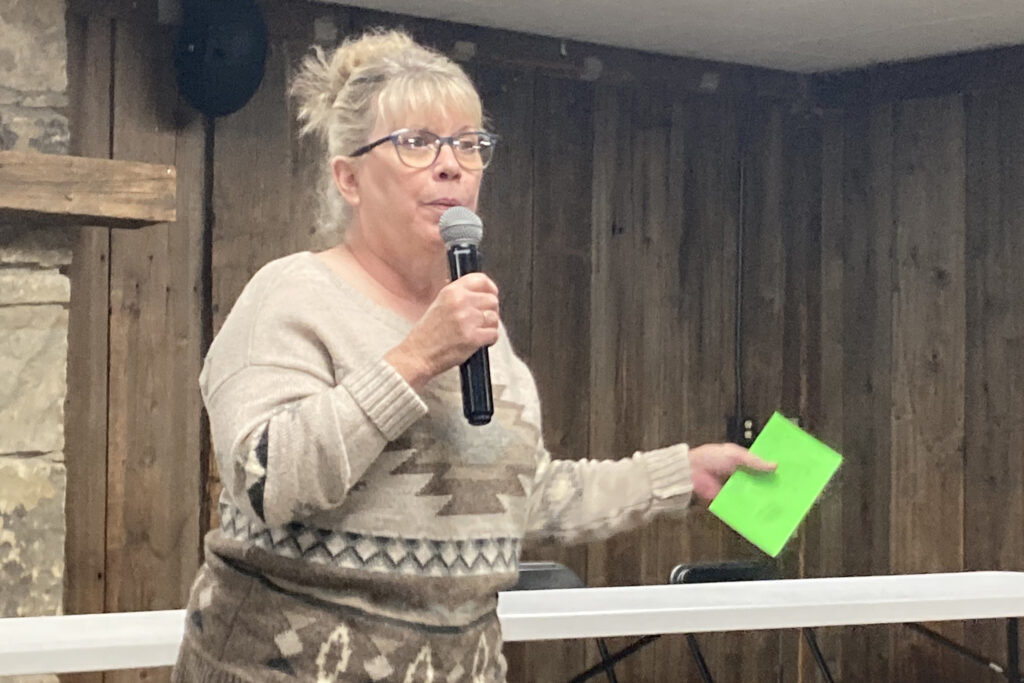
While some experts, like Davis, support bringing in a large water customer to offset expensive upgrades, others at the meeting, like nearby resident Randi Pokladnik, are worried about selling water amid record drought in recent years.
“That is the most…I’m going to say it…asinine solution that I have ever heard,” she said. “To sell more water to huge hogs of water when we’re already two years of a drought.”
This month, a consultant recommended that Cadiz replace the pipe between Tappan Lake and the water plant, which could cost more than $2 million.
The village recently repoured the concrete foundation and replaced the filter media at its water plant. The state is awaiting water sample results. Residents say they haven’t seen improvements in the water so far.
About This Story
Perhaps you noticed: This story, like all the news we publish, is free to read. That’s because Inside Climate News is a 501c3 nonprofit organization. We do not charge a subscription fee, lock our news behind a paywall, or clutter our website with ads. We make our news on climate and the environment freely available to you and anyone who wants it.
That’s not all. We also share our news for free with scores of other media organizations around the country. Many of them can’t afford to do environmental journalism of their own. We’ve built bureaus from coast to coast to report local stories, collaborate with local newsrooms and co-publish articles so that this vital work is shared as widely as possible.
Two of us launched ICN in 2007. Six years later we earned a Pulitzer Prize for National Reporting, and now we run the oldest and largest dedicated climate newsroom in the nation. We tell the story in all its complexity. We hold polluters accountable. We expose environmental injustice. We debunk misinformation. We scrutinize solutions and inspire action.
Donations from readers like you fund every aspect of what we do. If you don’t already, will you support our ongoing work, our reporting on the biggest crisis facing our planet, and help us reach even more readers in more places?
Please take a moment to make a tax-deductible donation. Every one of them makes a difference.
Thank you,
