

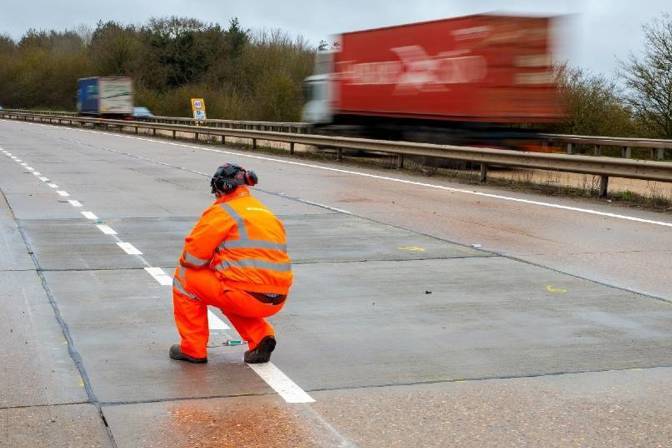
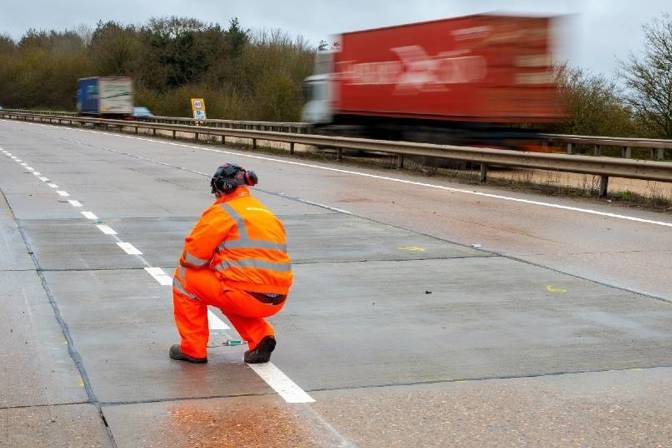
Kier Transportation, John Graham Construction and John Sisk & Son will resurface the crappy concrete roads that make up 5% of England’s motorway and trunk network.
National Highways’ concrete roads programme, being delivered through the legacy concrete roads reconstruction framework, gets to work this month and runs for six years until 2032
The scope of the £968m framework includes:
- design and construction services for the demolishment of existing pavements, and reconstruction of pavements
- design and delivery of associated temporary traffic management solutions
- Performing principal designer and principal contractor duties
- carbon capture recording and reporting
- recovering, recycling and reusing arisings during the delivery of a scheme – keeping the programme’s carbon footprint to a minimum and contributing to the circular economy.
Nick Knorr, National Highways’ head of the concrete roads programme, said: “The national concrete roads programme is a critical long term strategic programme of renewals for National Highways, ensuring our roads are safe and reliable for drivers, maximising the benefits of this significant investment in the future of England’s motorways and major A roads.
“By replacing aging concrete roads with modern designs, we’re ensuring smoother, quieter, and more resilient routes for millions of people. Building on the success of recent reconstruction schemes, this next phase will be delivered in partnership with our supply chain, helping us bring lasting improvements to communities and businesses across England.”
Most concrete roads were built in the 1960s and 1970s along the eastern side of England. They’re in the northeast, Yorkshire, East Anglia and the southeast. There are also small stretches in the West Midlands, Merseyside and Greater Manchester.
While motorists may not appreciate the ride quality and noise of concrete carriageways, National Highways says that they have proved tougher and longer lasting than asphalt, requiring very little maintenance over the years, but they are nearing the end of their working lives.
Kier Transportation, John Graham Construction and John Sisk & Son were selected for the framework after a formal competitive tender process.
James Birch, managing director for Transportation at Kier Infrastructure, said: “This appointment allows us to play a key role in delivering essential upgrades to England’s legacy concrete road network, improving the safety and resilience of it for end users. We’ll bring innovative solutions, sustainable practices and collaboration to the schemes, while maximising value for our customer and the communities we work in.”
Got a story? Email news@theconstructionindex.co.uk
