

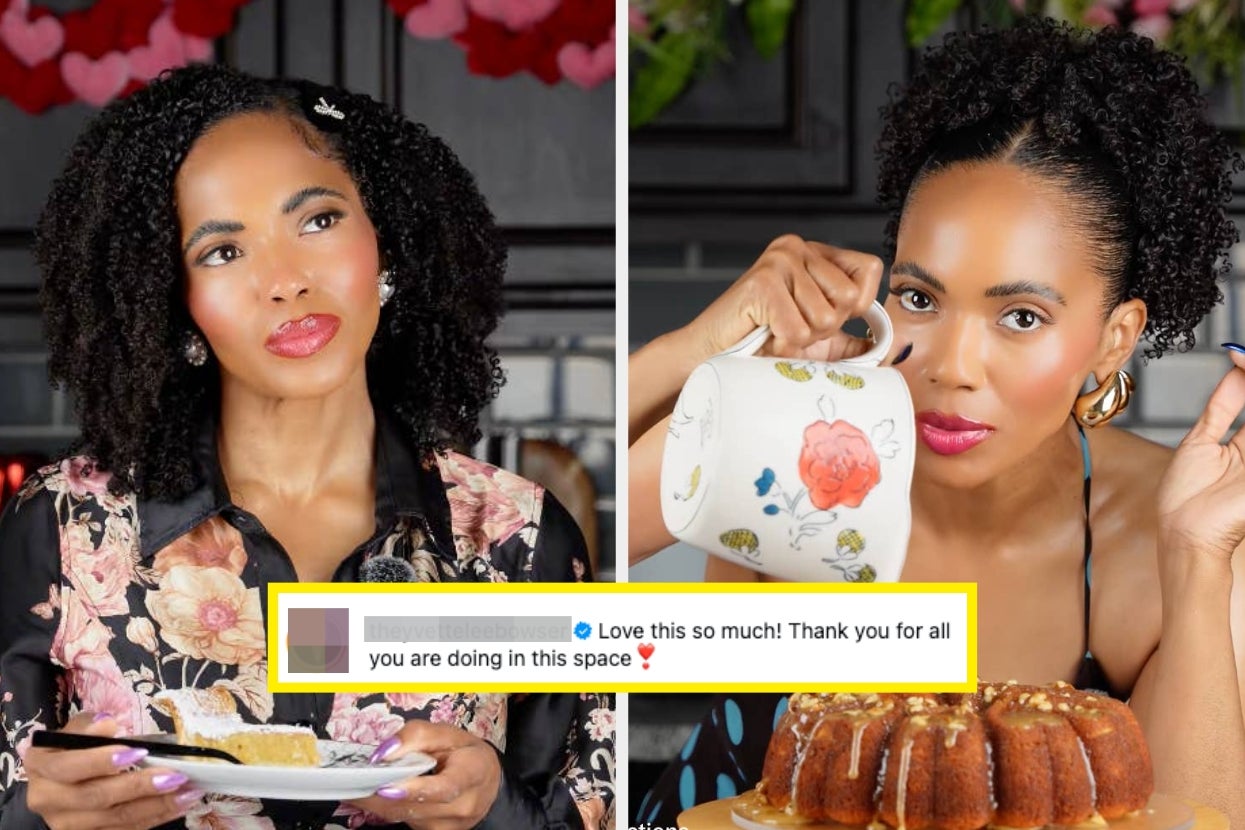
Sonja Norwood, aka @wickdconfections, begins each of her Lost Black American Recipes series with the same captivating line: “We’re losing recipes, and I’m going to find out if that’s for a good reason.”
For Norwood, who has more than two million combined followers across Instagram and TikTok, the series began with a spark of curiosity and quickly grew into something far deeper — a project rooted in memory, history, and recognition that has resonated with millions.
“I was inspired by a video I saw about vinegar pie and its Black American roots,” she told BuzzFeed. “It really stuck with me. It was Thanksgiving at the time, and I remember making a note to myself that I was going to make it for Black History Month.”
That note led to something far bigger.
“That moment sparked a bigger curiosity about all the other recipes we don’t hear about anymore, and it led me down the path of wanting to explore why they’re disappearing and whether there’s a reason they’ve faded from our tables.”
Her vinegar pie video — also known as “desperation pie” — blends centuries-old history with a modern-day tutorial and has amassed almost 900,000 likes across Instagram and TikTok.
In the video, she explains: “This pie was born out of necessity when fruit or citrus leaves were hard to come by… Black cooks in the South and Midwest adapted pantry-based dishes like this into their family food culture… This is American ingenuity.”
Since that first post, she’s shared the histories and recipes of sweets like Burnt Sugar Cake and savory meals like Rice Johnny. When it comes to choosing what to feature, Norwood starts close to home.
“I usually start by talking with my mom about her memories, because so many of these recipes live in family stories first,” she said.
She also reaches out to friends from different regions: “We may all be Black Americans, but regional food memories can be very different, and that helps me see the bigger picture.” Her series spans regions from the Mississippi Delta to the Gullah Geechee communities of the Lowcountry and the French Quarter of New Orleans.
That blend of lived experience, collective memory, and local distinctiveness is evident in dishes like Black Walnut Praline Cake. Her tutorial of the cake starts with a sensory memory: “If you ever sat at a table cracking walnuts with a grandparent — stained fingers, heavy shells, earthy smells — this will unlock memories.”
From there, she layers in key context: native black walnuts foraged from trees, pralines tied to Louisiana sugar plantations, and formerly enslaved Black women known as “praline ladies” who supported their families through street vending. “That was independent Black entrepreneurship — women-controlled income.”
Her Black Walnut Praline Cake is just one example of how she reframes these dishes as more than heritage cooking — they are records of resilience, skill, and adaptation.
She hopes viewers walk away recognizing “the creativity, ingenuity, and skill our ancestors used to survive — and not just survive, but find joy and make something delicious from what they had — is incredibly powerful. They deserve to be recognized and given credit for the culture they created, even though it has so often been looked down upon.”
From the overwhelmingly positive comments and support this series has received throughout Black History Month, Sonja has succeeded:
Thousands of Instagram and TikTok viewers have commented with supportive messages on her videos, many sharing their own personal connections to the foods she highlights. One commenter shared her memories of being her Granny’s “sous chef” on Sonja’s Burnt Sugar Cake video, in a particularly touching message:
That emotional connection is key to Norwood’s work. She explained: “When the history of ancestors we never knew connects with our present-day families, it creates this powerful moment of understanding.”
Lost Black American Recipes hasn’t just impacted her viewers; it’s given Norwood a fresh outlook, too: “What’s been most meaningful is realizing that the ‘why’ behind the things we do every day makes them feel so special,” she said.
“Food triggers memory in a way almost nothing else can,” she told us. “The comments on this series literally bring me to tears every day. People are remembering childhood moments and sharing stories about their great-grandmothers, grandparents, and parents. As kids, we don’t think to write these things down; our naive minds don’t yet understand how important it is to preserve these food traditions.”
The series is deeply rooted in Black American culinary history, but its impact is global. She shared: “People all over the world, from Mexico and Italy to Brazil and Germany, are watching the series and sharing their own food traditions in the comments.”
“These recipes remind us how connected we are to our ancestors,” Norwood noted. “It really humanizes them and makes that connection feel tangible.”
As February draws to a close, followers agonized over the series ending… then were elated to find out Lost Black American Recipes will likely continue on a weekly basis!
Because the ingenuity and history in the recipes Norwood highlights aren’t seasonal. They’re foundational. Her work is a reminder that Black food history isn’t confined to a single lesson in school, a single viral recipe, or even a single month. It lives in our kitchens, in family stories, and in the everyday act of asking where our food comes from — and who shaped it.
Sonja Norwood began this month with a question about why recipes are disappearing. What do you think?
