

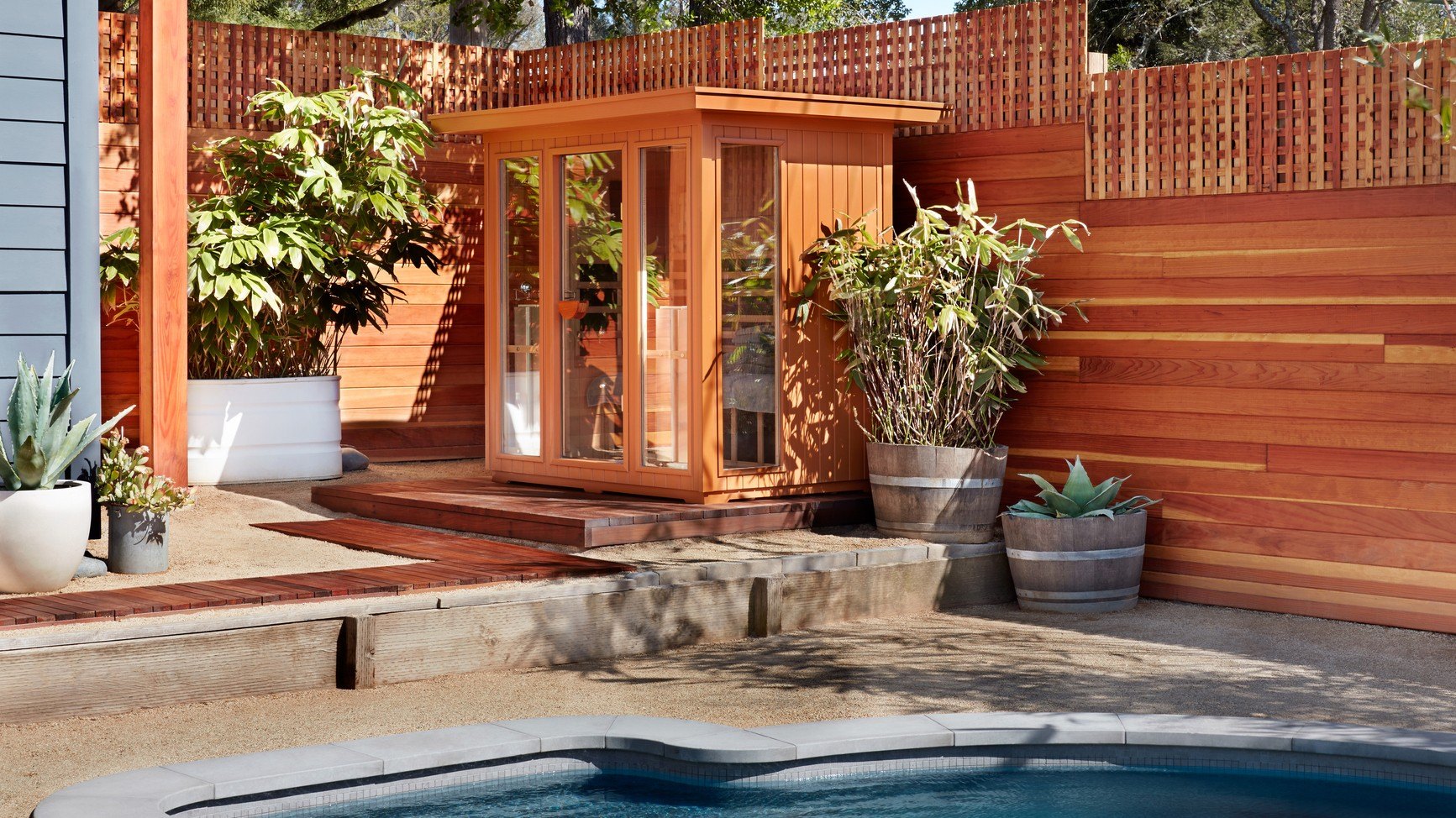
If you hadn’t noticed, the U.S. sauna market is heating up, fueled by wellness culture (see New York’s first-ever sauna festival) and by home saunas, which are becoming more and more prevalent—especially, but not exclusively, in the luxury market. “Its not just one demographic anymore,” says Michael Martirena, a Realtor® who deals in the ultra-high-net-worth arena of Miami. “Saunas are becoming standard alongside gyms, spa baths, and outdoor living.”
If you’re considering joining the heat-therapy movement, here’s what our experts say you need to know before getting your sweat on.
Meet the experts:
-
Emily Stubler, marketing director at Kohler Co. in California
-
Michael Martirena, Realtor, luxury real estate adviser at Compass in Florida
What the experts say about home saunas
Saunas can add a lot of pros to your life in terms of day-to-day health practices, in-home relaxation, and even future desirability of your property—but only when it makes sense. “You’ll want to be sure you’re actually going to use it, you’re not sacrificing essential space, and it’s installed at a quality level that matches your home’s price point, ideally during a larger renovation,” explains Martirena. Stubler adds that proper placement and maintenance are key if you plan on selling down the line. You want it to feel like a luxury, not like an afterthought. Put differently? “A good sauna adds value; a questionable one adds doubt,” Martirena says.
Loading…
FAQs about saunas
What is a home sauna?
A home sauna is a room or structure designed for heat-therapy sessions. There are two main types to consider:
Dry sauna: A dry sauna is heated to high temperatures (160 F-200 F), either by using an electric heater or a wood stove with hot rocks. It creates intense, dry heat.
Infrared sauna: An infrared sauna uses infrared light to warm the body directly instead of heating the air around you. This allows for lower temperatures (around 120 F-140 F).
What’s the best type of sauna for your home?
The best sauna for your home depends on how much you want to spend and how you envision using it. Infrared saunas are often cheaper (more on that below) and easier to install than dry saunas, especially those with wood-burning stoves, and you can also spend more time in an infrared sauna because the heat is less intense.
Do home saunas have health benefits?
The recent rise in popularity suggests homeowners are interested in potential health benefits, which may include “detoxification through sweating, relaxation of muscles, and improvement in circulation,” says Stubler. “Studies suggest it can boost cardiovascular health, enhance lung function, and promote better sleep by reducing stress,” she adds.
How much does a home sauna cost?
The price point of home saunas is far less exclusive than it has been in the past. These days, you can find compact, portable saunas—perfect for anyone in a small or non-permanent property—for less than $1,000. On the other end of the spectrum, a luxury indoor or outdoor structure can run you up to $10,000 or more with custom installation.
Where can you install a home sauna?
“We frequently see homeowners choose to install a sauna in home gyms, bathrooms, basements, and other dedicated wellness spaces,” Stubler says, adding that it’s important to consider space, structural support, and electrical requirements. “Indoor saunas should have adequate clearance; a level, load-bearing floor made of non-water-absorbing materials; and a dedicated 240-volt outlet,” she explains.
If you decide on an in-home sauna, Martirena advises against stealing square footage from core features a future buyer will want or need, such as closet space or a full bathroom. Outdoor saunas don’t have the same restrictions and often give you more space and flexibility for a larger structure. Still, they “require a stable, level surface such as a concrete pad to support the weight over time,” Stubler notes. And, keep in mind they need more protection from the elements for longevity.
Can you DIY installation, or do you need to hire someone?
Both experts agree: This is not a do-it-yourself project. “Installation is about creating a safe, sealed environment with proper ventilation,” Martirena says. “Depending on the type, you’ll need dedicated electricity, insulation, a vapor barrier, and waterproof flooring.” Stubler adds that if you’re buying from a dedicated (and reputable) brand or dealer—such as Kohler or KLAFS, both of which she represents—they offer an installation service for an additional cost.
What is the maintenance on a home sauna like?
Stubler encourages regular cleaning with a soft, damp cloth or soft-bristled brush. “Do not use any harsh chemicals, bleach, or cleaners within your sauna,” she says. Do not use a water hose, running water, or power washer on any part of your sauna.”
Does a sauna add value to your home?
Return on investment for a sauna isn’t as straightforward as, say, a new garage door, but a sauna does improve appeal and perceived value. “In luxury real estate, it’s less about appraisal line items and more about desirability,” Martirena explains. “Done well, it makes a home feel more lifestyle-driven and can be a tiebreaker between similar properties.” He says that he’s seen a sauna as part of a well-done spa suite add as much as a low five figures to the value of a home, while Stubler notes that wellness suites and products can boost a property’s price by 10% to 25%.
The realtor.com® editorial team highlights a curated selection of product recommendations for your consideration; clicking a link to the retailer that sells the product may earn us a commission.
