

commentary
Low-information and poor white voters are turning against the president. Can Democrats win them back?
Published
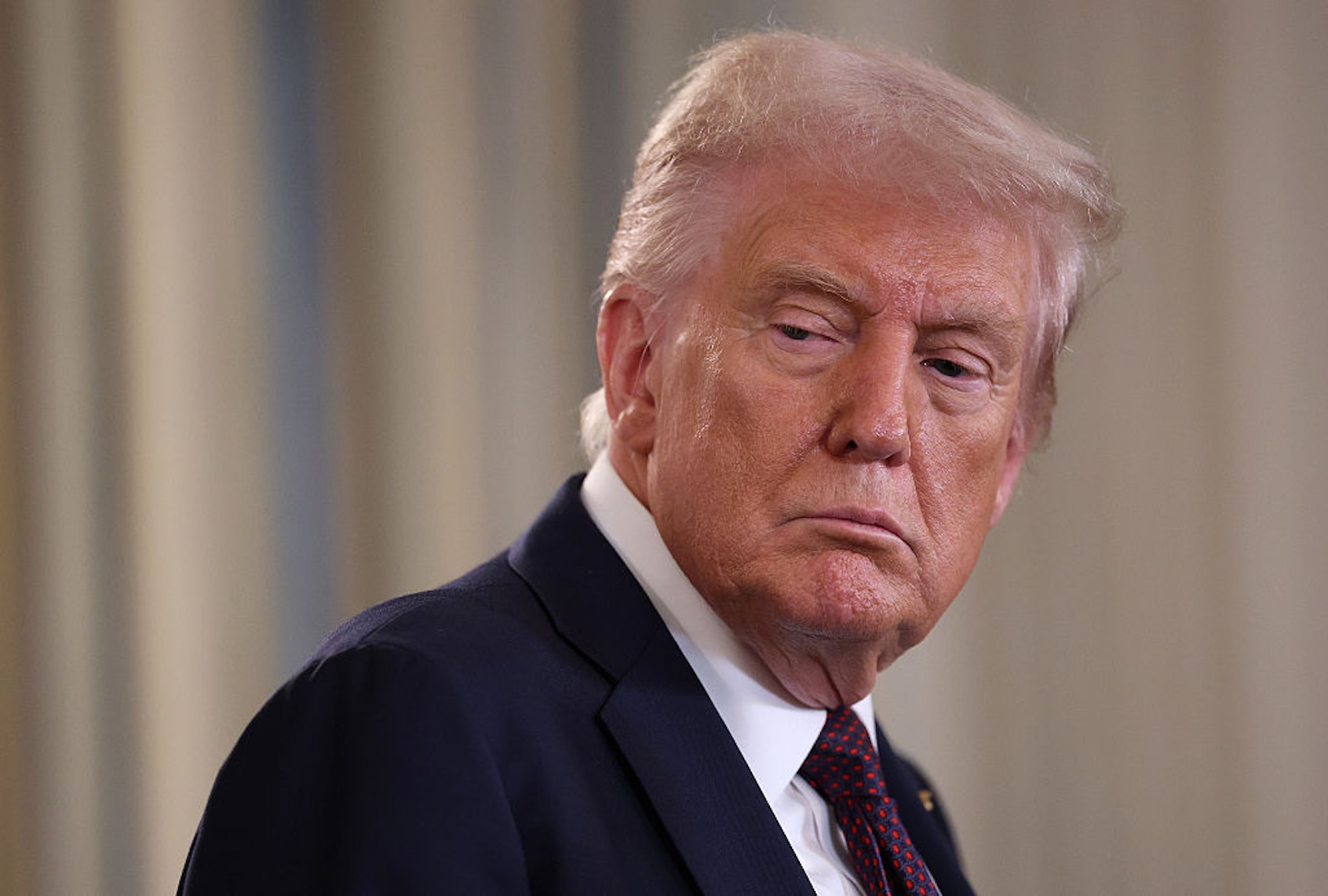
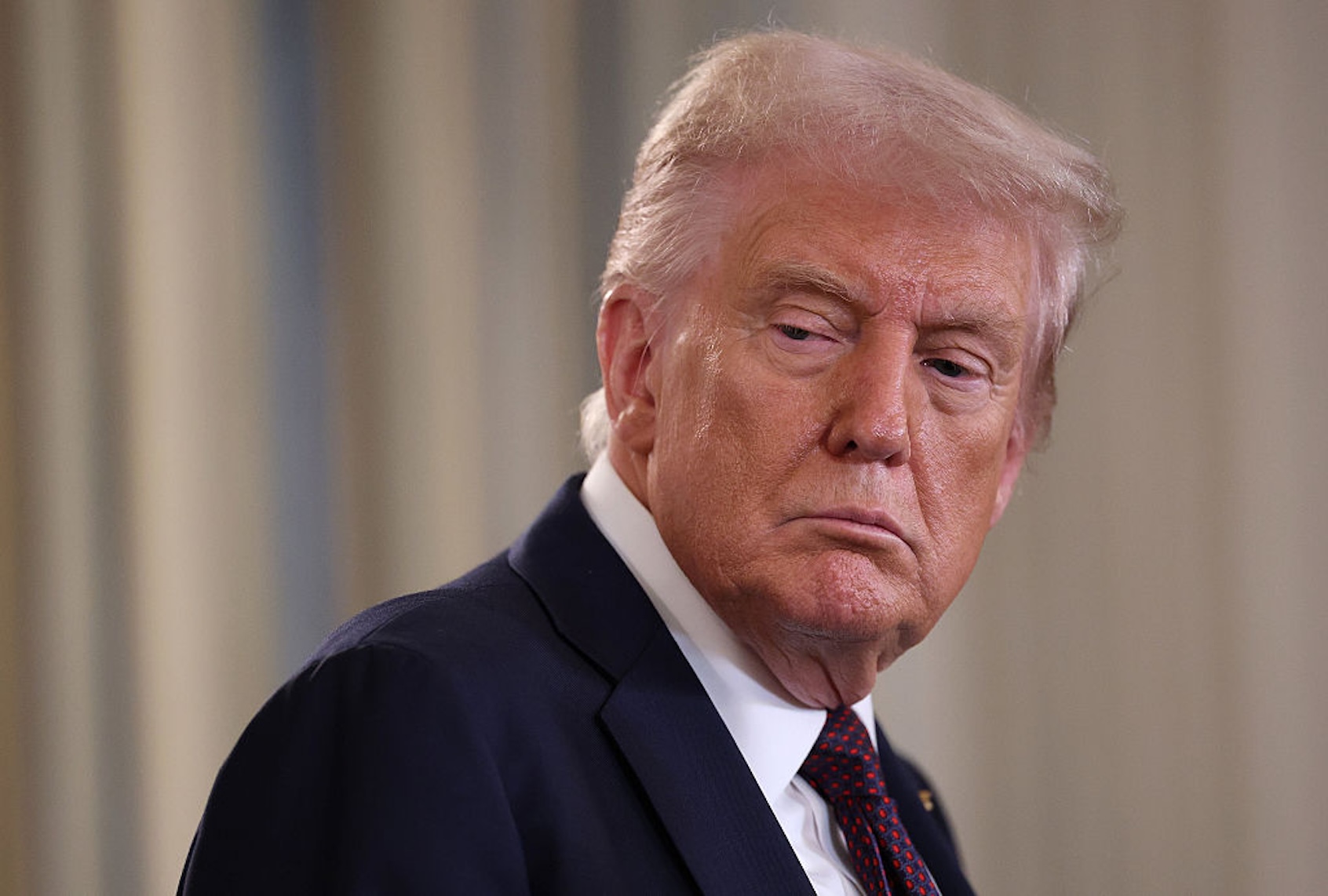
President Donald Trump at the White House on Sept. 29, 2025. (Win McNamee/Getty Images)
The mainstream media and political class were blindsided by Donald Trump’s victory in the 2024 presidential election. They were so fixated on stereotypes and caricatures about the MAGA movement and Trump’s so-called forgotten and lost white working-class followers across the battleground states and red state America that they mostly ignored his growing base of support among Hispanics and Latinos, other nonwhites and young men. Trump’s new rainbow coalition of rage and resentment helped lift him back to the White House.
Now this very coalition is splintering as his support spirals downward. On top of that, low-income whites and low-information voters are moving away from him too.
If Democrats and the larger pro-democracy movement can answer these questions and communicate the answers clearly and boldly, they may be able to secure a new front in the fight against Trump and his neofascist movement.
What do these voters want? What are they in search of? If Democrats and the larger pro-democracy movement can answer these questions and communicate the answers clearly and boldly, they may be able to secure a new front in the fight against Trump and his neofascist movement.
Low-information voters, which comprised about 25% of the electorate in 2024, supported Trump over Vice President Kamala Harris by 11 points. These voters don’t follow politics closely; they tend to get their news from social media, YouTube influencers and people they trust. These factors, as we saw in the 2024 election, make them very vulnerable to disinformation, misinformation, conspiracy theories and other forms of manipulation by malign actors.
While the Democratic Party’s leaders and some voices in the mainstream news media were correctly warning that Trump’s return would be disastrous for the country, low-information voters were more concerned about their immediate economic and other personal needs and distractions from the attention economy.
New polling from Strength In Numbers/Verasight shows that low-information voters now disapprove of Trump by 13 points, which marks a 24-point shift since 2024. The percentage of voters who supported the president in 2024 and now disapprove of his performance in office stands at more than 55%. This is important, and not just because of the numerical change showing them backing away from the president. It also indicates a potential change in behavior. As they increasingly feel the pain from his failed economic agenda and other policies, these low-information voters are beginning to behave more like the politically engaged voters who have long opposed him and the MAGA movement.
At Strength in Numbers, data journalist G. Elliott Morris explained that “they were unhappy with Biden, unhappy with prices, and voted accordingly.” Their support of Trump, he said, should not have been seen as them “making an ideological commitment to Trumpism — most aren’t even ideological at all.” Morris predicted that, if Trump continues to stumble, “these voters will keep moving against the president.”
All this amounts to bad news for the GOP, he said: “If Republicans aren’t winning high-knowledge respondents because of the negative news, and they aren’t winning low-knowledge respondents because of conditions…then they’re not winning elections.”
Contrary to the stereotypes and cultural myths, poor white people are far from monolithic in their support of Trump, MAGA and the Republican Party. While the shift to Republicans began in the late 1970s around cultural issues such as abortion, many poor and low-income white voters still support the Democratic Party’s economic policies. There is also a long tradition of populism and multiracial alliances in rural America, most notably Appalachia. This nuance can be seen to call into question the permanence and depth of their connection to any given political party or ideology.
While the president is losing support with voters across all incomes, his losses are especially acute among low-income voters. In 2024, he won voters who made less than $25,000 a year, but as polling analyst Lakshya Jain detailed in a new report for The Argument, Trump has lost 26 points of support among lower-income white voters.
By comparison, Democrats have gained only one point of support among voters who make more than $200,000 a year. But they have gained seven points among voters who make less than $50,000 a year. These disparities in support help to explain why Democrats have been dominating the Republicans in generic congressional ballots, as well as in special and off-year elections.
Want more sharp takes on politics? Sign up for our free newsletter, Standing Room Only, written by Amanda Marcotte, now also a weekly show on YouTube or wherever you get your podcasts.
Trump’s policies have greatly increased the economic and financial misery of working-class and low-income Americans, and now they are punishing him for it.
There are tens of millions of poor and low-income — and low-information — voters in the United States. As the Rev. William Barber III, leader of the Poor People’s Campaign, has argued, if mobilized properly this group could radically improve American society by supporting politicians and movements that create economic opportunity and expand freedom for all Americans, not just the rich and the powerful.
“Poor people are not driving the extremism in American politics, nor are they the true base for Trump, whose major policy achievement has been to cut government programs that serve everyday people so he can give tax breaks to corporations and wealthy Americans,” Barber and Jonathan Wilson-Hartgrove argued in an essay for Time published in 2025. “Poor and low-income Americans are, in fact, the largest swing vote in the country… If a moral fusion movement, led by poor and low-income people, can rise up in America today, we have the numbers to change the political conversation.”
Democrats need to mobilize these voters for the long-term by emphasizing economic concerns, quality of life and speaking in direct ways about problems and solutions, or they risk a permanent rupture with the working-class. Most importantly, politicians across all spectrums of the party need to be much better listeners. Lecturing these voters will not win them over.
In a 2024 interview with me, sociologist Arlie Hochschild explained this in the context of what she called “a material economy and a pride economy” that exists for poor and working-class voters. “In politics, sometimes the material economy matters more, and sometimes the pride economy matters more… [Trump’s] voters feel that language and take it personally.”
She highlighted the role that racism and social dominance behavior plays in the president’s appeals. “Yes, Trump is lifting them up psychologically and emotionally by putting other people down — in particular, nonwhites and others deemed by him and the right as not being ‘real Americans,” she said. “But that psychological and emotional wage in the pride economy is very real and very powerful — sometimes, even more than the wages paid in the material economy.”
But that’s not all: Democrats will have to overcome structural obstacles as well. Political scientists and other experts have repeatedly shown that America’s political elites are not responsive to the policy demands of poor and working-class people.
Tens of millions of low-income and low-information Americans are already turning against Trump — and Democrats should not take that for granted. Although the sleeping giant is stirring, it can still be lured back to Trumpism by promises of free money and easy answers to complex problems. The question is whether Democrats have the conviction and smarts to wake it all the way up.
Related Topics
——————————————
Related Articles

