

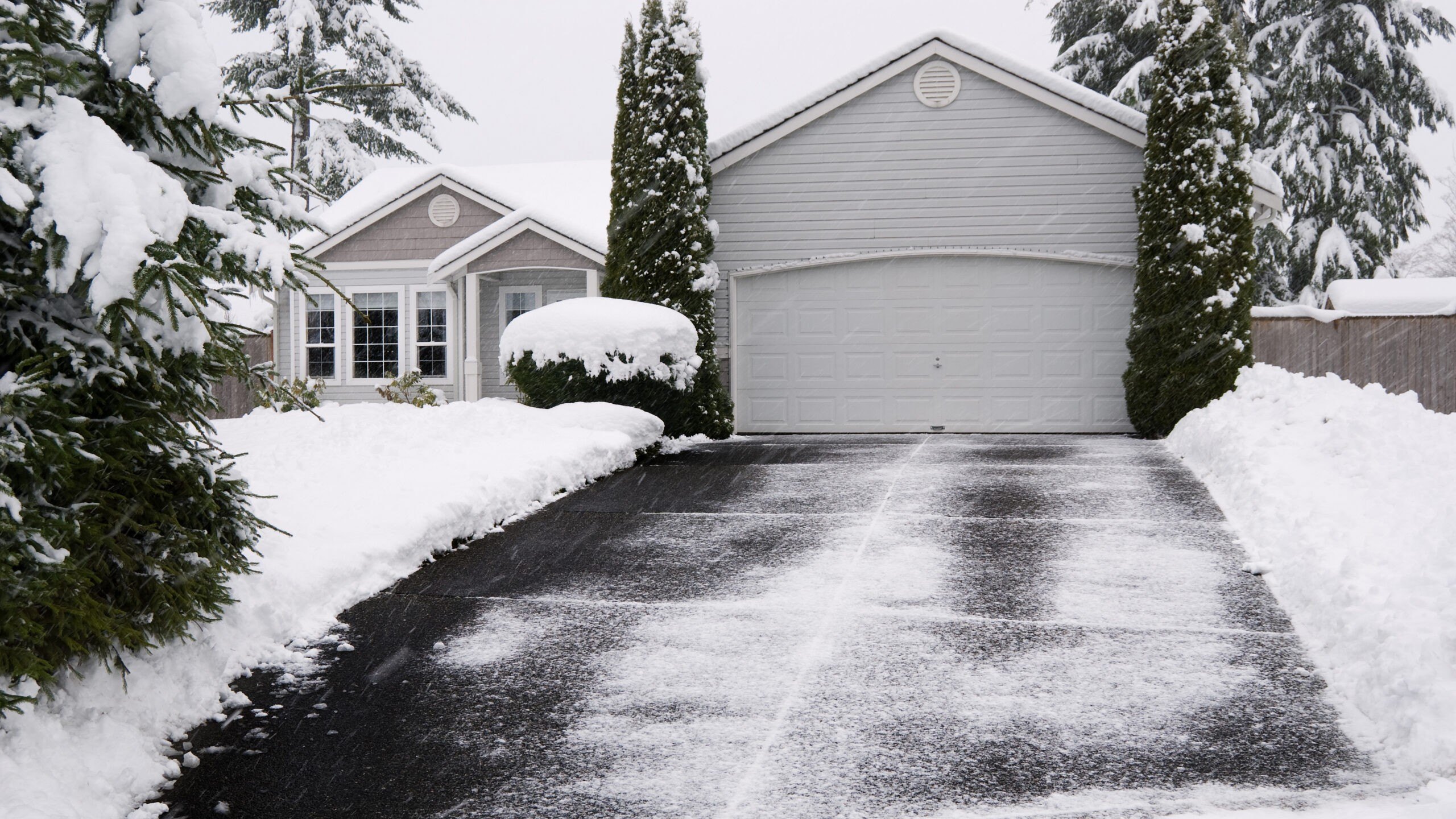
When winter storms hit and you just want all that snow and ice and slush to go away, salt offers the allure of a quick fix. But is salting your driveway the best solution? From driveway damage to environmental concerns, salt comes with real trade-offs. Ahead, experts break down the pros and cons of slating your driveway, plus some smarter ice-melt alternatives and best practices for staying safe when temperatures drop.
Loading…
Meet the experts:
-
Kate Ziegler, RealtorⓇ, real estate investor, landlord and renovation enthusiast in Massachusetts
-
Wills Mahoney, co-founder of Plowz & Mowz, an on-demand snow-plowing app servicing more than 40 U.S. cities
What the experts have to say about salting your driveway:
There’s no easy answer to whether or not you should salt your driveway. If you do decide to salt, use less than you think you need—and sweep up any excess salt to keep it from contaminating the water supply. It’s also a good idea to consider rock salt alternatives. Finally, you may want to consider salting after it snows (and after shoveling) instead of before. This will help minimize the amount of salt you use, although it will also mean more work for you. That, or investing in an electric snow blower.
FAQ about salting your driveway
Is salting actually effective?
The answer is yes—in certain conditions. “Salt works at melting icy surfaces when combined with warmer ground temperatures, sunshine, or friction from traffic,” Ziegler explains. “But if it’s very cold and heavy snow is forecasted, salt will do very little beyond making its way into your snowbanks when you eventually clear the driveway.” In other words, the colder the temperature, the less effective salting your driveway will be. When you get down to temperatures of around 15 degrees or lower, rock salt is basically useless.
Does salting damage your driveway?
If you have an asphalt driveway that’s in good condition, it should be relatively immune to salting. If, however, your asphalt driveway is starting to deteriorate, salting can exacerbate the problem. And if your driveway is made of concrete, brick, or gravel, salting will almost certainly cause corrosion. As for your car, since rock salt is especially damaging to metal, it’s best to park your car in the garage before salting.
Is salting your driveway bad for the environment?
Salting your driveway can pollute water supplies, soil, and plant life—especially because most people are using more salt than they need. The right amount, according to Salt Smart, a campaign to reduce the amount of salt that reaches rivers and streams, is about 12 ounces for a 20-foot-long driveway. “If salt piles linger after ice has melted, you likely used too much,” Ziegler says. “It will eventually wash away on its own, but that salt enters the surrounding soil and water,” where it can damage or kill nearby plants and cause you “lawn and garden headaches next season.”
Loading…
Are there alternative salts to consider?
Abstaining from salt altogether can prevent corrosion and pollution, but it’s not the only solution.
One easy swap: using calcium chloride instead of sodium chloride. Mahoney explains that not only does calcium chloride work at colder temperatures (up to 10 degrees below), it’s also better for the water table and safer for pets—though it is more expensive than rock salt.
What about non-salt options?
Sand is another worthy alternative, according to Ziegler. While it won’t actually melt ice or snow, it won’t throw off the balance of nearby waterways and it can give your boots and your tires some traction. And there are plenty of other options out there too: Beet juice, cat litter, wood ash, bird seed, and pickle brine can all help, according to the New Hampshire Department of Environmental Services and Maryland’s Carroll County Environmental Advisory Council.
The realtor.com® editorial team highlights a curated selection of product recommendations for your consideration; clicking a link to the retailer that sells the product may earn us a commission.
