

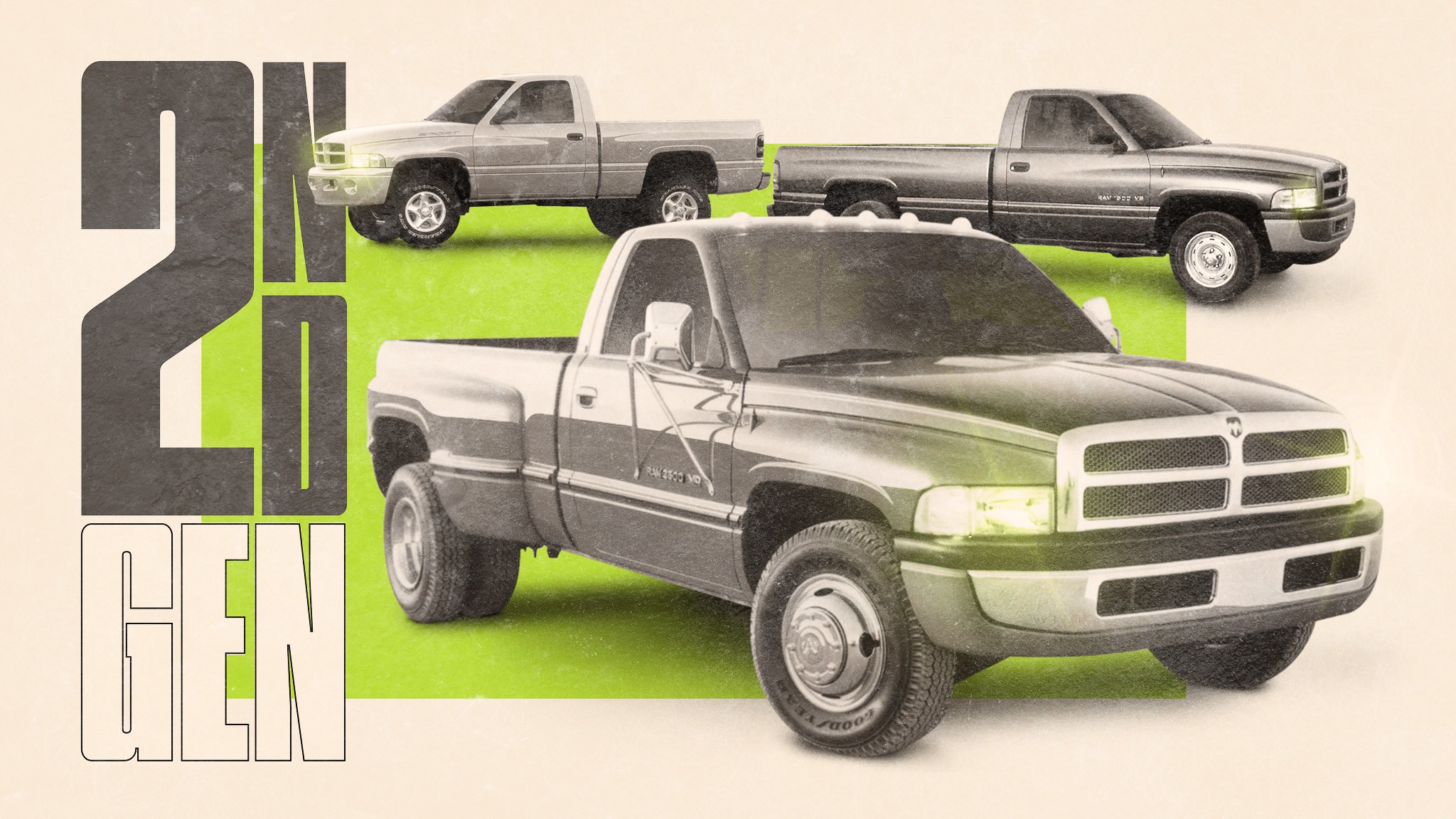
The Radical Ram Almost Didn’t Happen
Given how few resources Chrysler had allocated to the underperforming Dodge pickup division and how unexciting its prospects seemed, it’s not a surprise that 1994’s makeover took a torturous path on its way to the showroom.
There were two redesign concepts that preceded the one that ultimately made it into customer driveways. The first was dubbed “Louisville Slugger,” and while innovative in some ways—the idea was to create a modular platform that could pull duty as either a van or a pickup—it was an outright failure in other, more important areas. Namely, the engine bay was too narrow for the engine options Dodge wanted to offer, and the styling was, well, more than a little too “vanlike” to truly rise above the rest of the pickup pack.
The next attempt, “Phoenix,” wore some cues that would become familiar on the finished product (especially when seen in profile), but the front and rear offered a lukewarm dilution of both the current Dodge Dakota midsize truck and, surprisingly, the upcoming aerodynamically improved Old Body Style Ford F-150.
Chrysler executive Bob Lutz was so offended by how inoffensive Phoenix looked that he scrapped the entire project, moving the effort (dubbed T300) under his auspices (and those of fellow exec Francois Castaing) and giving designer Philip E. Payne carte blanche to come up with something completely outside the company’s current borders. It’s here that the Ram 1500’s tractor-trailer proportions and classic Power Wagon callbacks took form.
