

Even though working out is good for you, it can sometimes leave you feeling pretty bad. Intense muscle pain, stiffness, and tenderness—delayed-onset muscle soreness (DOMS) to insiders—is a common post-workout complaint, especially among people who are returning to exercise after a break and those who are trying a new type of exercise for the first time.
While DOMS is actually a sign that your workout was effective—physical activity causes micro-tears in muscle fibers that triggers them to knit back together stronger, resulting in muscle growth—it can cause discomfort (at best) and interfere with your ability to function (at worst). Depending on the severity of your DOMS case, you might even find it tough to take the stairs for a few days.
If ibuprofen or hot or cold compresses are your first-line treatment for treat post-workout aches and pains, you may be surprised to learn that some of the most accessible remedies aren’t found in your medicine cabinet, but in your fridge or pantry. Incorporating them into your diet can fight the inflammation induced by that muscle fiber damage to help you bounce back faster. When you eat the right things after a workout, “it tells your body to start the restoration process,” Amy Stephens, MS, RDN, CSSD, a sports nutrition consultant for NYU Athletics who specializes in performance nutrition and eating disorder treatment for competitive athletes, tells SELF.
Several nutrients are crucial
When eating for workout recovery, you should prioritize protein and carbs. Protein famously helps support your muscles by providing the amino acids they need to mend tears. Shoot for around 20 to 30 grams for best results, according to Stephens. Meanwhile, carbs—the body’s primary energy source—increase your blood sugar, or blood glucose, and, in turn, trigger the pancreas to secrete insulin (a hormone that tells the body’s cells to absorb glucose to prevent an overload). During that process, the circulating protein is also absorbed—and the repair process begins in the muscles. Carbs “are something that get overlooked a lot, but they’re really a recovery spark,” Tyler McDonald, NASM-CPT, CNC, a certified personal trainer specializing in tennis and a senior brand marketing manager for the National Academy of Sports Medicine, tells SELF.
You can think of the protein-carbs duo as kind of a nutritional dream team. Without protein, your muscles won’t have the amino acids they need to rebuild: “While you’re sparking the transport needed in your body, you don’t necessarily have the right nutrient mix,” McDonald explains. Without carbs, on the other hand, those amino acids won’t reach your muscles as speedily. (Not to mention you also might feel more tired and fatigued!) Most authorities recommend a three-to-one ratio of carbs to protein in a post-workout snack or meal. If you ate 20 grams of protein, you’d want 60 grams of carbs, for example. If possible, throw in some healthy fats—the third macro—as well.
Even though protein and carbs are essential, it’s also important not to overlook micronutrients like vitamins and minerals, especially vitamin C and copper. Both play essential roles in collagen synthesis to support your connective tissues, according to McDonald. During exercise, after all, “it’s not just your muscles that are being worked out—it’s also your tendons and your joints,” McDonald says. Tendons and joints “kind of hold all the bones and muscles in place, so making sure we don’t neglect those is important.”
With these nutritional considerations in mind, here are seven foods to incorporate after a workout to boost recovery and feel better sooner.
Seven foods to eat after a workout
Eggs and toast
“Eggs are a really good example of a protein-dense food that’ll do a lot for you,” McDonald says. Pairing them with a carb like toast is a quick and easy way to meet your post-workout nutritional needs, according to Stephens. Consider choosing a multigrain bread for some bonus fiber. (Don’t like eggs? Check out this list of 15 alternative high-protein breakfast options.)
Yogurt or cottage cheese with fruit
Similar to eggs, both yogurt and cottage cheese are packed with protein. What’s more, like other dairy products, they “also contain an amino acid called leucine, which activates recovery a lot faster and builds muscle at a much higher rate,” Stephens says. Meanwhile, fruit provides high-quality carbohydrates to round out the crucial carb-protein duo. Besides, it’s “rich in all different antioxidants, which also help repair that damaged muscle tissue,” Stephens says. Quercetin—plentiful in apples, cherries, raspberries, red grapes, and citrus fruits—is one particularly potent example. Try substituting in a protein shake and an apple if you’re not feeling yogurt or cottage cheese.
Salted almonds and a banana
Nuts have a little bit of everything—protein, fiber, and healthy fats—and bananas are a top-tier source of both carbs and the hydration-promoting electrolyte potassium. Between the two, this snack “helps with reducing inflammation in many different ways,” Stephens says. Plus, she adds, the sodium in the salt will contribute additional electrolytes. You can also try salted pretzels and a drinkable yogurt as an alternative to this combo.
Salmon
If you don’t want to sit down to a plate of fish immediately after finishing up in the gym, we don’t blame you—but it can’t be denied that some kinds offer significant recovery benefits. Thanks to its high concentration of anti-inflammatory omega-3 fatty acids, salmon is “really good for inflammation,” McDonald says. Other omega-3-rich food options include walnuts, chia seeds, and hemp hearts, all of which are “really easy to toss into a smoothie” if you don’t want to eat them straight.
Turmeric
Similar to salmon, turmeric is also rich in anti-inflammatory compounds—specifically, an antioxidant known as curcumin. Because of this, it’s another strong anti-inflammatory option to help combat sore muscles, according to McDonald. Scooping some turmeric powder into a post-workout shake could offer that curcumin hit.
Bell peppers
Bell peppers are “really high in vitamin C,” McDonald says—a nutrient that helps support connective tissues like tendons and joints, as we’ve covered. (How high, you ask? Well, a serving delivers more than 200% of the daily value for vitamin C, at least, blowing more well-known sources like citrus fruit out of the water.) Choose red peppers, which pack significantly more vitamin C than the green kind, to maximize your intake. Dunking them in hummus or ranch dressing could tack on some carbs as well.
Kiwi or pineapple
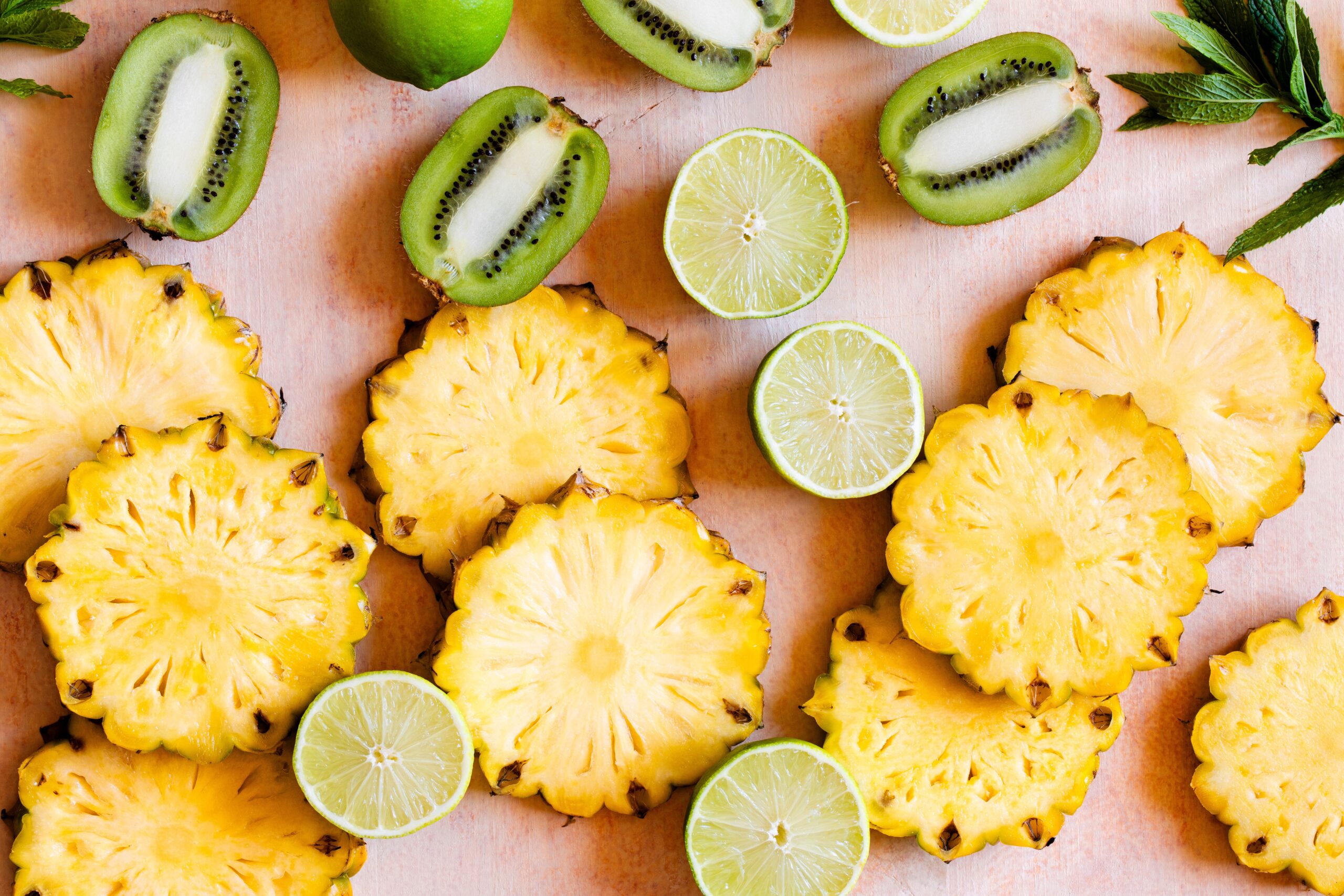
Both of these tropical fruits contain enzymes that aid in protein digestion—bromelain in the case of pineapple, and actinidin in the case of kiwi. Bromelain, in particular, has been found to inhibit the production of inflammatory agents, reducing soreness. Try making yourself a mini fruit platter that features this duo after your workout.
When to eat these foods
When it comes to eating for workout recovery, “it’s not just about the specific food—it’s also the timing that’s really important,” Stephens says. Eating within 30 to 60 minutes of exercising will “shift your body into recovery mode a lot faster”—and waiting too long, by contrast, will cause a delay. While this rule applies to all workouts, the level of importance increases in tandem with the intensity and duration. “The more intense your workout, or the longer you work out, the bigger the priority,” Stephens says.
McDonald has a slightly different approach. He prefers to focus on more holistic “protein pacing”—spacing out your protein intake over the course of the day rather than all at once. “You should be consuming 0.4 to 0.5 grams [per kilogram] of your body weight in protein every three to four hours throughout the day,” he says, noting that muscle protein synthesis—the breaking down and rebuilding of muscle tissue with the help of protein—is a steady, ongoing process rather than an one-off event. “Thinking about your recovery as an entire arc through the day, not just this one point in time, makes it a lot more approachable.”
Most of all, Stephens and McDonald both emphasize not to overthink your strategy. “Keeping it simple is actually the best thing to do,” Stephens says. “When we think about all of these different things—proteins, carbs, micronutrients—it’s very easy to get overwhelmed, so looking for nutrient-dense foods and getting the most bang for your calorie buck is going to be the best way to approach it,” McDonald adds.
Related:
- 6 Foods That Support Your Body’s Natural Detox Process
- The 5 Best Foods to Eat for Better Mental Health
- 6 Foods to Eat for Better Sleep
Get more of SELF’s great nutrition coverage delivered right to your inbox—for free.
