

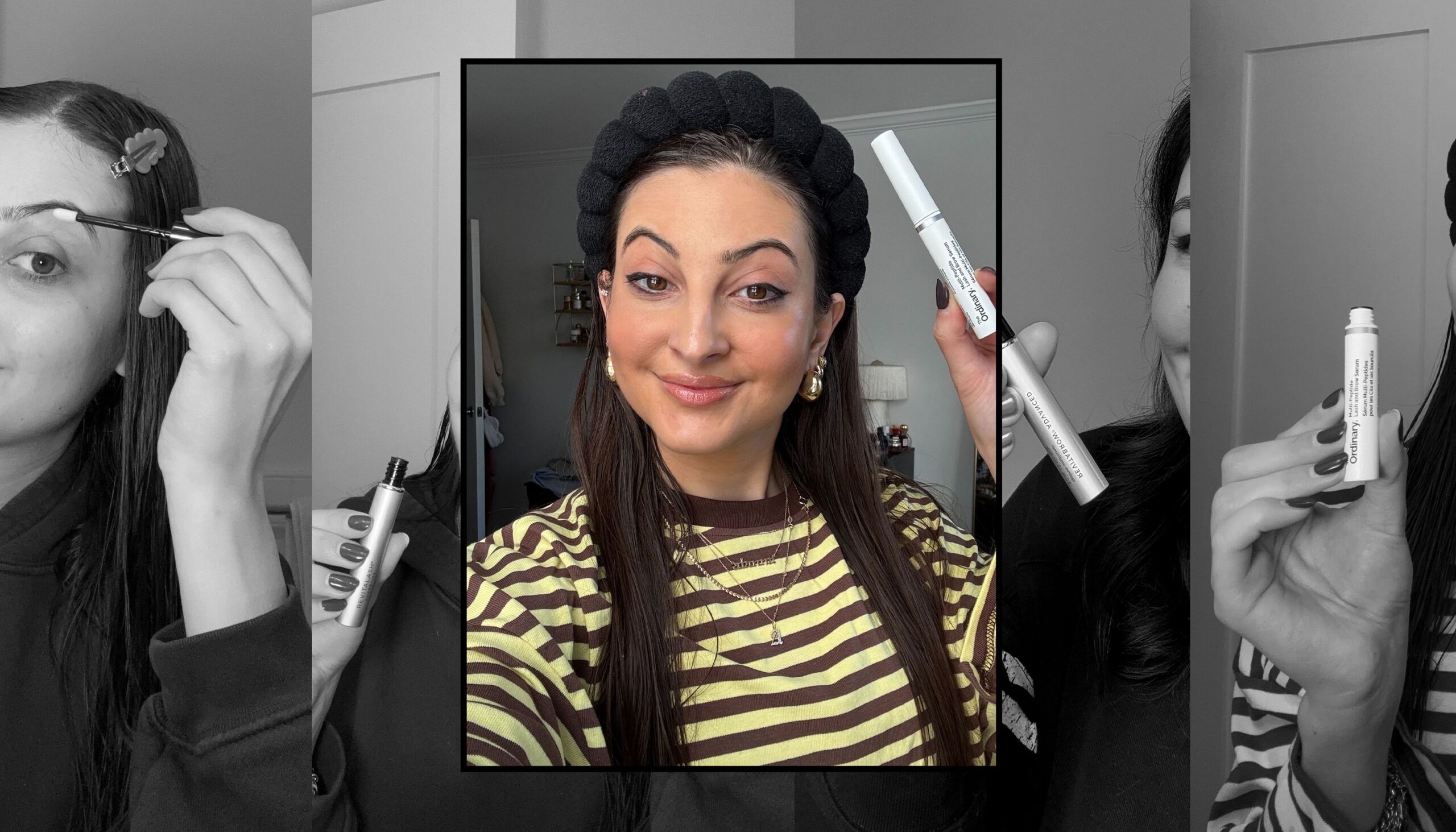
- Key Ingredients: Peptides, glycerin, plant extracts, biotin
- Contains hormones: No
- Use: Twice per day
The brow growth serums we skipped
- If you’re looking to address very thin brows, we also tested out the RapidBrow Eyebrow Enhancing Serum. This serum is affordable and has a trio of proteins to strengthen follicles, peptides to encourage new growth, and conditioners that nourish hair. Users say it works quickly, too. One of our testers, a victim of the ’90s thin-eyebrow trend, said she used the serum religiously for two months and saw significant growth, making her eyebrows look as dense as they once were. We ultimately removed it from our list because we found that other products did a better job of thickening hairs with a better wand for application.
- We also gave the NeuBrow Brow Enhancing Serum a go. This formula is great for stimulating growth, thanks to its ingredients that support healthier-looking brows—including biotin (vitamin B7) to help strengthen and stimulate growth, keratin to fortify existing hairs, panthenol (provitamin B5) and apple extract to condition and hydrate. Its unique applicator, shaped like a brow brush, makes it easy to sweep on precisely where you need it so even first-timers can apply it with confidence. But we found this product frequently went out of stock online.
- The formula of the Kosas GrowPotion Fluffy Brow + Lash Boosting Serum is lightweight and doesn’t harden. It’s also great as the finishing touch to everyday makeup, keeping brows groomed and in place. While it excelled at keeping brows soft and hydrated, the formula is more about conditioning than stimulating new growth.
- Our tester noticed a real improvement in fullness with the Augustinus Bader The Eyebrow & Lash Enhancing Serum, which can be used on both brows and lashes. After two weeks, her brows looked noticeably fuller and less patchy, and she didn’t have to rely on her eyebrow makeup as much. While the dual-use formula for brows and lashes delivered visible results, the $155 price tag and tricky-to-use wand kept it out of our top picks.
- The light as a feather Milk Makeup Kush Lash + Brow Serum impressed our tester by helping regrow a sparse patch within weeks. It’s nonsticky, the formula absorbs right in, and the tiny applicator makes it easy to maneuver. While it’s pregnancy-safe and can be used on lashes too, the formula is so sheer that it can be difficult to tell where you’ve actually applied it—making it easy to miss spots or apply unevenly.
Frequently asked questions
Do eyebrow growth serums really work?
Yes, but they need to be used consistently over many weeks to months, says Dr. Portela. The most effective option for regrowth is a prescription product called Latisse. Still, if a doctor’s visit is out of the question, OTC beauty products containing the right ingredients (plus a little bit of patience) will also do the trick.
Look for a prostaglandin or prostaglandin analogue such as bimatoprost, which is found in the prescription-strength formula Latisse, or isopropyl cloprostenate, which is like what you’d find in GrandeLash, says Geeta Yadav, MD, a board-certified dermatologist and founder of Facet Dermatology. Both of these active ingredients encourage hair growth. Still, other notable ingredients in a formulation include peptides and amino acids to support brow growth directly, and hyaluronic acid or vitamin E to hydrate and protect the skin, says Dr. Portela.
Can you regrow sparse eyebrows?
In most cases, yes. “As long as the follicle is still functional, you should be able to regrow your brows,” says Dr. Engelman. That said, overplucking or overwaxing the brows can permanently kill hair follicles, and if that’s the case, hair may not grow back. “Thankfully, there are numerous solutions for growing back brow hair if the follicles are still active, including topical serums, supplements, diet adjustments, etc,” she says.
Are the brow serums with hormones the most powerful?
“Generally, brow growth serums that contain prostaglandin analogs are considered more powerful and effective than brow growth serums that do not contain these hormones,” says Dr. Engelman. She goes on to explain that prostaglandin analogs are proven to be effective at supporting brow growth by extending the anagen (growth) phase of the hair cycle. “While there are some good prostaglandin-free formulas out there, typically better and faster results come from serums that do contain prostaglandins. When looking to purchase a brow serum, always do your research and check for clinical testing and verified before-and-after results,” she says.
Note: There may be a risk of irritation, itchiness, and redness, particularly with individuals who have sensitive skin when using a brow serum with hormones, according to Dr. Engelman. “The more serious risks are associated with the eye area (more commonly with lash growth serums), where in some rare cases, prostaglandin analogs were linked to hyperpigmentation of the skin and even the iris of the eyes,” she says.
How long does it take to see results from an eyebrow growth serum?
You can expect to see results in anywhere from one to three months, depending on the product and its ingredients. Both derms and makeup artists agree that consistency is key. If you’re looking to regrow your eyebrows as quickly as possible, use it consistently and don’t skip days for the best, fastest results.
What should you avoid doing if you want thicker brows?
Don’t overpluck them, Dr. Engelman says. “Overplucking can lead to permanent loss of brow hair. I recommend tweezing only the hairs that fall outside of your natural brow shape, or leave it to the pros to pluck, wax, or thread unwanted hairs every few weeks,” she says. It’s also key to be careful about which skin care ingredients you use in the brow area. “Potent ingredients like retinol can actually interrupt hair growth and result in hair loss, so it’s best to avoid applying them on the brows,” she says. If you have sensitive or acne-prone skin, products that irritate or clog pores can also interfere with eyebrow follicles, so the gentler, the better for this area.
How long can you use a growth serum?
Most brow serums are safe to use long-term, as long as you’re not experiencing irritation. In fact, consistency is key—many formulas stop working once you discontinue them, since they support the growth cycle rather than permanently changing it. Experts generally recommend using a serum daily for 8 to 12 weeks before expecting noticeable results, then continuing regular use to maintain them. If you’re using a prostaglandin analogue (like bimatoprost or its derivatives), check with your dermatologist first, especially if you have sensitive skin or eye concerns.
Do eyebrows regress if you stop using growth serum?
Yes. Once you stop applying a brow serum, your results will gradually fade. Most formulas work by conditioning hair or stimulating the growth phase of the follicle, but they don’t permanently change how your brows grow. Over several weeks to months, your eyebrows typically return to their baseline fullness and density. To maintain results, dermatologists recommend continuing regular use or shifting to a maintenance schedule.
We based our testing on dermatologist guidance. Serums containing hormones (such as prostaglandin analogues) that promised to enhance brow fullness or length were used for at least 12 weeks. Peptide-focused formulas aimed at strengthening brow hairs and minimizing breakage followed the same testing period. Meanwhile, hormone-free serums designed primarily for conditioning and hydration were trialed over four weeks. Twelve testers applied each product as directed—once or twice daily—and assessed factors like ease of application, visible results, product longevity, and overall value.
- Claire Wolinsky, MD, a board-certified dermatologist at Spring Street Dermatology in New York City
- Dustin Portela, DO, board-certified dermatologist in Idaho
- Geeta Yadav, MD, board-certified dermatologist and founder of Facet Dermatology
- Natalie Dresher, Miami-based makeup artist
- Dendy Engelman, MD, board-certified dermatologist in New York City.
- Pooja Rambhia MD, a board-certified dermatologist at Union Derm
