





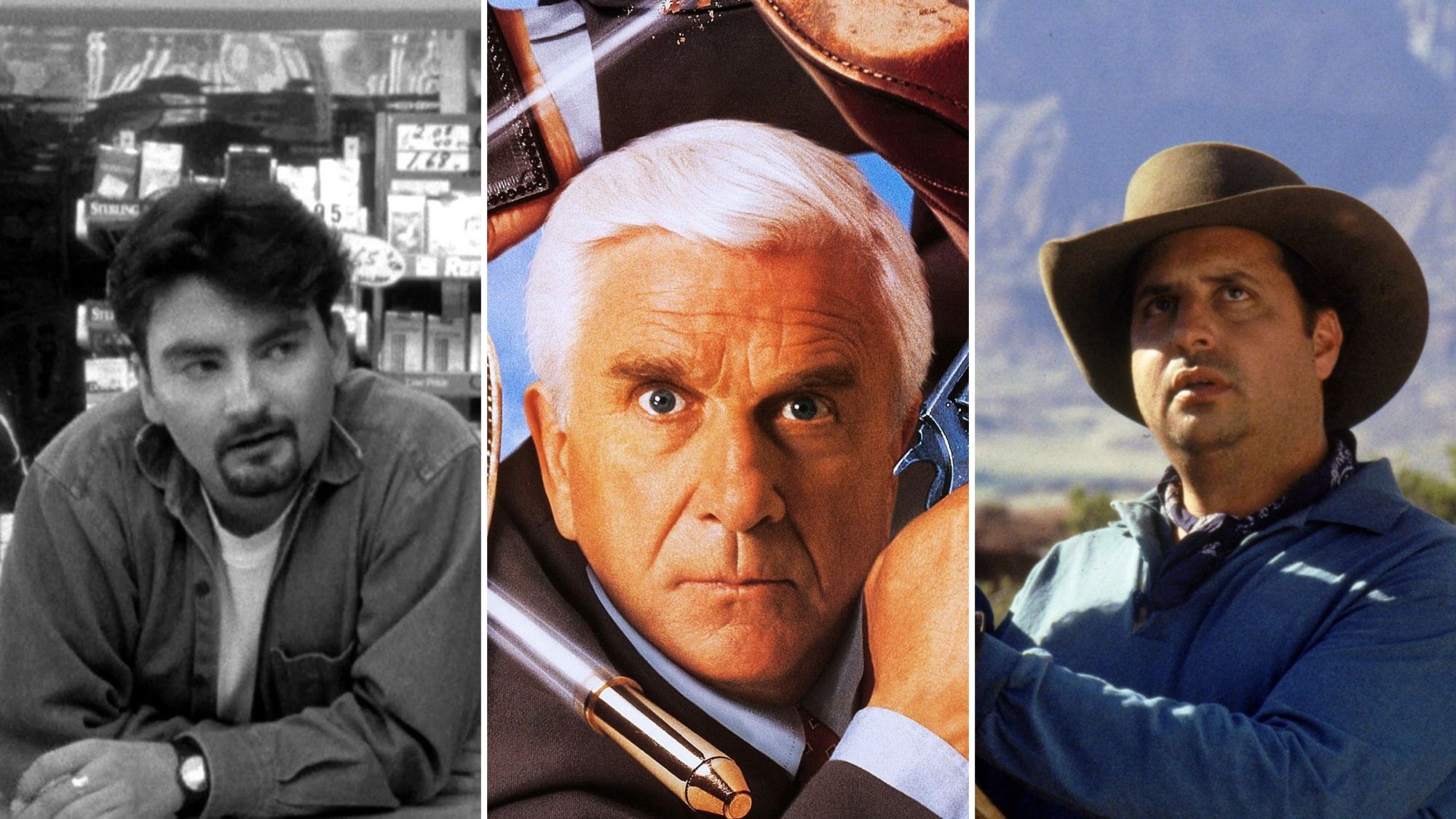
Comedy was one of the most profitable genres in 1990s Hollywood, powered by a video rental market that turned quotable one-liners into household currency and a studio system willing to bankroll star-driven vehicles alongside cheaper genre fare. The decade also produced its own comedic language, from the deadpan parody tradition perfected by Zucker-Abrahams-Zucker to the rubber-faced physical performance style that turned television comedians into movie stars almost overnight. At the same time, Sundance and Miramax proved that a comedy shot for a few thousand dollars could travel just as far as one backed by a studio marketing budget, opening the door for a wave of independent filmmakers with distinctly personal voices. That combination of mainstream spectacle and low-budget ambition gave the genre a range it had rarely shown before.
Videos by ComicBook.com
However, while the 1990s were a golden age for comedy, the genre is arguably the most vulnerable to aging poorly, since so much of what makes audiences laugh depends on slang, celebrity references, and social attitudes that shift within a few years of release. That makes it remarkable that so many of 1994’s biggest comedic swings continue to draw laughs decades after their references should have expired.
6) City Slickers II: The Legend of Curly’s Gold


City Slickers II: The Legend of Curly’s Gold followed the runaway success of the 1991 original, reuniting Mitch Robbins (Billy Crystal) and Phil Berquist (Daniel Stern) for a treasure hunt built around a map left behind by their late trail guide Curly. Jack Palance also returned in dual roles, playing both flashback footage of Curly and his previously unmentioned twin brother Duke, a device that let the production capitalize on the Oscar-winning performance of the first film.
Unfortunately, the sequel cost roughly $40 million to produce and grossed about $72 million worldwide, an unspectacular return that fell well short of its predecessor’s cultural footprint. In addition, critics were unkind at the time, and the film even picked up a Golden Raspberry nomination for Worst Remake or Sequel. Still, Crystal and Stern’s rapport survived the transition, with Jon Lovitz bringing a genuinely funny sibling dynamic as Mitch’s brother Glen that the original never had room for. The film also leans hard on Western movie tropes for its comedy, which keeps its gags surprisingly disconnected from anything topical, and that alone has helped it age more gracefully than its reputation suggests.
5) Naked Gun 33 1/3: The Final Insult

Naked Gun 33 1/3: The Final Insult closed out the iconic Police Squad film trilogy in 1994. The movie was the first Naked Gun installment directed by someone other than David Zucker, with Peter Segal taking the reins in his feature directorial debut while Zucker stayed on as producer and co-writer. For the threequel, Leslie Nielsen returned as Lieutenant Frank Drebin, joined by George Kennedy and O.J. Simpson, whose performance became notable in retrospect as his last film role before his arrest on murder charges just months later.
What keeps the entire Naked Gun trilogy funny today, including 33 1/3: The Final Insult, is the sheer density of its gag construction, since the Zucker-Abrahams formula packs so many visual puns, movie parodies, and background sight gags into each scene that a joke landing poorly barely registers before the next one arrives. Plus, the film’s centerpiece parody of the Academy Awards, complete with an extended homage to the Untouchables staircase sequence, remains one of the tightest set pieces the franchise has ever produced. Even as a clear step down from the first two Naked Gun films, the trilogy’s closing chapter shows why rapid-fire slapstick ages better than jokes built around a single premise.
4) The Mask

The Mask adapted the Dark Horse Comics series into a $23 million production that ultimately grossed more than $351 million worldwide, a return that made it the year’s biggest comedy hit. Instead of following the dark nature of the comics, director Chuck Russell built the film around Jim Carrey’s performance as Stanley Ipkiss, a mild-mannered bank clerk whose discovery of an enchanted mask unleashes a cartoon alter ego capable of bending physics for a laugh.
What separates The Mask from more dialogue-dependent comedies of its era is how much of its humor is purely physical and visual, drawing on the language of Tex Avery cartoons rather than topical references. That choice has paid off, since sequences like the “Cuban Pete” dance number or Milo the dog’s own transformation into a green-faced troublemaker still play as pure slapstick spectacle regardless of when an audience discovers them. The film also effectively launched Cameron Diaz’s career overnight, turning an unknown model into a leading actress within a single release.
3) Ace Ventura: Pet Detective

Ace Ventura: Pet Detective turned into one of 1994’s biggest sleeper hits, earning $107.2 million worldwide against a $15 million budget despite reviews that were mostly negative. Similar to The Mask, Jim Carrey’s manic performance as Ace Ventura charmed audiences, helping the star to build his fame as a unique comedian in Hollywood. The movie follows a pet detective investigating the kidnapping of the Miami Dolphins’ team mascot, and the physical commitment Carrey brought to the role established the template he would use across his career.
To be fair, not everything in Aced Ventura: Pet Detective aged gracefully. The film’s climactic reveal involving Lieutenant Lois Einhorn (Lieutenant Lois Einhorn) has turned into its most legitimately criticized element, as it reduces the character’s transgender identity to a punchline and a villain reveal, a choice that was mean-spirited even at the time. Still, that criticism doesn’t erase the fact that Carrey’s frenetic character work, largely improvised on set, remains a genuinely inventive piece of physical comedy that launched a franchise, an animated series, and one of the decade’s most recognizable comic personas.
2) Clerks

Clerks premiered at the Sundance Film Festival before Miramax purchased the black-and-white independent film and released it theatrically the same year, transforming a $27,575 production shot on credit cards into a launching pad for writer-director Kevin Smith’s entire career. The film follows convenience store clerk Dante Hicks (Brian O’Halloran) and his video store counterpart Randal Graves (Jeff Anderson) through a single chaotic shift, introducing Jay and Silent Bob (Jason Mewes and Smith himself) as recurring characters who would anchor Smith’s View Askewniverse for decades afterward.
In 2019, the Library of Congress selected Clerks for preservation in the National Film Registry, citing its cultural and historical significance to American independent cinema. Beyond the prestige, what keeps the film funny today is its foundation in verbal sparring, as Dante and Randal’s circular arguments about customer service, movie trivia, and workplace ethics translate cleanly to any retail employee regardless of the decade. Furthermore, Smith’s willingness to let dialogue carry entire scenes, without relying on visual gags or budget, gave the film a shelf life most studio comedies of the same year couldn’t match.
1) Dumb and Dumber
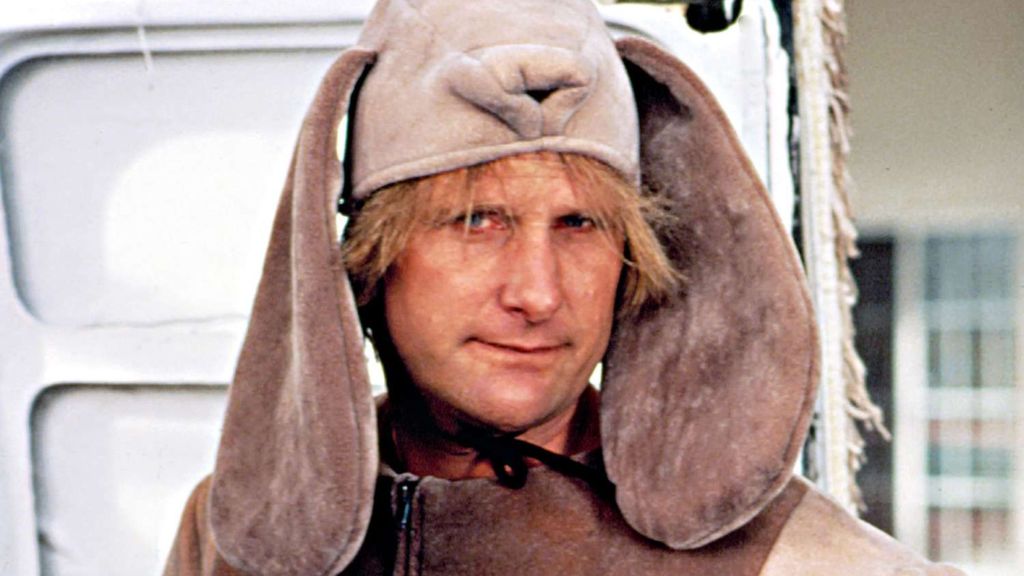
Dumb and Dumber marked the directorial debut of Peter Farrelly and Bobby Farrelly, who would become comedic powerhouses in Hollywood after the movie grossed $247.3 million worldwide against a $17 million budget. In the movie, Jim Carrey and Jeff Daniels starred as Lloyd Christmas and Harry Dunne, two well-meaning but profoundly dim friends who drive across the country to return a briefcase of ransom money, unaware of what it actually contains. Dumb and Dumber received mixed reviews on release but built a cult following strong enough that it later spawned a 2003 prequel, a 2014 sequel with the original stars, and even an animated television series.
What makes Dumb and Dumber the most resilient comedy of 1994 is how its humor is built around character rather than cultural context, since Lloyd and Harry’s stupidity is rooted in sincerity rather than any reference an audience needs to recognize. That approach created a template for the modern idiot-buddy comedy that studios have chased ever since, and few have matched the specific chemistry Carrey and Daniels brought to the original.
Which 1994 comedy do you think holds up the best three decades later? Leave a comment below and join the conversation now in the ComicBook Forum!


