


The horror genre spent the 1990s pulling in very different directions. After nearly a decade of exhausted slasher franchises, Wes Craven’s Scream reinvigorated the genre in 1996 by turning killer conventions into the plot itself, a self-aware wink that spawned a wave of glossy teen slashers. At the same time, filmmakers working outside the studio mainstream were pushing in the opposite direction, trading catharsis and irony for a slower kind of dread. Beyond Hollywood, Japan’s film industry was quietly building what would soon be known as J-horror, a style rooted in curses and the unresolved anger of the dead, laying the groundwork for a wave of American remakes that would define the following decade of mainstream horror.
Videos by ComicBook.com
Horror criticism tends to focus on what a monster represents, whether that’s repressed trauma, technological anxiety, or generational guilt, and those readings matter because horror is a tool for humans to confront the most disturbing parts of the world around us and our own psyche. However, there’s a simpler reason why horror movies are so popular, and that’s because it’s fun to feel scared, just to realize the danger wasn’t real a few moments later. As someone discovering the genre as a kid in the 1990s — the times were different and parental negligence was the rule — that feeling was incredibly present, and 1998 had many new releases that eventually found their own way to my VHS player and quickly got under my skin.
4) Deep Rising

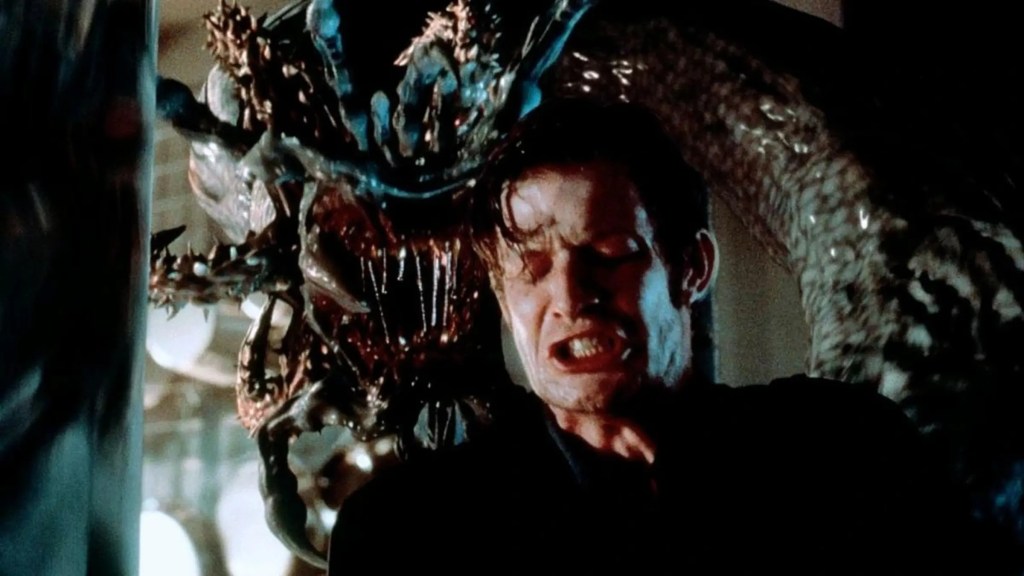
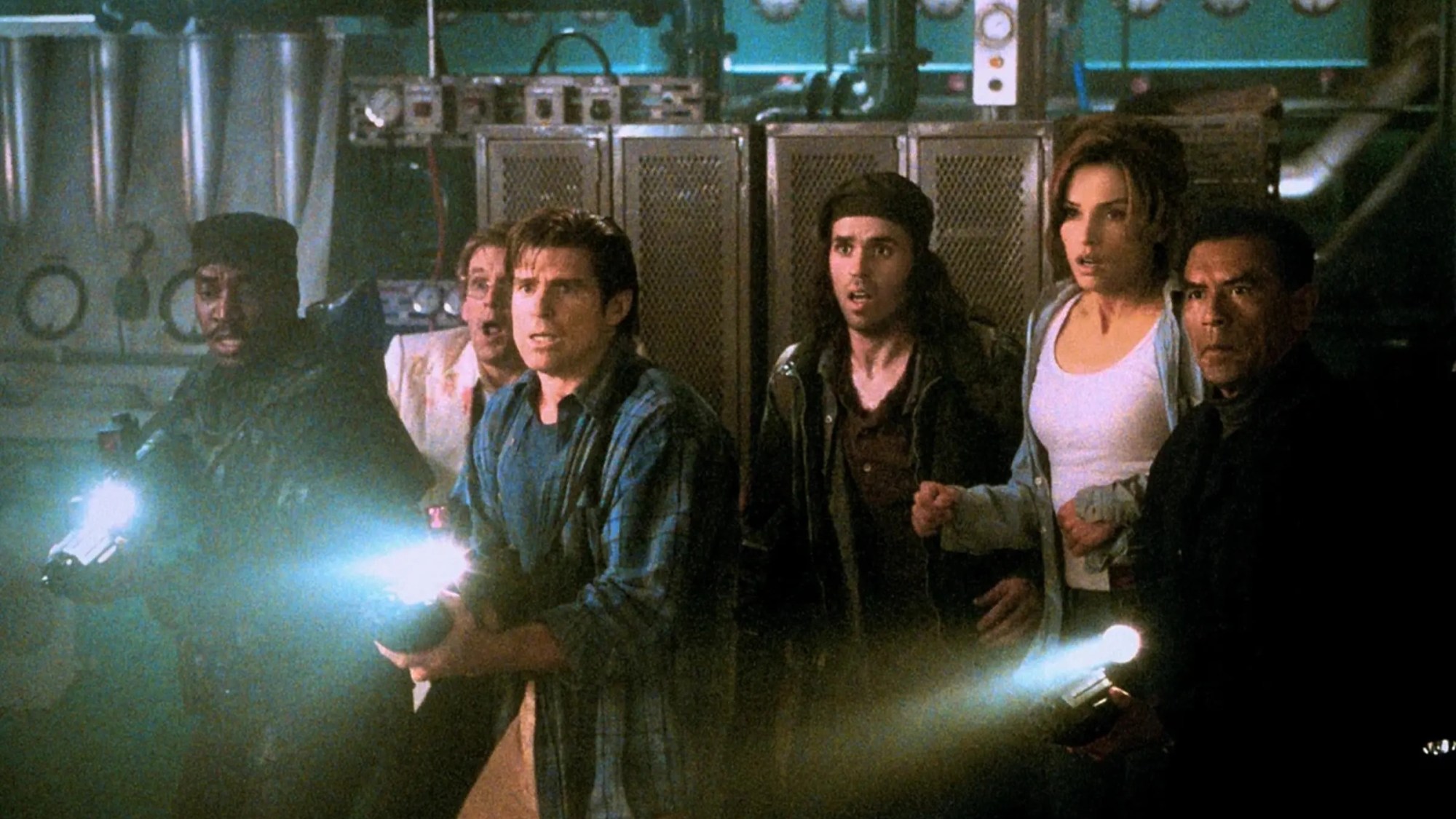
Before Stephen Sommers directed The Mummy, he made Deep Rising, a creature feature that stranded a band of mercenaries on a luxury cruise liner adrift in the South China Sea, only to discover the ship overrun by giant tentacles that digest their victims alive. Treat Williams led the cast as reluctant hero Finnegan, alongside Famke Janssen as a con artist and Wes Studi as a hardened gun-for-hire, all of them fighting for survival against a monster that could slither through the ship’s pipes and hallways like water. While less impressive by today’s standards, Rob Bottin’s practical creature effects turned the ocean liner into a floating slaughterhouse, with half-digested corpses dropping from ceilings and hallways painted in gore, all delivered with a B-movie enthusiasm that made the carnage feel dangerously plausible to a young mind.
By trapping its victims in a confined space with something that could strike from any direction, Deep Rising built a siege-horror atmosphere that left little room to breathe. That setting, paired with the everyday vulnerability of a gurgling sink or a dark bathroom pipe, turned mundane domestic spaces into potential threats that helped the movie feel scary. The cherry on top, however, is the image of a victim screaming liquid slurry while being digested alive, just before being swallowed whole.
3) Urban Legend

Urban Legend revolves around an ensemble that includes Jared Leto as journalism student Paul Gardner, Alicia Witt as Natalie Simon, Rebecca Gayheart as Brenda Bates, Tara Reid as Sasha Thomas, and Michael Rosenbaum as Parker Riley, with horror legend Robert Englund playing a psychology professor with a suspicious past — a brilliant cast choice that weaponized his time as Freddy Krueger. Directed by Jamie Blanks and written by Silvio Horta, the film put a spin on slasher tradition by incorporating real campus folklore such as the killer hiding in a car’s backseat, a body hung from a tree with a rope tied to a bumper, and poisoned Halloween candy. Those were all stories repeated by children and teenagers trying to scare each other, which made the film more effective.
The inventive kills of Urban Legend made it one of the more successful slashers of the post-Scream era, grossing $72 million against a $14 million budget. In addition to its opening decapitation, the film’s most memorable scare is the bathroom sequence built around the Pop Rocks and soda urban legend, staged with enough grim commitment that the killer’s method felt like something a person could actually attempt. Critics largely dismissed the film as an imitation of Scream, and the comparison is fair, but watching a slasher weaponize the exact stories being swapped in real life made the slasher more unsettling.
2) Spiral
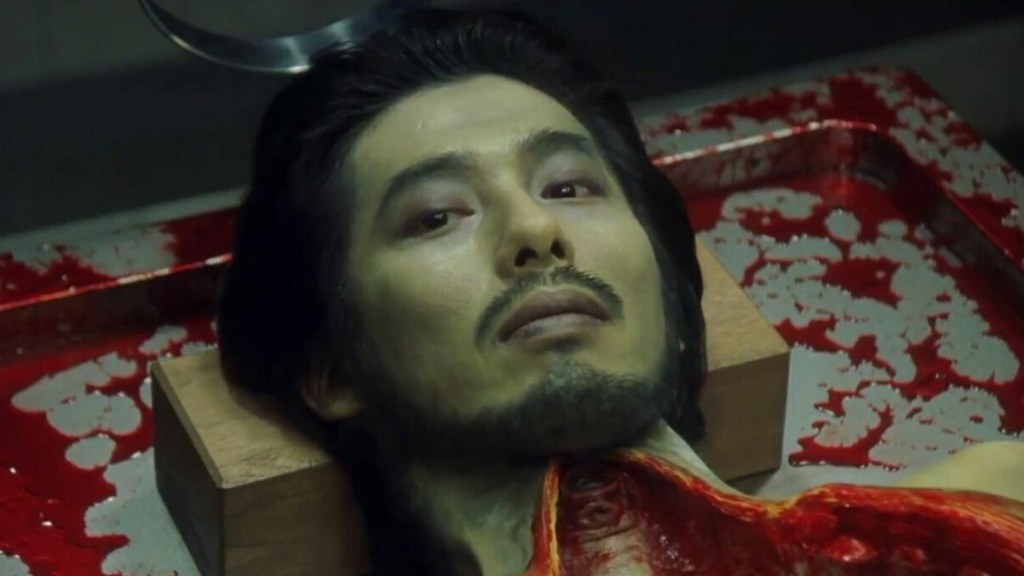
Spiral, released in Japan under the title Rasen on the same day as Ringu, was directed by Joji Iida and adapted from Koji Suzuki’s own sequel novel, sharing cast members with its more famous sibling while abandoning almost everything that made the original film work. The film opens with a suicidal pathologist named Ando (Koichi Sato) performing an autopsy on Ryuji Takayama, the character Hiroyuki Sanada played in Ringu, only to discover the body altered in ways that pull him directly into the video curse.
Rather than treating the film’s antagonist as a purely vengeful spirit, Spiral reframes the curse as a contagious virus resembling smallpox, spreading through infected tissue rather than pure supernatural dread. That choice made the film a critical and commercial disaster in Japan. As a result, the studio quietly commissioned an entirely different sequel, Ring 2, to replace it as canon within a year, leaving Spiral to become the forgotten entry in the franchise. Still, as a kid who saw the two films close together, Spiral‘s body horror hit differently than Ringu‘s ghost story for me. While it’s easy to understand the rejection, Spiral still has enough gore and disturbing imagery to be recognized as an awful adaptation, but a scary gem of 1998 horror.
1) Ringu

Directed by Hideo Nakata and adapted from Koji Suzuki’s 1991 novel, Ringu follows reporter Reiko Asakawa, played by Nanako Matsushima, as she investigates a videotape that kills whoever watches it exactly seven days later. Produced on a budget of roughly $1.5 million, the film became the most successful horror release in Japan at the time of its debut. Eventually, it also claimed the title of highest-grossing horror film in Japanese history up to that point, which helped it to cross the ocean and even get a Hollywood remake a few years later. Curiously, the film’s climactic image, Sadako (Rie Ino’o) climbing out of a television set and into the room of her latest victim, does not appear anywhere in Suzuki’s source novel. It was invented specifically for the film, which makes it more impressive that the scene became the defining image of an entire horror subgenre.
Nakata built Ringu‘s dread almost entirely through atmosphere and sound design rather than gore, leaving long stretches of silence before the phone rings. That means a kid watching the movie alone, like I was, had nothing to distract from the growing sense of dread. Ringu‘s success kicked off the J-horror boom that produced Ju-On and Dark Water, and its slow-burn approach stood in direct contrast to the fast-paced American slashers dominating theaters that same year. It was terrifying to stare at the television once the movie was over, imagining what kind of horror could come out of the screen.
Which of these 1998 horror movies kept you up at night? Leave a comment below and join the conversation now in the ComicBook Forum!