




Nobody adopts a rescue dog for the credit. Compassion doesn’t work that way. It walks into an animal shelter, picks the animal nobody else wanted, and leaves before anyone can call it generous.
Research from the Human Animal Bond Research Institute confirms that pet companionship measurably reduces loneliness and lifts happiness — proof that our world in 2026 still rewards people who show up for a dog with no proof it’ll be worth it.
These 12 real stories start the same way every time: in the last kennel on the row, with happiness and kindness nobody was expecting to find there.

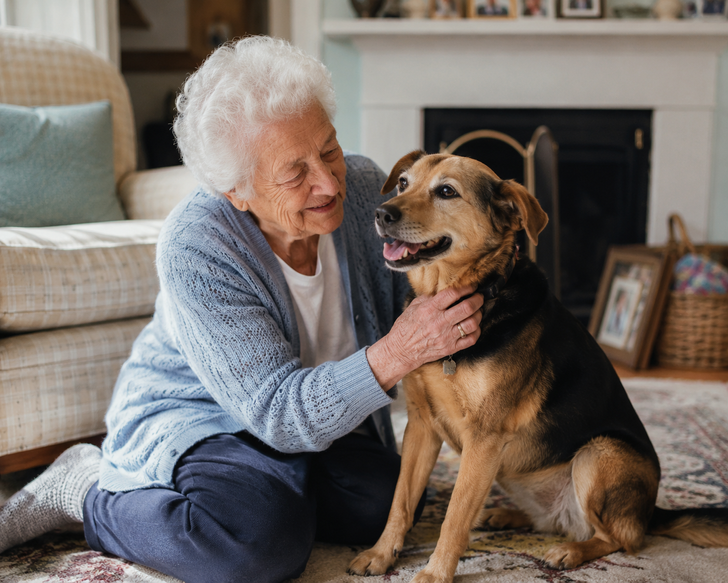


- My mother’s memory loss had taken most of her words by the time we brought Lucky home from the animal shelter — a last attempt, the doctor’s idea, low expectations all around.
She didn’t recognize me most days. She recognized the dog instantly, every time, and called him by a name we’d never given him: Duke.
We found out three months later, going through old photos, why. Duke was the name of the dog she’d had as a girl — sixty years earlier, a detail she’d never once mentioned to any of us in her life.
Whatever room memory loss had locked, that dog’s face was the key that still worked. She called Lucky “Duke” until the day she was gone. We never corrected her once.
- My mother-in-law never told anyone she’d lost a daughter before my husband was born — a secret she kept for forty years, until the week she started fostering senior cats through her local animal welfare office and named every single one Grace.
Six Graces over four years. We assumed it was just a name she liked.
She finally explained it at the seventh Grace’s arrival: “Your father-in-law and I named our daughter Grace. We never got to call her anything else. I just wanted the name to exist somewhere in this house, being used, being loved, even if it wasn’t attached to who it was actually for.”
The seventh Grace, a one-eyed tabby, sleeps on her lap every evening now. Forty years of a name with nowhere to go, finally given somewhere to land.
- The animal shelter had a rule about Diesel, a scarred pit bull: staff only, no visitors, after he’d bitten a volunteer during intake. Three years, one kennel, zero tours.
Then a new volunteer named Rob requested Diesel’s shift specifically. No explanation.
Six months in, the director asked why he’d picked the one dog nobody else was allowed near.
“Because everyone decided who he was after one bad afternoon,” Ruiz said. “I lost a job once over one bad night, too. Nobody asked me for the whole story either.”
Diesel lives with Rob now. Real kindness, it turns out, is sometimes just refusing to let one bad day be the whole file.

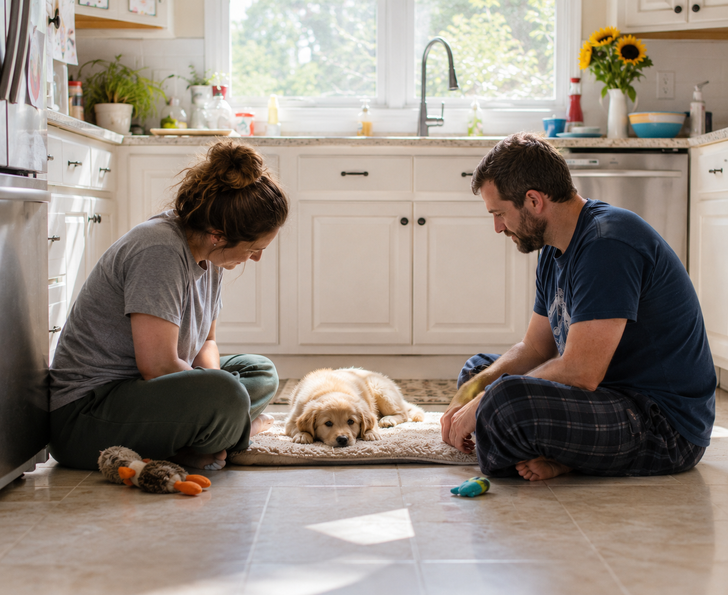
- My husband and I fostered our first puppy the year we lost our son — not to replace anything, just because the house had gone unbearably silent.
The puppy cried every night for a week. We took turns sitting with her on the kitchen floor at 3am, saying nothing, just staying.
One of those nights, my husband spoke his first full sentence to me in a month: “I don’t know how to help you. But I know how to sit on this floor until she stops crying.”
We fostered 3 more after her. Grief never got smaller. We just found something to do with our hands while it sat there — the kind of compassion that doesn’t fix anything, just refuses to leave the room.
- My father’s will contained one instruction nobody expected: his entire coin collection, forty years of careful accumulation, was to be sold and donated in full to the humane society — no explanation given, a complete surprise to every person who thought they knew him.
We found the reason in an old shoebox two years later: a receipt from the same shelter, dated the week after our mother’s memorial service, for a dog he’d adopted secretly and kept at a friend’s house for six months before quietly returning it, unable to care for it and grieve at the same time.
A note inside, in his handwriting, read: “Couldn’t keep him. Couldn’t stop thinking about him either. If I can’t finish this, someone else’s dollar should.”
We never found out what happened to that dog. The coins funded forty rescue dog adoptions the year after he passed. He finished it after all — just later, and through other people’s hands.
- My mother spent decades never explaining why she flinched at the sound of dogs barking — a fear so old none of us ever thought to ask about its origin, just accepted it as simply who she was.
At seventy-three, her retirement home partnered with an animal shelter for a supervised visitation program. She refused to attend for a full year.
Then she finally went, sat across from the calmest dog in the room, and told the volunteer a story she’d never told her own children: as a girl, she’d watched her childhood dog get hit by a car and had blamed herself for forty years for not calling him back inside sooner.
She’s been going every week since. Not to get over the fear. Just to finally say the story out loud to someone patient enough to just sit there and let her.
- I run a small foster program out of my garage, partnered with the county humane society. A teenager showed up asking to volunteer — no car, a two-hour bus ride each way, every Saturday for a year.
I never asked why. Free labor rarely questions itself. Then a puppy she’d fostered got adopted, and she cried harder than any volunteer I’d seen.
“My mom fosters too, at the facility where she’s staying for a while,” she finally told me. “She calls it the only good thing she still does. I figured somebody in the family should do it out here too, so it counts as one thing we still share.”
She’s fostered 8 dogs this year. That kind of kindness travels through walls neither of them chose.
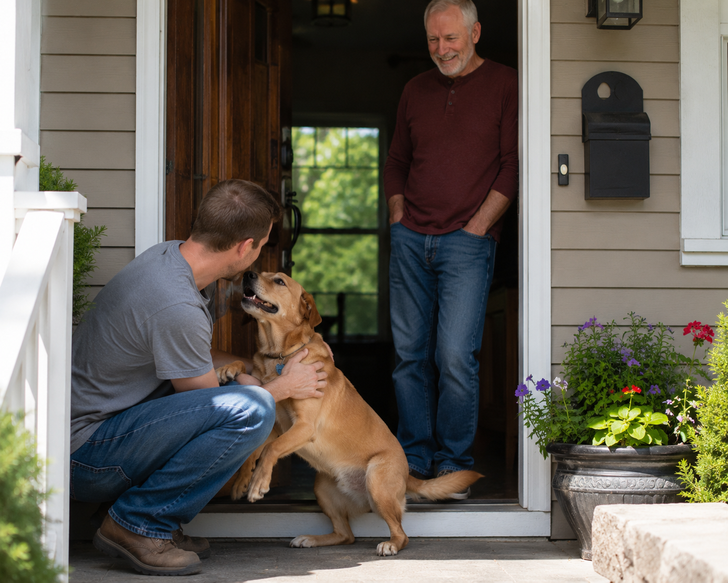
- My brother stopped speaking to our father after the divorce — eight years, zero contact, pride on both sides. Then Dad adopted Scout through the local animal welfare office.
Every time my brother visited the old house for mail, Scout ran straight to him and wouldn’t let go of his sleeve. Third visit, my brother finally asked why.
“He’s not waiting for you,” Dad said — the first words they’d exchanged in eight years. “I just told him stories about my son whenever I missed him. Guess he started looking for you too.”
They talk now. Scout still runs to the door first. Somebody has to break a silence. It doesn’t always have to be a person.
- A woman came into the humane society’s shelter every single day for two weeks to sit with the sickest kitten in the building — a runt nobody expected to survive intake.
She never explained why she’d picked the one that almost didn’t make it. Staff figured it out eventually: she’d lost a patient the same age, at the same weight, a month earlier. She was a nurse.
She’d never owned a rescue dog or cat before in her life. She has three now. She adopted the kitten the day the hold lifted. Nobody at the shelter ever brought it up out loud.
Some compassion doesn’t need the whole story told to be understood completely.
- My father spent his last working years as a longtime animal shelter volunteer, walking the dogs nobody else would take out — the biters, the growlers, the ones flagged “handler experience required.”
After he passed, the shelter offered to name a kennel after him. We asked for something else: his exact walking route, kept as the shelter’s official hard-case route, walked daily by whoever was willing.
The current volunteer told us: “I never met your father. But I walk his route every morning, and the difficult dogs still calm down exactly where he used to stop.”
Nobody there remembers his face anymore. The kindness he built into the route outlived the man who walked it first.
- My grandmother’s assisted-living facility banned pets — no exceptions, until the day she stopped eating. Staff called a rescue program using old, slow rescue dogs other adopters had passed over.
They brought Biscuit, nine years old, who could barely climb onto the bed by himself. Grandma ate a full meal for the first time in nine days, with one hand on his back the whole time.
The director rewrote the pet policy that week — not for every resident. Just for whichever dog this program sent next.
One old dog broke a rule nobody thought would bend. Real compassion doesn’t ask for permission twice.
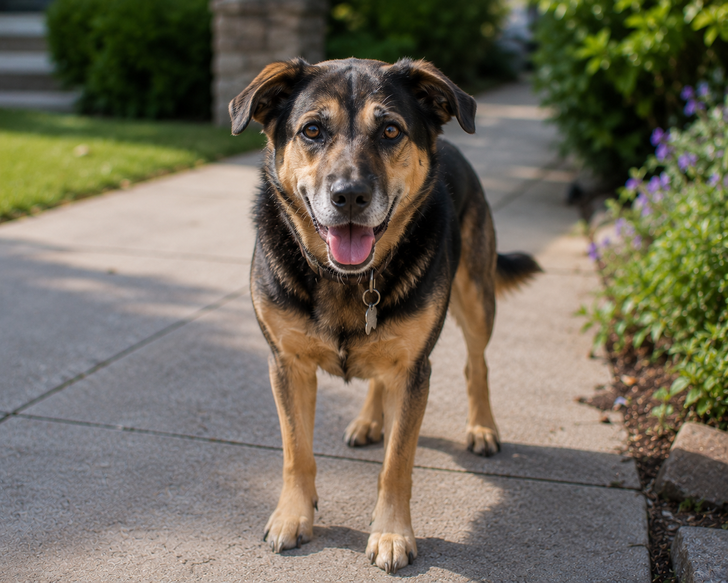
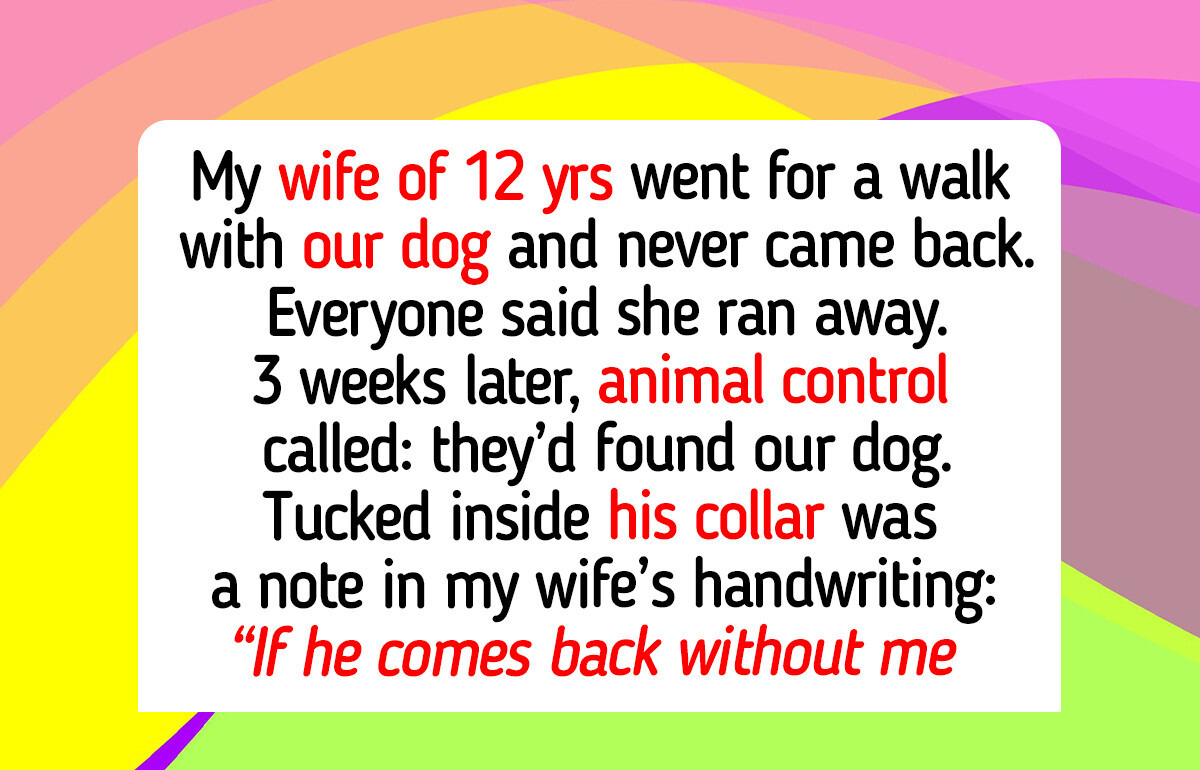
- My wife of 12 years went for a walk with our dog and never came back. Everyone said she ran away.
3 weeks later, animal control called: they’d found our dog. Tucked inside his collar was a note in my wife’s handwriting: “If he comes back without me, follow him next Tuesday. He’ll show you where.”
I didn’t understand until the following Tuesday, when our old shelter mutt suddenly stood at the door at exactly 4 p.m., whining, insistent, the way he used to before her evening walk.
I grabbed the leash and let him lead. He walked with total purpose, all the way to a quiet care facility twenty minutes away. The staff explained everything as I stood frozen in the lobby.
My wife had been quietly battling a serious memory-related illness for months, and had checked herself in alone, unable to find the courage to tell me face to face, terrified of becoming “a burden” before she even understood what she was facing.
She hadn’t wanted me to worry, or to argue her out of going, or to watch her decide this without me in the room. But she couldn’t bring herself to disappear from our lives completely either.
So for weeks beforehand, while she could still trust her memory, she walked our dog to that facility again and again, teaching him the route on purpose—not just so I could find her, but so that someday, if her own memory failed her first, he could walk her back home.
Every Tuesday since, that dog walks himself to the door at four o’clock. Every Tuesday, we follow him to her. Her memory is fading fast now. But the dog she once rescued out of loneliness has become the one thing steady enough to hold our way back to each other, in whichever direction we need it.
Comments
Lucky you! This thread is empty,
which means you’ve got dibs on the first comment.
Go for it!


